Clear Sky Science · en
Disease susceptibility and biological vulnerability of black vultures to fatal clade 2.3.4.4b highly pathogenic avian influenza A(H5N1) virus infection
Why sick vultures matter to us
Black vultures are nature’s cleanup crew, stripping carcasses before they can rot and spread disease. This study shows that a modern strain of bird flu, known as H5N1, has been killing black vultures in unusually large numbers across the southeastern United States. Understanding why these tough scavengers are suddenly so vulnerable matters not only for their conservation, but also for the broader health of ecosystems that depend on them.
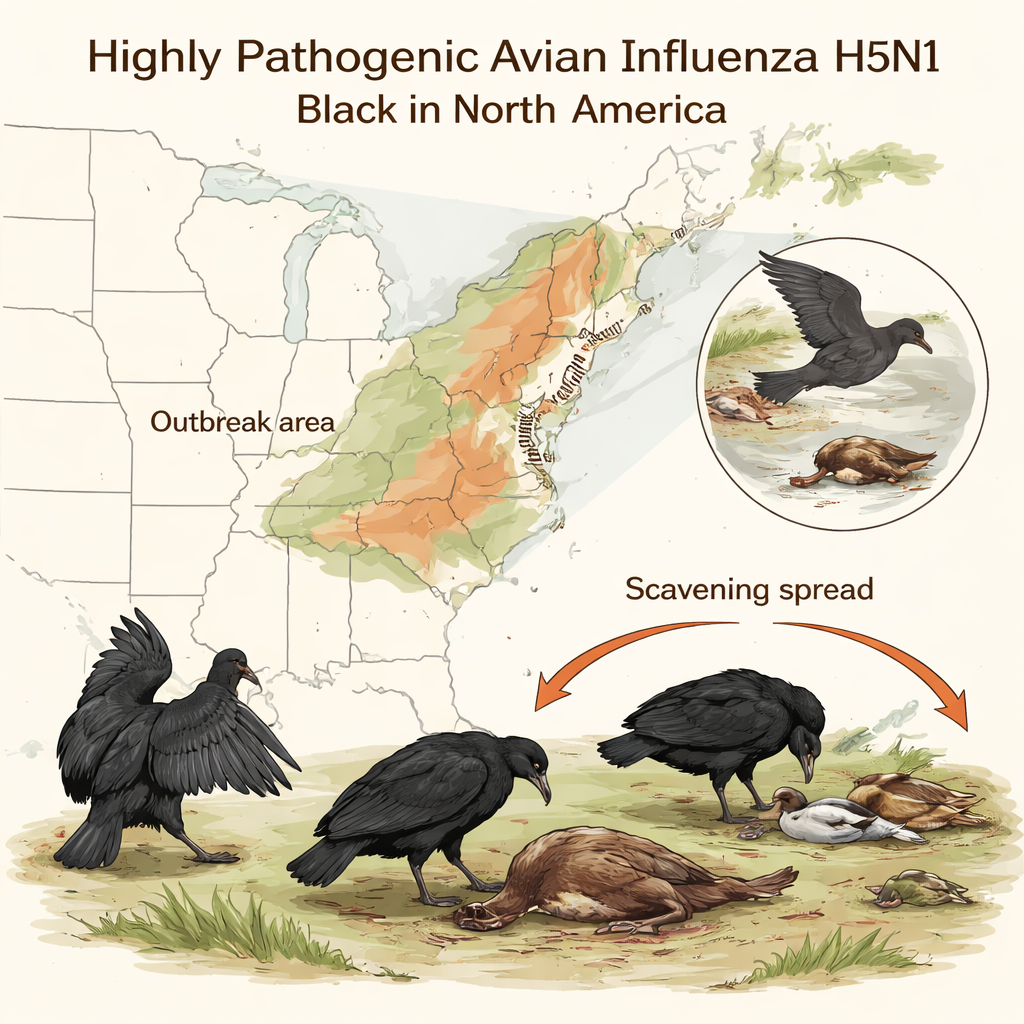
A deadly new wave of bird flu
Since late 2021, a highly pathogenic (especially lethal) form of avian influenza called clade 2.3.4.4b H5N1 has swept through wild birds in North America. Waterfowl such as ducks and geese usually carry flu viruses with little obvious illness. Vultures and other raptors, in contrast, tend to be infected when they eat sick or dead animals. Black vultures are particularly at risk because they are abundant, highly social scavengers that gather in large roosts, aggressively crowd carcasses, and often feed in human-altered landscapes like landfills, where many species mix.
Unusual die-offs across the Southeast
The researchers compiled data from 134 black vultures found dead or severely ill in 2022–2023 across seven southeastern states, from Georgia and the Carolinas to Florida and Louisiana. Laboratory tests detected the H5N1 virus in 113 of these birds—an enormous jump compared with the handful of vultures submitted in any year over the previous two decades. Many cases were part of striking die-offs: at some sites, observers reported dozens to hundreds of sick or dead vultures, and one Georgia event was estimated at up to 700 birds. These outbreaks were not confined to a single migration season; they stretched across most months of the year, suggesting that once the virus entered vulture groups, it could circulate locally for many months.
How the virus attacks a scavenger’s body
On the necropsy table, most vultures were in good nutritional condition, implying they died quickly after becoming ill. A consistent and dramatic finding was that their spleens and livers were swollen, mottled, and pale. Under the microscope, every closely examined vulture showed severe destruction of cells in these organs, packed with influenza virus proteins. The digestive tract—from mouth and throat through the stomachs and intestines—often showed patches of deep ulceration, tissue death, and bleeding. Viral material turned up not only in the gut and major immune organs, but also in kidneys, adrenal glands, and reproductive tissues, indicating that once the virus entered, it spread widely through the bloodstream.
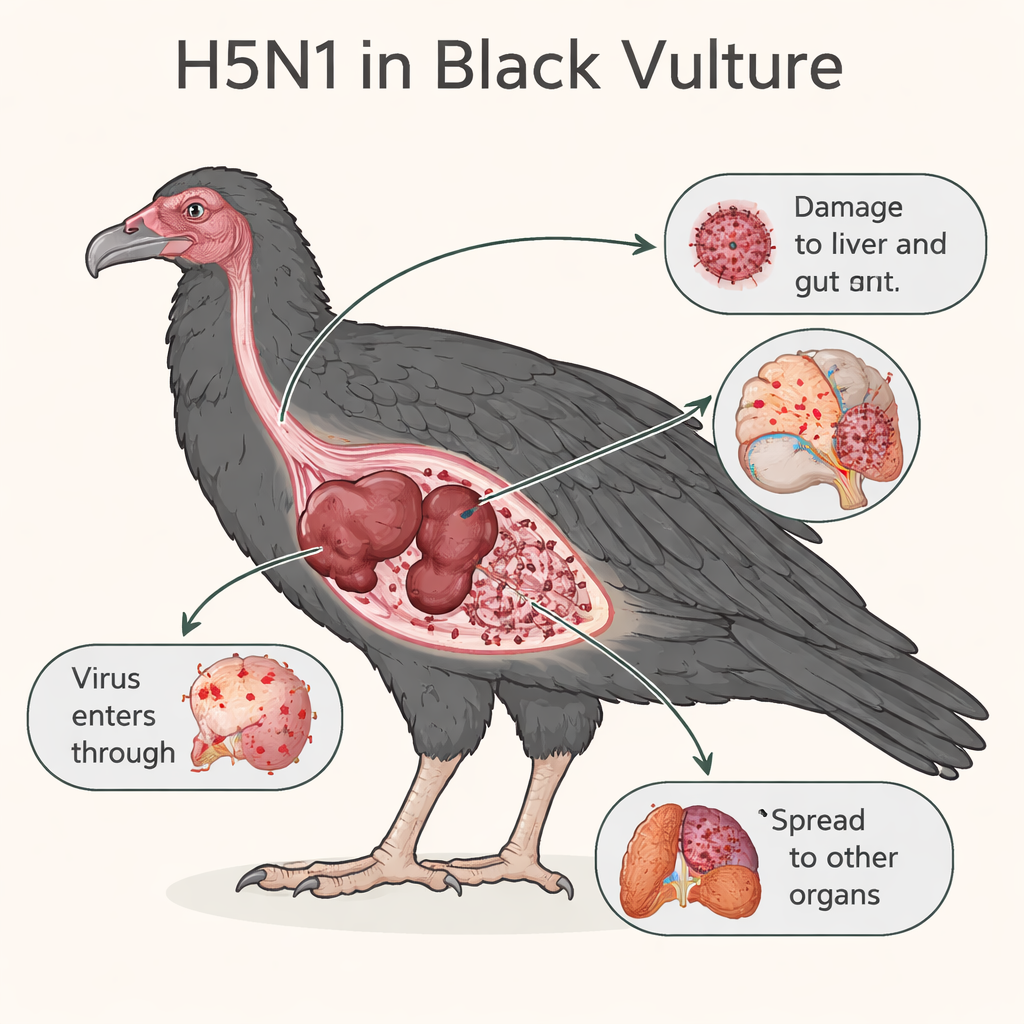
Infection starting in the gut
The pattern of damage points to the digestive tract as the main doorway for infection in black vultures. By feeding on carcasses loaded with virus, including dead vultures of their own kind, these birds likely expose their gut lining to extremely high doses for long periods—especially after large meals, when food can sit in the same gut segment for hours. This intense exposure may allow the virus to chew through the protective gut surface, then flood into the circulation and rapidly attack the spleen, liver, and other organs. Unlike in some other raptors, brain and heart damage were less common in black vultures, emphasizing that gut-centered disease is a distinctive feature for this species.
What this means for vultures and beyond
The authors conclude that black vultures are both behaviorally and biologically vulnerable to this strain of H5N1. Their social scavenging lifestyle creates efficient, self-perpetuating chains of infection, even outside the usual waterfowl migration windows. At the same time, their bodies react with widespread, often fatal organ damage once infected. While the outbreaks may eventually be self-limiting—because so many infected birds die—the losses could be large enough to affect local populations of this important scavenger. The study underscores the need to keep tracking bird flu in vultures, both to safeguard a key ecological cleanup service and to better understand how a changing virus moves through wildlife communities.
Citation: Nemeth, N.M., Andreasen, V.A., Weyna, A.A.W. et al. Disease susceptibility and biological vulnerability of black vultures to fatal clade 2.3.4.4b highly pathogenic avian influenza A(H5N1) virus infection. Sci Rep 16, 6086 (2026). https://doi.org/10.1038/s41598-026-36912-5
Keywords: black vultures, H5N1 avian influenza, wildlife disease, scavenger birds, bird conservation