Clear Sky Science · en
Predictors of opportunistic infections among people living with HIV: a prospective cohort study from a tertiary care setting in India
Why Staying Healthy Matters for People Living with HIV
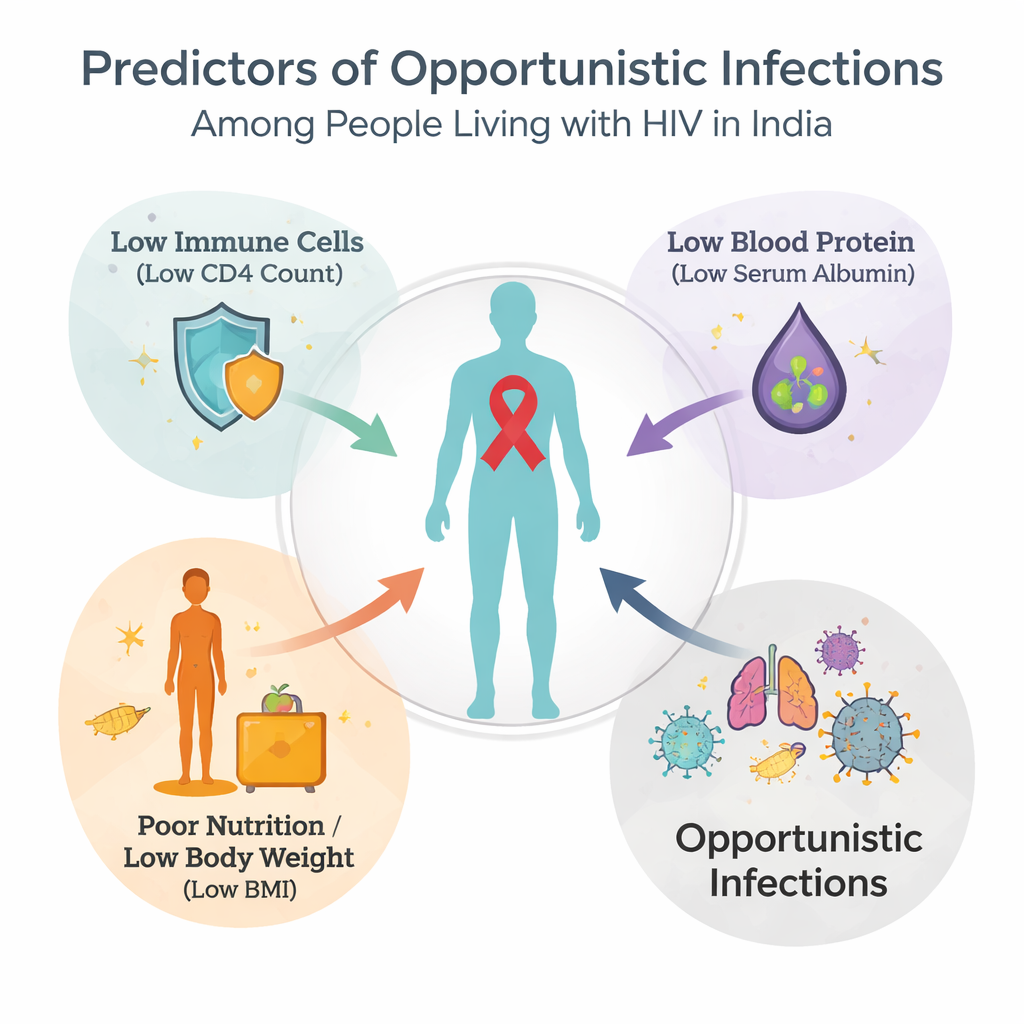
For many people living with HIV, the biggest threats today are not the virus itself but the infections that take advantage when the body’s defenses are down. These are called opportunistic infections and include illnesses such as tuberculosis and serious fungal or viral diseases. In parts of the world where resources are limited, doctors often lack advanced tests and must rely on simple, affordable measures to identify who is at greatest risk. This study from a large hospital in Western India asked a practical question: can basic checks like body weight, a common blood protein, and a standard immune cell count help predict which patients are most likely to develop these dangerous infections?
Who Was Studied and What Was Measured
Researchers followed 223 adults living with HIV who were receiving care at a government-supported clinic. Everyone was screened at the start to make sure they did not already have an opportunistic infection. Doctors then recorded everyday information: age, sex, job type, body mass index (BMI, a measure of weight relative to height), and stage of HIV illness. They also measured hemoglobin, the number of key immune cells called CD4 cells, and the level of albumin, a protein in the blood that reflects both nutrition and overall health. About half the participants were already taking antiretroviral therapy (ART), the standard treatment for HIV, when they entered the study, and all were then followed for up to three years to see who developed serious infections.
Which Infections Appeared Most Often
Over the follow-up period, 97 out of 223 patients—almost 44 percent—developed at least one opportunistic infection. The most common was tuberculosis, which accounted for roughly two out of every five infections and often involved disease spread beyond the lungs. Other frequent problems included yeast infections such as candidiasis, infections caused by non-tuberculous mycobacteria, a special type of pneumonia, and cytomegalovirus, a virus that can damage the eyes and other organs. Nearly one quarter of affected patients suffered more than one infection. These patterns underline how, even in the era of widely available HIV drugs, serious infections still pose a heavy burden in low- and middle-income countries.
Simple Signals That Point to Higher Risk
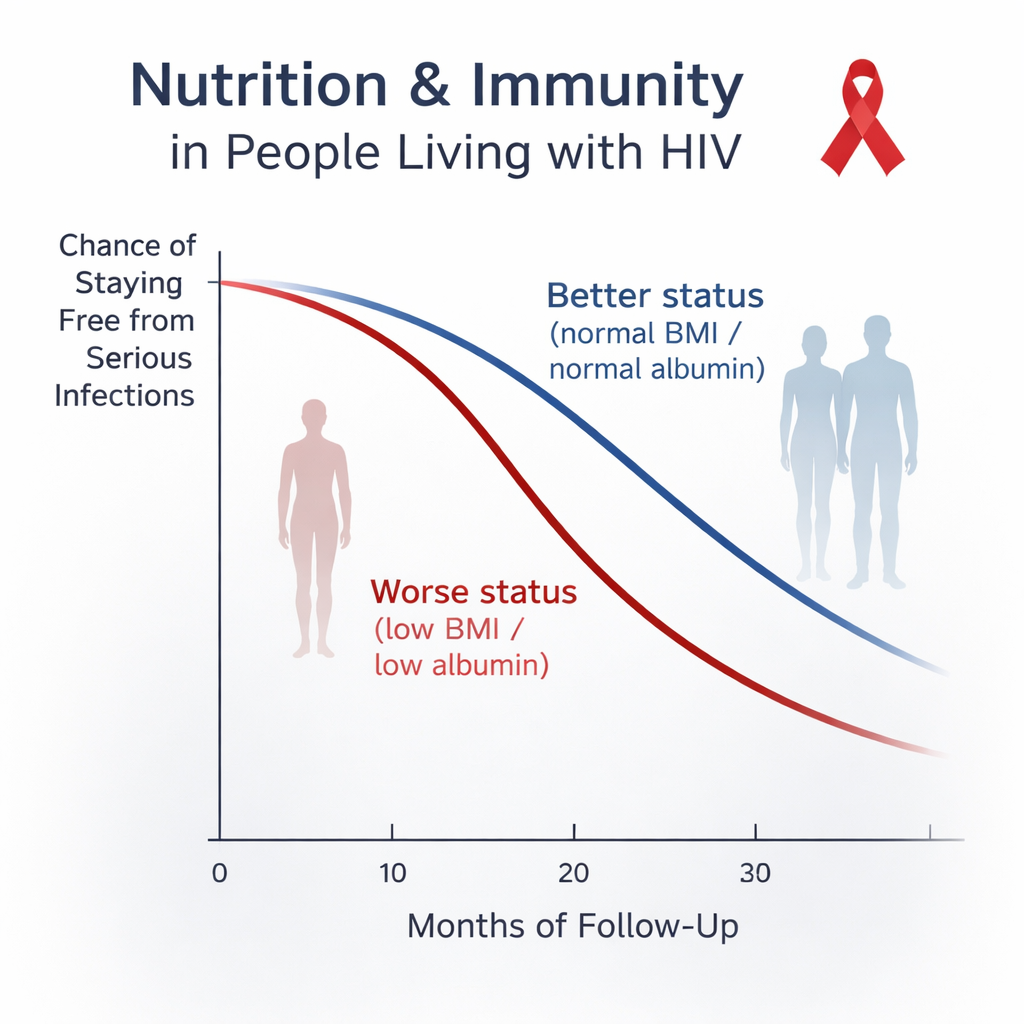
To learn which patients were more likely to fall ill, the researchers compared people who developed infections with those who stayed well. Several differences stood out. Patients who became sick tended to be older, had a lower CD4 count, weighed less for their height, and had much lower albumin levels. When the team used statistical methods to adjust for other factors, three predictors remained clearly important: a CD4 count below 250 cells per microliter, a BMI under 18.5 (classified as underweight), and albumin levels below normal. Each of these was linked to roughly double the odds of developing an opportunistic infection. When the data were plotted over time, undernourished patients and those with very low albumin had a noticeably shorter infection‑free survival than better-nourished patients.
Why Nutrition and a Single Blood Test Matter
The findings suggest that the body’s defenses depend not only on the strength of the immune system, as reflected by CD4 counts, but also on overall nutritional reserves. Low albumin likely signals a mix of poor diet, ongoing inflammation, and advanced HIV-related illness, all of which weaken barriers to infection and dampen immune responses. Interestingly, simply being less consistent with HIV medication did not clearly predict infections in this group, probably because adherence was self-reported and follow-up was limited. In real-world clinics that lack frequent viral load or advanced immune testing, measures like BMI and albumin—both cheap and widely available—could therefore serve as practical red flags to trigger closer monitoring, nutritional support, and preventive treatments.
What This Means for Patients and Clinics
For people living with HIV, this study delivers a straightforward message: keeping weight and nutritional status up, along with maintaining immune health, is crucial to avoiding life‑threatening infections. For busy clinics in resource‑limited settings, it shows that simple tools—a weighing scale, height chart, and a basic blood test for albumin alongside CD4 counts—can help identify who most needs extra attention. By acting early for patients who are underweight, have low albumin, or have very low CD4 counts, health workers may be able to reduce hospitalizations and deaths from opportunistic infections, even when more sophisticated tests are out of reach.
Citation: Maheshwari, A., Meena, D.S., Kumar, D. et al. Predictors of opportunistic infections among people living with HIV: a prospective cohort study from a tertiary care setting in India. Sci Rep 16, 5901 (2026). https://doi.org/10.1038/s41598-026-36909-0
Keywords: HIV, opportunistic infections, nutrition, CD4 count, India