Clear Sky Science · en
Enhancing cucumber production through compost and plant growth promoting rhizobacteria in an unheated soil based greenhouse
Why cucumbers and soil life matter
Cucumbers are a popular salad staple, but growing them in greenhouses often depends on synthetic fertilizers that can harm soil and water over time. This study explores whether everyday organic tools—compost made from recycled wastes and helpful soil bacteria—can keep cucumber yields high while cutting the environmental cost. By testing these living inputs together, the researchers show how working with soil biology can support both farmers’ incomes and cleaner ecosystems.
Turning waste into a soil resource
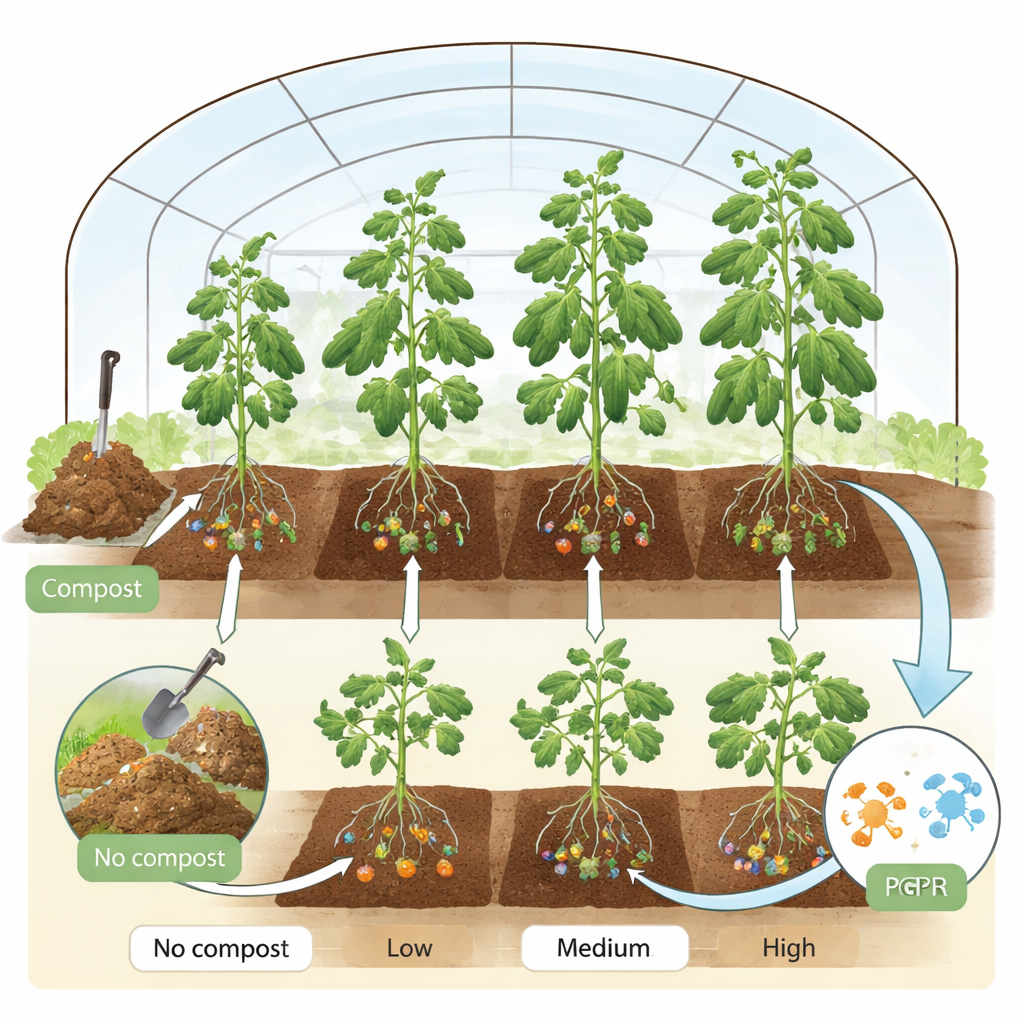
Compost is essentially recycled organic waste transformed into a dark, crumbly soil booster. It improves the soil’s structure, helps it hold water and nutrients, and reduces pollution runoff. In this experiment, compost made from mixed organic residues was added to the top 10 cm of soil in an unheated polyethylene greenhouse in western Türkiye. Four compost levels were tested—from none to a relatively high dose—under real production conditions using grafted cucumber plants of a commercial greenhouse variety. The goal was to see how much compost is enough to benefit the crop without overdoing it.
Enlisting friendly bacteria around the roots
Alongside compost, the team worked with two types of plant-friendly bacteria that naturally live near roots: Bacillus subtilis and Pseudomonas fluorescens. These microbes, known as plant growth promoting rhizobacteria, can unlock nutrients in the soil, release substances that encourage root growth, and sometimes help plants cope with stress. The researchers applied the bacteria twice to the root zone of young plants, creating combinations of different compost doses with or without each microbe. They then tracked root and shoot growth, yields, fruit quality, and the levels of key nutrients in the leaves.
What changed in roots, nutrients, and yields
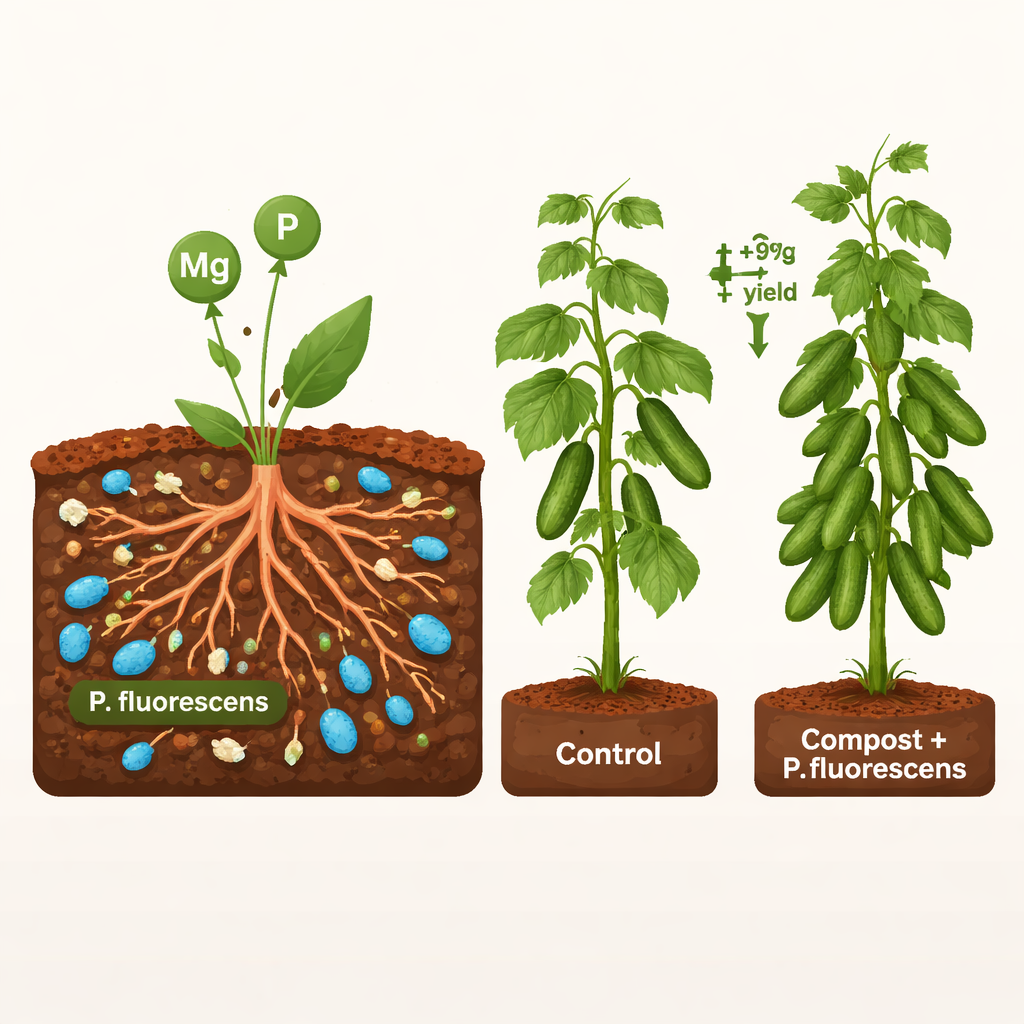
The strongest changes appeared below ground and in the plant’s nutrient supply. Compost and bacteria together increased root fresh and dry weight, giving plants more “underground machinery” to take up water and minerals. Detailed leaf analysis showed that plots treated with P. fluorescens and higher compost doses had noticeably more magnesium and phosphorus—two nutrients closely tied to energy use and sugar transport in plants. A statistical method called principal component analysis revealed that magnesium, in particular, was strongly linked to both the number of fruits per plant and their average weight, helping explain why better nutrition translated into better harvests.
Finding the sweet spot for compost and bacteria
Not every combination gave the same payoff. The best-performing treatment used a moderate compost dose of 200 g per square meter together with P. fluorescens, which raised marketable cucumber yield by about 9% compared with plots that received neither compost nor bacteria. Higher compost alone tended to boost leafy shoot growth and fruit firmness more than yield, suggesting that simply adding more organic matter without microbes may push plants toward foliage rather than fruits. By contrast, treatments including P. fluorescens shifted the balance toward root strength, nutrient uptake, and fruit production, without major changes in visible fruit quality traits like size, color, or sweetness.
What this means for growers and consumers
For growers, the study shows that a realistic combination of compost and a well-chosen root bacterium can nudge yields upward in commercial-style greenhouses while improving soil health. The recommended practice—applying compost at 200 g per square meter and inoculating with P. fluorescens—offers a practical step toward relying less on synthetic fertilizers, especially in sensitive areas such as drinking-water catchments. For consumers and policymakers, the work adds evidence that more sustainable greenhouse vegetables are possible without sacrificing productivity. The authors note that future research should test these strategies in other soils, under water or salt stress, and with lower fertilizer inputs to refine long-term guidelines for truly climate- and resource-friendly cucumber production.
Citation: Memelİ, İ., Tüzel, Y., Durdu, T. et al. Enhancing cucumber production through compost and plant growth promoting rhizobacteria in an unheated soil based greenhouse. Sci Rep 16, 6742 (2026). https://doi.org/10.1038/s41598-026-36907-2
Keywords: greenhouse cucumbers, compost, beneficial soil bacteria, sustainable fertilization, plant nutrition