Clear Sky Science · en
The efficiency paradox of discharge masking head loss in run-of-river hydropower generation
Why this river dam matters for everyday power
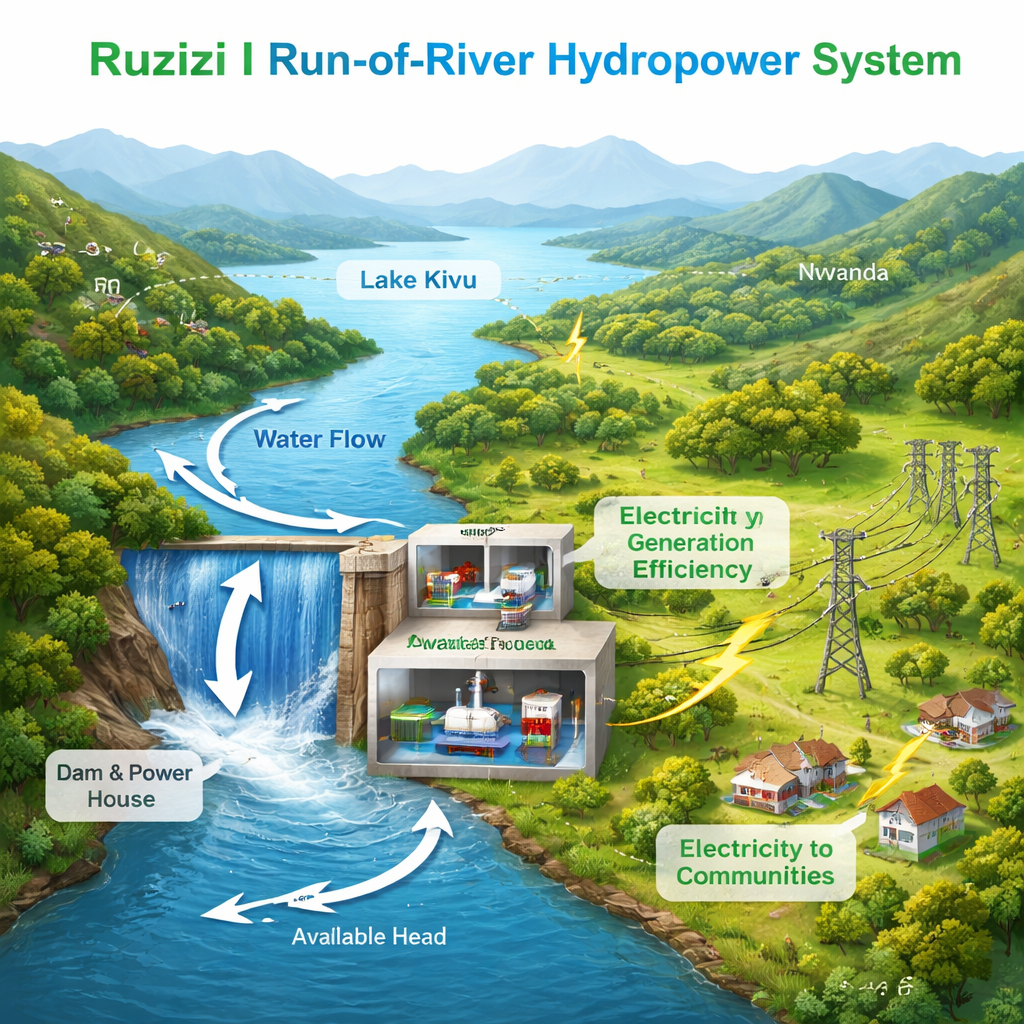
Across much of Africa, rivers are the backbone of electricity supply. The Ruzizi I hydropower plant, fed by Lake Kivu between Rwanda and the Democratic Republic of Congo, has quietly powered homes and businesses since the 1950s. This study looks under the hood of that plant to ask a deceptively simple question: how efficiently is it turning moving water into usable electricity, and is that performance getting better or worse as climate, rivers and aging machinery all change over time?
Measuring how well water becomes watts
Hydropower plants do not just depend on how much water flows through them; they also depend on the height the water falls, known as the head, and on how well turbines and generators convert that falling water into electricity. The researchers focused on the Ruzizi I plant from 2000 to 2023, using detailed monthly records from the operator along with climate data. Instead of only tracking how much power was produced, they examined the plant’s efficiency – the share of the water’s energy that actually becomes electricity – and how it changes with flow, head and operating choices inside the plant.
When more water hides a weakening fall
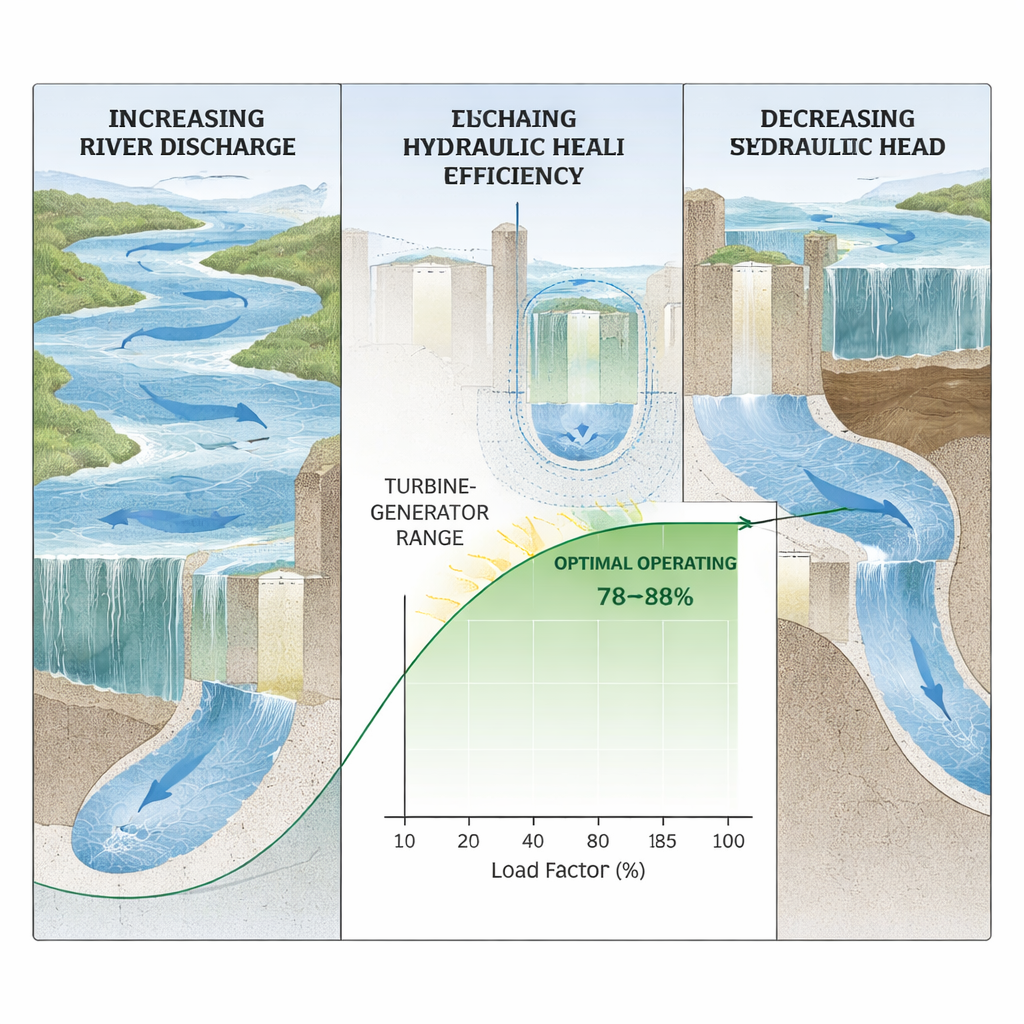
Over the 23-year period, the plant’s efficiency improved markedly, rising by about 3.6 percentage points per decade. At first glance this is good news: the plant appears to be getting better at doing its job. But the study reveals a paradox. The river has been carrying more water, and this extra flow almost perfectly explains the efficiency gains. At the same time, the vertical drop available to drive the turbines has been shrinking, likely because the riverbed downstream is filling with sediment and water levels below the dam are rising. In other words, a stronger current is compensating for a smaller waterfall, so headline efficiency numbers look healthy even as one of the plant’s basic advantages quietly erodes.
Protected from drought, boosted by wet years
The team also asked how the plant responds to dry and wet conditions across the wider Lake Kivu–Ruzizi system. Thanks to the large lake upstream, the plant is strongly buffered during droughts: even in dry years, efficiency stays close to normal levels. Wet years, however, are a different story. When rains are abundant and lake levels are high, efficiency jumps by around 17–18 percent compared with typical years. This shows that the system is less vulnerable to losing performance in bad years than it is poised to gain in good ones, turning wet periods into valuable surges of low‑carbon electricity for the region.
Finding the sweet spot in plant operations
Not all of the story is about nature. How the plant is run also matters. By comparing efficiency with two simple measures of how hard the plant is pushed – the load factor (how close it runs to its peak output) and the available capacity factor (how much of its equipment is online) – the researchers found a practical insight. There is an operating “sweet spot” where the plant is neither idling nor straining: when the load factor sits around 78–82 percent, efficiency is highest. Historically, Ruzizi I has tended to run a little above this range, chasing maximum output rather than best use of each drop of water. Moving closer to this optimal band could raise efficiency by about four percentage points, effectively getting more electricity from the same river.
What this means for future clean energy
For people and policymakers who depend on Ruzizi I, the message is twofold. In the short term, careful day‑to‑day operation can boost the plant’s performance simply by keeping it in its most efficient operating zone. Over the longer term, however, the shrinking head is a warning sign that sediment build‑up and riverbed changes are eating away at the plant’s natural power. The apparent gains in efficiency are largely riding on today’s high flows, which may not last forever. To keep this aging yet vital plant delivering reliable, climate‑friendly electricity, managers will need to both fine‑tune how it is run and protect the river system itself, especially by tackling sediment and safeguarding the stabilizing role of Lake Kivu.
Citation: Mugisho, M.J., Ahana, B.S., Posite, V.R. et al. The efficiency paradox of discharge masking head loss in run-of-river hydropower generation. Sci Rep 16, 3048 (2026). https://doi.org/10.1038/s41598-026-36906-3
Keywords: hydropower, river dams, renewable energy, sedimentation, climate resilience