Clear Sky Science · en
Clinical characteristics and survival outcomes of adult inflammatory myofibroblastic tumor: a retrospective single-center study
Why this rare tumor matters
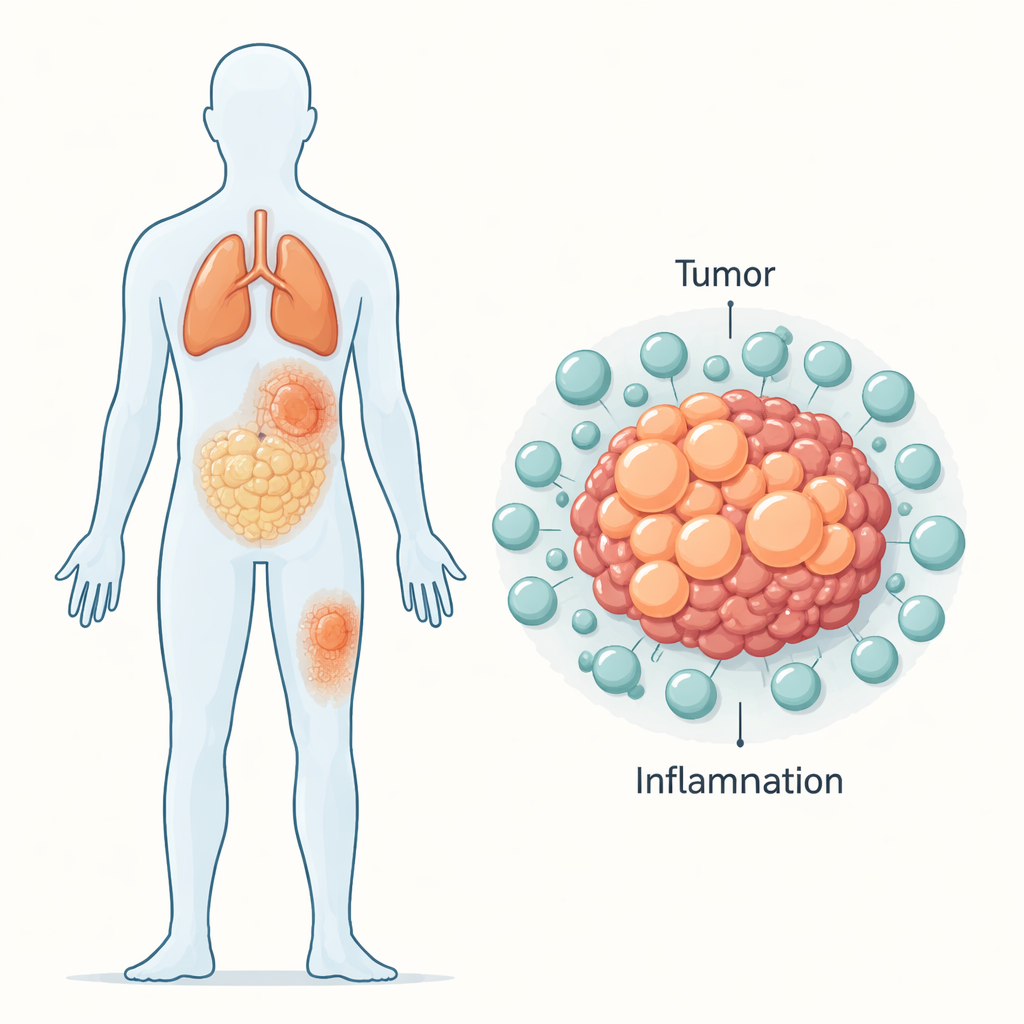
Inflammatory myofibroblastic tumor (IMT) is a mouthful, but behind the name lies a key medical puzzle: a tumor that behaves somewhere between a stubborn inflammation and a true cancer. It can strike people of almost any age, often young adults, and can appear in many parts of the body. Because it is rare, doctors still lack clear rules for how to treat it and predict who will do well. This study follows a group of adults with IMT over several years to uncover which features of the disease – and which treatments – are most closely tied to staying alive and keeping the tumor from coming back.
Who was studied
The researchers looked back at the records of 24 adults treated for IMT at a major cancer center in Turkey between 2015 and 2023. Most patients were in their early thirties, and just over half were women. Tumors most often arose in the abdomen and the arms or legs, but could also appear in the chest, eye, or deep spaces behind the abdominal organs. About one in five patients already had spread of disease to organs like the lungs or liver when they were first diagnosed. Many people came to medical attention with pain, tiredness, weight loss, or fevers, though in a few cases the tumor was discovered by chance on a scan done for another reason.
What doctors measured
The team gathered detailed information on each person’s tumor, treatments, and blood tests. They checked for changes in a gene called ALK, which can drive some IMTs and make them sensitive to special drugs that block this signal. They also recorded simple blood markers linked to inflammation and nutrition: C‑reactive protein (CRP), erythrocyte sedimentation rate (ESR), and albumin, a protein that often falls when the body is under stress or poorly nourished. Finally, they tracked how long patients lived overall and how long they remained free of tumor growth or spread after diagnosis.
The power of surgery
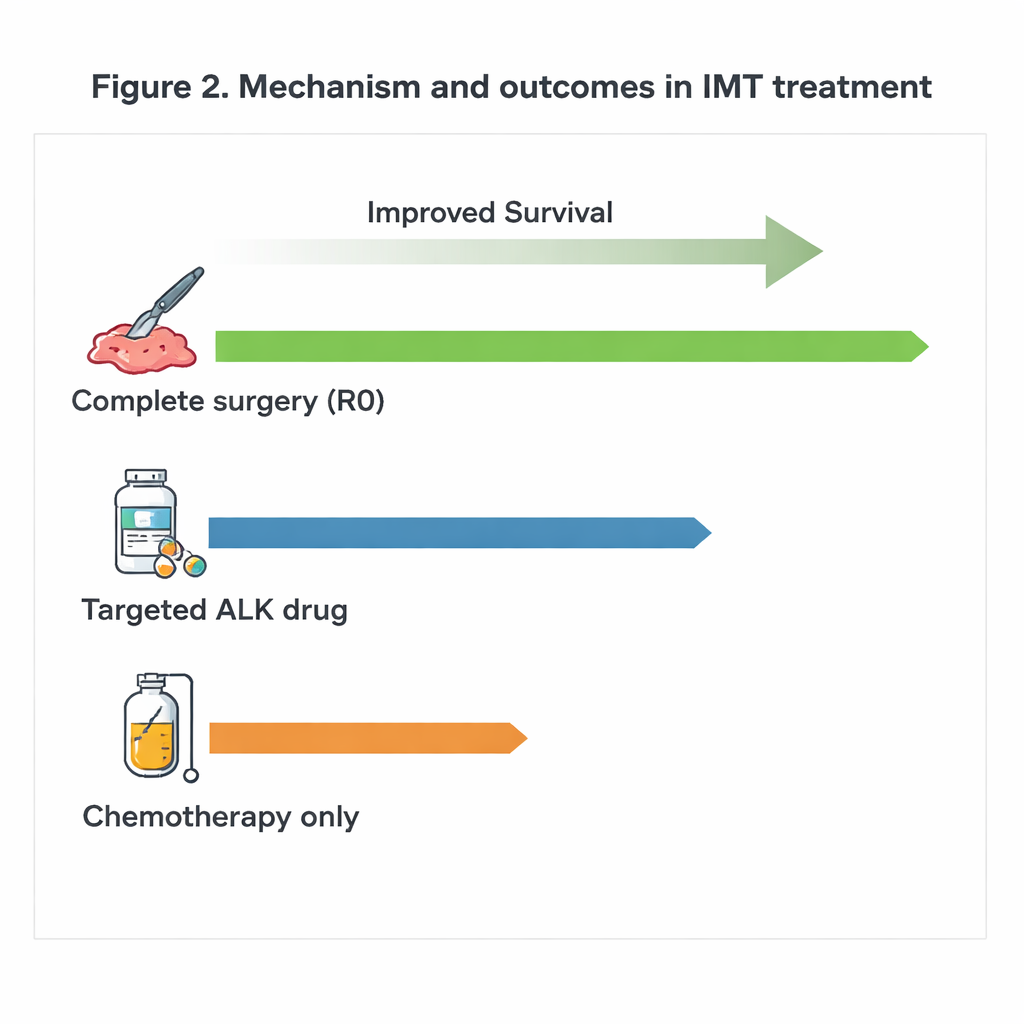
The clearest message from this study is that cutting out the tumor completely offers the best chance of long‑term control. Nearly 80% of patients had surgery, and in most of these the surgeons achieved what is called an R0 resection – no visible tumor left behind. People with such clean margins had far fewer recurrences and lived longer than those whose tumors could not be fully removed or who never had surgery at all. In fact, lack of surgery or incomplete removal was linked to both a much higher rate of the disease coming back and shorter survival times. Patients who suffered repeated rounds of progression tended to have tumors in the abdomen or deep pelvic region, where surgery is technically harder and risky.
Targeted drugs and warning signs in the blood
Only five patients in the group had tumors with ALK changes, a lower fraction than reported in some earlier research. Even so, the two people treated with the ALK‑blocking pill crizotinib both saw their tumors shrink and enjoyed many months before the disease grew again. Overall, however, ALK status by itself did not clearly separate long‑term survivors from others, likely because the study was small and access to these drugs was limited. Among the blood markers, low albumin stood out: patients whose albumin levels were below normal at diagnosis were more than twice as likely to die during follow‑up as those with healthier levels. High CRP and ESR were more common in people whose tumors progressed, but they did not show a strong enough pattern to be statistically solid predictors on their own.
What this means for patients
For people facing an IMT diagnosis, this study offers both reassurance and caution. When the tumor can be fully removed, many patients remain disease‑free for years, underscoring surgery as the cornerstone of care. At the same time, those with advanced, inoperable, or repeatedly returning tumors still face a difficult road, and standard chemotherapy appears to offer limited help. Targeted drugs aimed at ALK and other gene changes can provide meaningful control in selected cases, but are not yet a universal solution. Simple blood tests, especially albumin, may help flag higher‑risk patients who need closer monitoring and more aggressive treatment. Because IMT is rare, the authors stress that larger, multi‑center studies will be crucial to refine these early signals into firm guidance and to expand the treatment toolkit for this uncommon but serious disease.
Citation: Dumludağ, A., Yıldırım, G., Topal, A. et al. Clinical characteristics and survival outcomes of adult inflammatory myofibroblastic tumor: a retrospective single-center study. Sci Rep 16, 5733 (2026). https://doi.org/10.1038/s41598-026-36899-z
Keywords: inflammatory myofibroblastic tumor, rare soft tissue tumor, ALK targeted therapy, surgical tumor removal, cancer inflammatory markers