Clear Sky Science · en
Prolonged social media use is not fundamentally problematic in a Hungarian representative study
Why heavy scrolling might not mean you are "addicted"
Many people worry that spending hours on social media each day must mean they are addicted and harming their mental health. This study of a nationally representative sample of Hungarian adults challenges that idea. It suggests that simply using social media a lot is not, by itself, a sign of a serious problem. Instead, what matters more is how people use these platforms, how much they compare themselves to others, and whether they are already struggling with stress, anxiety, or depression.
Everyday life in a highly online population
In modern Hungary, as in many countries, social media has become woven into daily life. In this survey of 807 adults aged 18 to 86, more than 96% reported using social media, typically for nearly two hours a day. People turned to platforms for many familiar reasons: to stay in touch, follow news, pass time, and relieve boredom. The researchers distinguished between "active" use (such as posting, commenting, and chatting) and "passive" use (such as scrolling through feeds and reading others’ posts). They also measured how lonely people felt, how often they compared themselves to others, and how much psychological distress they were experiencing. 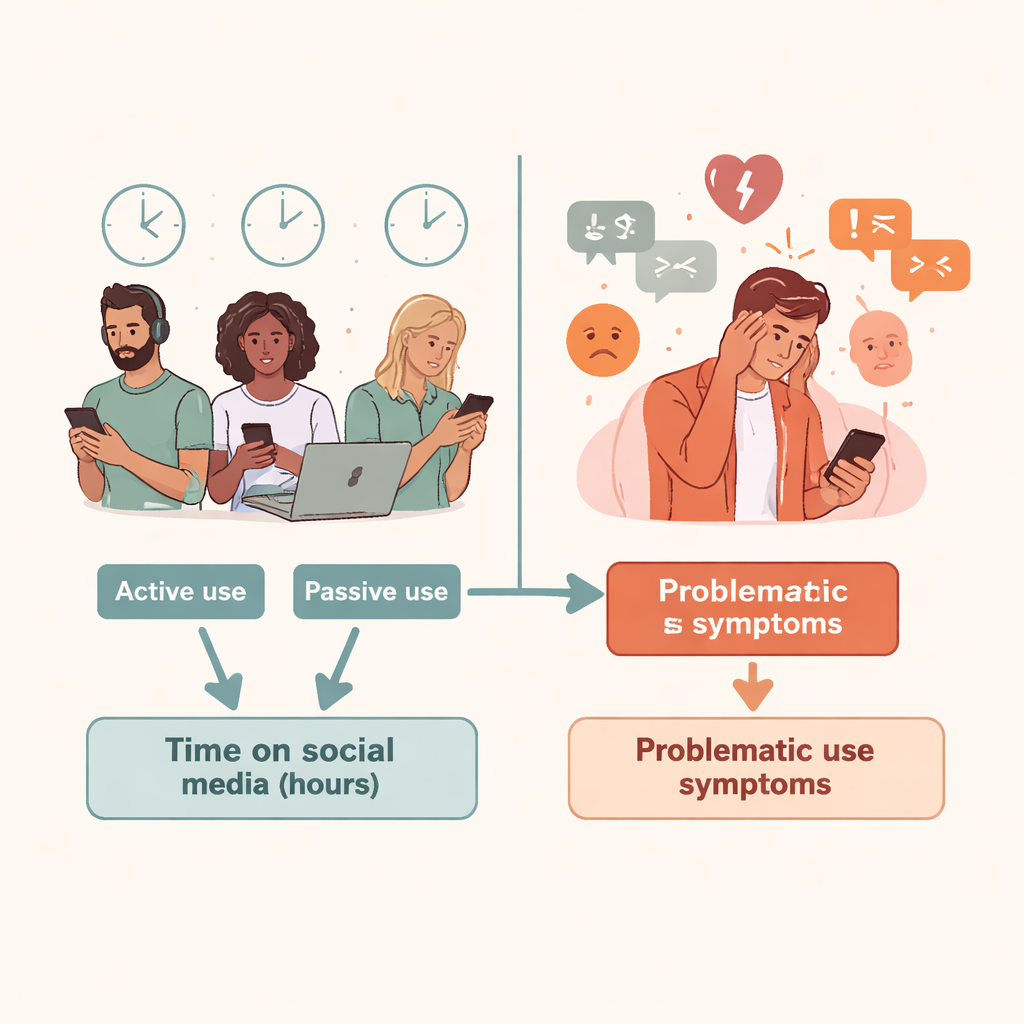
Prolonged use versus problematic use
The central question was whether spending more time on social media is the same thing as using it in a problematic, addiction-like way. Problematic use was defined not just by time, but by symptoms such as loss of control, failed attempts to cut back, using social media to cope with emotional distress, feeling upset when unable to log on, and conflicts with work, school, or relationships. Using a statistical model, the researchers examined how different factors predicted either the total hours spent on social media or the severity of these problematic symptoms, while taking age and gender into account.
What really predicts trouble
The results drew a sharp line between heavy use and harmful use. Both active and passive engagement were linked to spending more time on social media, but together they explained only a modest part of how many hours people were online. Crucially, the number of hours spent on social media was not meaningfully related to having more addiction-like symptoms. Instead, problematic use was strongly tied to active use, a strong tendency to compare oneself with others, and higher levels of psychological distress. People who were younger, more active on social platforms, more focused on how they stacked up socially, and more depressed, anxious, or stressed were the ones most likely to show harmful patterns. Feelings of loneliness, surprisingly, did not clearly predict either more time online or more problematic use. 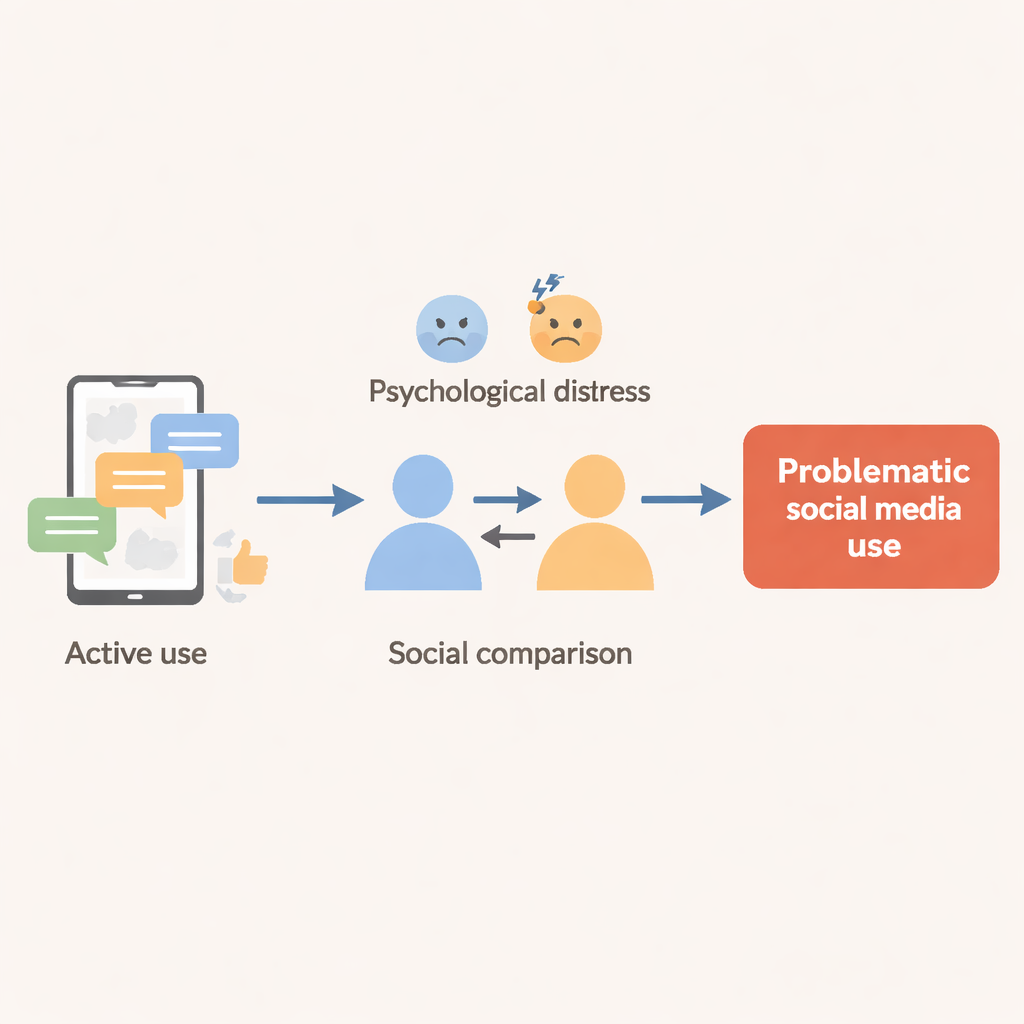
Why this difference matters
These findings suggest that prolonged social media use and problematic social media use are qualitatively different. Many people who spend lots of time online show no clear signs of harm and may even gain social or emotional benefits from their activity. Treating every heavy user as "addicted" risks pathologizing normal behavior and may distract from those who truly need help. By contrast, people who use social media very actively while constantly measuring themselves against others, and who already feel distressed, are at higher risk for serious difficulties. For them, social media may intensify negative feelings or become a way of avoiding real-life problems rather than coping with them.
What this means for users and helpers
For the average person, this study offers a reassuring message: long hours on social media do not automatically equal a disorder. What deserves closer attention is why you log on, how you feel while using these platforms, and whether your online habits are starting to disrupt your work, relationships, or well-being. For clinicians, educators, and policymakers, the results argue for more targeted approaches that focus on unhealthy comparison, emotional distress, and the quality of online interactions, rather than time limits alone. In short, not all heavy scrolling is harmful—but when social media becomes a crutch for coping with distress and constant self-comparison, that is when alarm bells should ring.
Citation: Zsila, Á., Bognár, B. & Shabahang, R. Prolonged social media use is not fundamentally problematic in a Hungarian representative study. Sci Rep 16, 6488 (2026). https://doi.org/10.1038/s41598-026-36896-2
Keywords: social media use, problematic use, mental health, social comparison, addiction-like behaviors