Clear Sky Science · en
Gondwanan cyrtocrinids uncover hidden diversity and crinoid dispersal pathways
Ancient Sea Lilies Tell a New Story
Long before dinosaurs vanished, the seas around the southern supercontinent Gondwana were home to delicate, stalked animals called crinoids—often nicknamed “sea lilies.” By unearthing tiny fossil pieces of a rare crinoid group from Jurassic rocks in Algeria, scientists have not only identified species never before seen in the Southern Hemisphere, but also redrawn maps of how marine life spread across ancient oceans. This work shows that even millimetre‑sized fossils can change our picture of life on Earth and the hidden connections between distant continents.
A Hidden Chapter in Southern Oceans
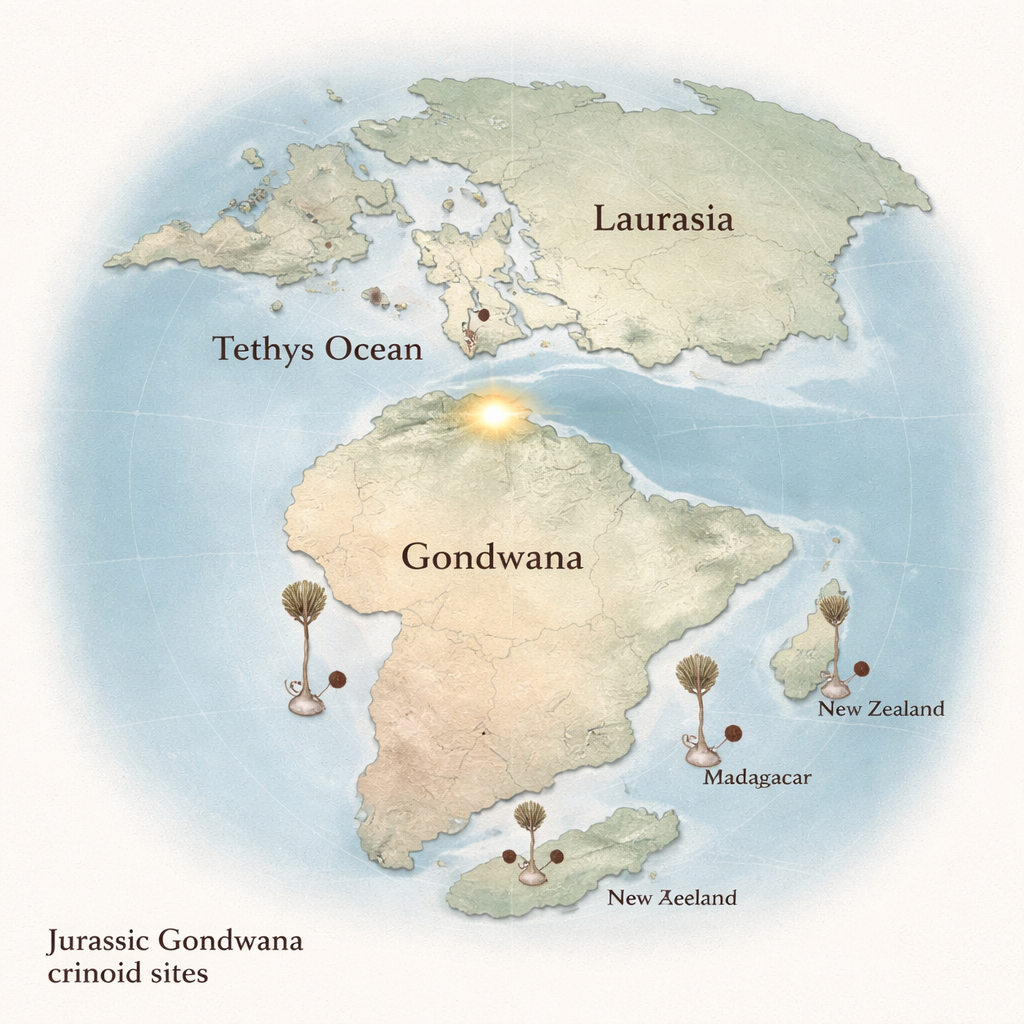
Most of what we know about these particular crinoids, called cyrtocrinids, comes from Europe. Their record on the southern continents—those that once formed Gondwana—has been sparse and fragmentary. The new study focuses on Jurassic rocks in the Saïda Mountains of western Algeria, which sat along the northern edge of Gondwana about 160 million years ago. Until now, no unquestionable cyrtocrinid fossils were known from this part of the Southern Hemisphere. The researchers’ discovery of several distinct cyrtocrinid forms fills a major geographic gap and shows that these animals were far more widespread than the European record alone suggests.
Reading the Rocks of an Ancient Shoreline
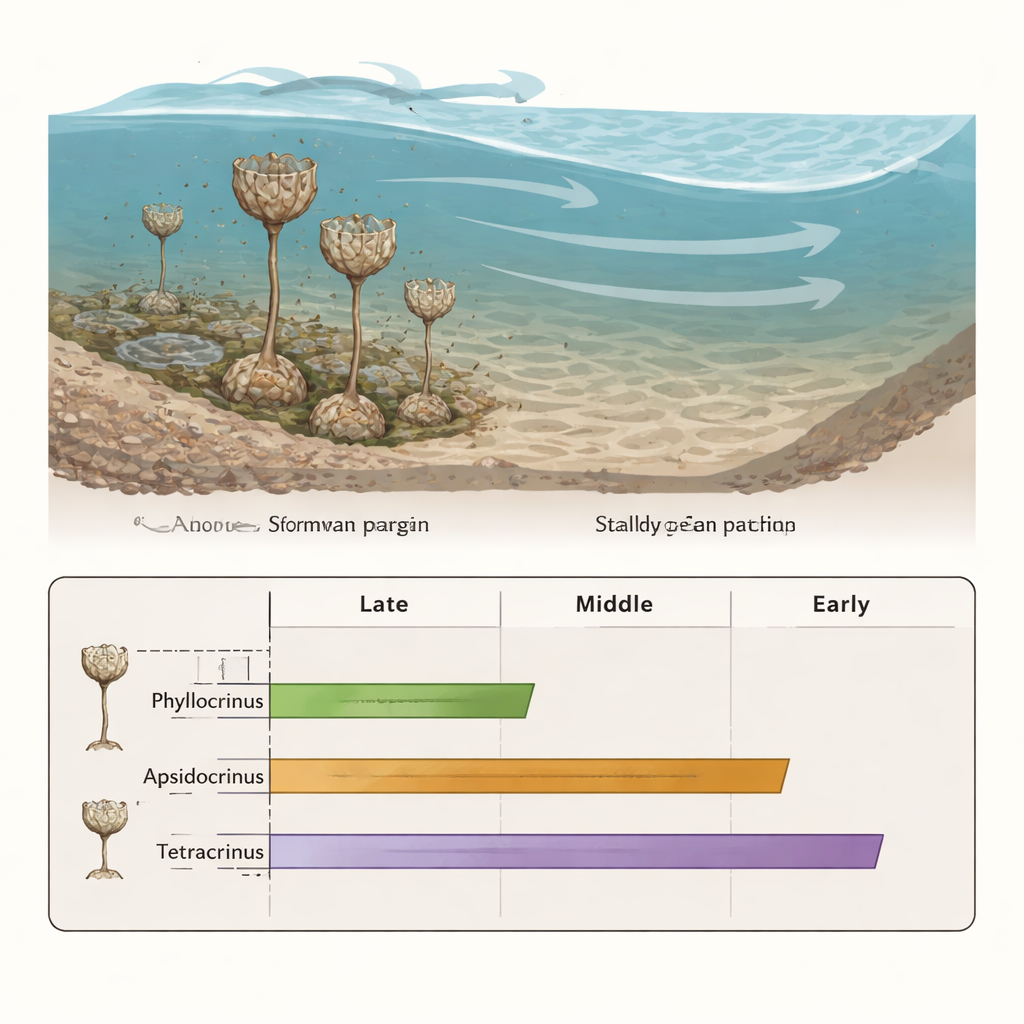
The team examined a rock unit called the Argiles de Saïda Formation, a package of greenish clays, thin sandstones and limestone layers deposited where waves and storms regularly disturbed a shallow sea floor. By washing and sieving clay samples, then scanning the residues under powerful microscopes, they recovered more than 900 tiny fossil pieces. These included column segments, arm plates and cup‑shaped bodies of several types of crinoids, along with brittle stars, sea urchins, belemnites and shells. Among this rich assemblage were the crucial cyrtocrinid remains: numerous cups of Phyllocrinus stellaris, a single but distinctive cup of the genus Apsidocrinus, and multiple skeletal parts of Tetracrinus moniliformis. Each carries subtle features—such as the shape of cavities and ridges—that tie them to species known from elsewhere.
Rewriting Timelines and Travel Routes
Because the ages of the Algerian rock layers are well constrained by accompanying ammonites, the new fossils also sharpen the calendar for when these crinoid lineages first appeared. The Apsidocrinus cup comes from Oxfordian‑age rocks and predates the genus’s earlier European record from slightly younger layers, pushing its origin back in time. Likewise, the presence of Tetracrinus moniliformis in Callovian strata extends that species’ known history earlier than its classic European occurrences. When these new data are combined with other Gondwanan finds—from Madagascar, New Zealand and even Late Cretaceous rocks in Peru—a more intricate picture emerges. Cyrtocrinids were not confined to northern Tethyan seas; they ranged widely along southern continental margins and may have dispersed via powerful equatorial currents that connected east and west across the ancient Tethys Ocean.
From Deep Seas to Stormy Shelves
Modern cyrtocrinids are rare and live exclusively in deep, quiet waters, hundreds to nearly two thousand metres below the surface. Many fossil occurrences also point to relatively deep settings packed with sponges and other filter feeders. Yet the Algerian cyrtocrinids were living in a much livelier neighbourhood: a wave‑swept shoreface where storms periodically stirred up sand and mud. This contrast suggests that these animals were more flexible than their modern relatives, able to colonize both deeper slopes and energetic, shallow shelves. Such ecological breadth would have aided their spread around Gondwana, allowing them to exploit a variety of sea‑floor conditions as currents carried their larvae between distant coasts.
Why These Tiny Fossils Matter
Together, the Algerian specimens and other southern finds reveal that our current view of cyrtocrinid evolution has been biased by an overreliance on European sites. The new data show earlier first appearances for key genera, longer survival times for some lineages and previously unrecognised pathways linking African, Madagascan, Pacific and South American margins. For non‑specialists, the message is clear: even the smallest fossil fragments, carefully collected and interpreted, can overturn long‑held ideas about where life evolved and how it moved across the globe. As more understudied Gondwanan rocks yield their secrets, we can expect further surprises about these graceful “sea lilies” and the dynamic Jurassic seas they inhabited.
Citation: Salamon, M.A., Benyoucef, M., Zaidi, M.A. et al. Gondwanan cyrtocrinids uncover hidden diversity and crinoid dispersal pathways. Sci Rep 16, 7267 (2026). https://doi.org/10.1038/s41598-026-36892-6
Keywords: cyrtocrinid crinoids, Jurassic Gondwana, marine dispersal, paleobiogeography, fossil sea lilies