Clear Sky Science · en
Minimizing energy consumption and providing improved thermal comfort for buildings by incorporating false ceiling and mechanical ventilation
Cooler Rooms With Lower Power Bills
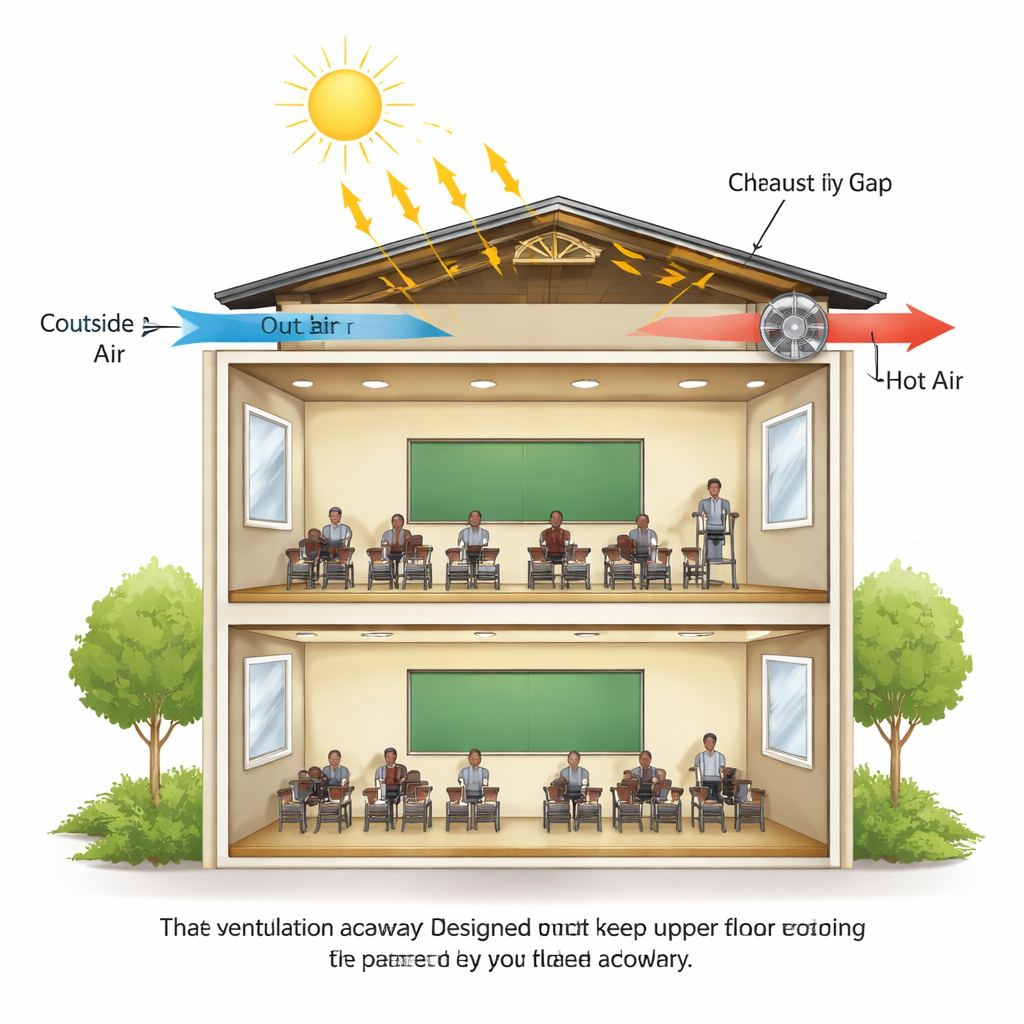
Anyone who has sat in a top-floor classroom or apartment on a hot day knows that heat rises—and can make life miserable. Air conditioners can help, but they also drive up electricity bills and climate-warming emissions. This study explores a relatively simple way to keep upper floors cooler while using less energy: adding a low-cost false ceiling under the roof and quietly venting away the trapped hot air above it.
Why Roofs Matter So Much
Roofs take the full brunt of the sun. In hot, humid places like southern Bangladesh, they soak up solar radiation for hours and steadily leak that heat into the rooms below. Air conditioners must then work harder to keep indoor spaces comfortable. Around the world, buildings already consume a large share of total energy, much of it for cooling. Any practical retrofit that cuts roof heat gain without expensive materials or complex technology could therefore deliver big savings and reduce greenhouse gas emissions.
A Simple Twist on a Familiar Ceiling
The researchers focused on a common feature in many buildings: the false ceiling, or secondary ceiling hung below the main roof. In their design, a thin plastic ceiling panel is installed 20 to 40 centimeters beneath the concrete roof, creating a narrow air gap. This air layer acts as a basic thermal shield, slowing the flow of heat into the room. The novel step is to actively remove the hot, stagnant air from this gap using small exhaust fans, which pull in cooler outside air and flush the built-up heat back outdoors. The team used detailed computer simulations of a two-story academic building in a hot coastal climate to test different gap heights and fan flow rates, then applied the best combinations to a real university building.
How Much Cooler and More Efficient?
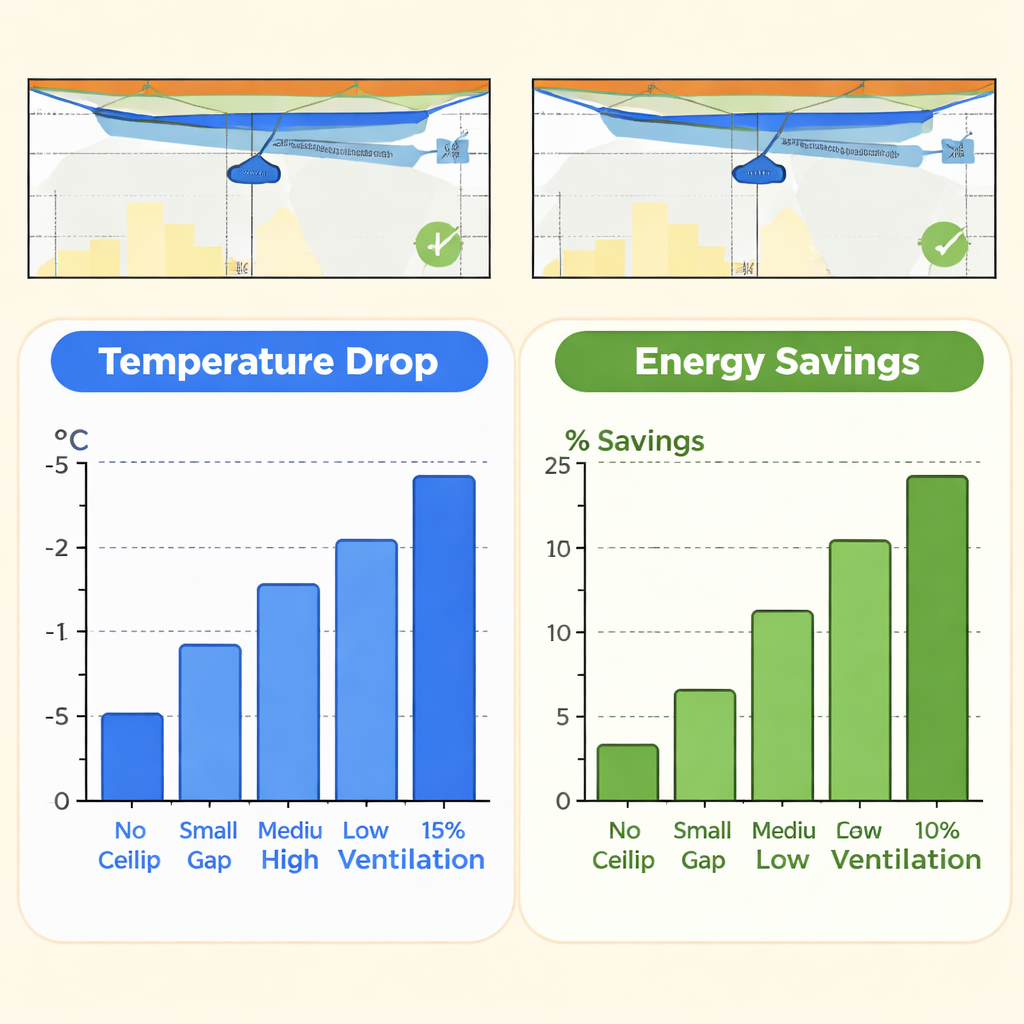
In the model building, adding only the false ceiling to the top floor already lowered indoor temperatures by up to about 1.4 degrees Celsius compared with having no ceiling at all, and cut annual cooling energy use by roughly 10 to 12 percent for modest gap sizes. Increasing the gap beyond about 40 centimeters brought diminishing returns and started to eat into usable room height. When mechanical ventilation was added to the gap, the benefits grew. Depending on fan strength, top-floor room temperatures dropped by as much as about 2.2 degrees, and total cooling energy use fell by around 15 to 19 percent relative to a bare-roof case.
Real-World Trial in a University Building
The researchers then tested the approach virtually on a five-story academic block at Khulna University of Engineering & Technology. They modeled a 30-centimeter false ceiling gap under the roof on the top floor and ran exhaust fans during working hours at several airflow rates. The false ceiling alone cut the top-floor’s annual cooling demand by about 9 percent. When the ventilation fans were added, energy savings rose to roughly 13 to 15 percent, while typical daytime temperatures on the top floor dropped by around 1.5 to 2 degrees Celsius. A basic cost analysis suggested that the combined system would pay for itself in roughly two and a half to four years through lower electricity bills, and would continue to save money over a 20-year building life.
What This Means for Everyday Buildings
For building owners, school administrators, and homeowners in hot regions, the message is straightforward: carefully designed false ceilings, paired with simple mechanical ventilation of the narrow roof gap, can make top floors noticeably more comfortable while trimming energy use by a significant margin. The modification relies on inexpensive, widely available materials and small fans rather than complex equipment. That makes it a promising retrofit for many existing buildings, especially in developing countries where cooling needs are rising fast. By turning a neglected slice of space above our heads into an active heat buffer, this study shows that modest changes in building design can deliver cooler rooms, lower bills, and a smaller environmental footprint.
Citation: Hossain, M.R., Shahriar, K., Alam, M.M. et al. Minimizing energy consumption and providing improved thermal comfort for buildings by incorporating false ceiling and mechanical ventilation. Sci Rep 16, 7209 (2026). https://doi.org/10.1038/s41598-026-36888-2
Keywords: building energy efficiency, false ceiling, mechanical ventilation, cooling load reduction, thermal comfort