Clear Sky Science · en
An everyday-task-focused, strategy-based educational program for informal dementia carers: a feasibility and pilot study
Why Everyday Tasks Matter in Dementia Care
Caring for a loved one with dementia is often described as a full-time job, yet many family carers receive little practical guidance on how to manage day-to-day life. This study explores a new educational program that gives carers concrete, easy-to-use strategies for helping with everyday tasks like talking, shopping, dressing, and cooking. For families trying to keep someone at home safely and with dignity, understanding whether such a program is workable and genuinely helpful is of real-world importance.
A Closer Look at Daily Life Challenges
Dementia gradually affects memory, thinking, communication, and movement, making routine activities harder over time. In Australia, most people with dementia still live in the community, relying heavily on unpaid family members for support. As abilities decline, carers often take on more responsibility for basic self-care and more complex tasks, such as managing meals, shopping, and appointments. This rising workload can be exhausting and emotionally draining. While many existing programs offer emotional support or advice on difficult behaviors, few focus specifically on hands-on strategies for making everyday tasks easier and more meaningful for both the person with dementia and the carer.
A Practical Program Built with Carers in Mind
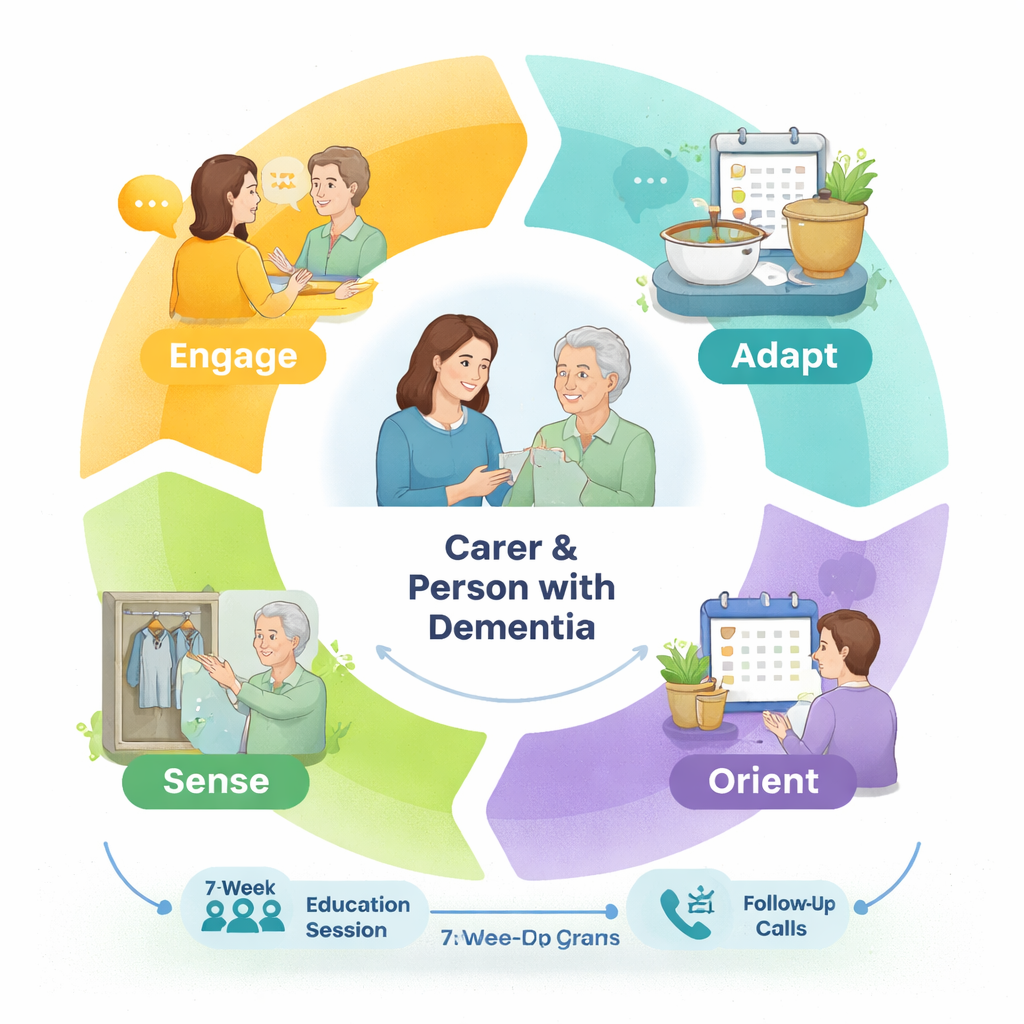
To fill this gap, the researchers designed a seven-week, everyday-task-focused educational program for informal carers. The program drew on the Montessori approach for dementia care, which emphasizes working with a person’s remaining abilities, interests, and preferences, rather than just their losses. Carers received a two-hour education session, a detailed booklet with more than 200 practical strategies, and four follow-up contacts by phone or home visit. The strategies were organized into four simple themes—engage, adapt, orient, and sense—and linked to common activities like dressing, toileting, cooking, and dealing with agitation or confusion. Carers were encouraged to apply the ideas to their own situations, solve real problems with guidance from occupational therapists, and record their experiences in a journal.
Was the Program Doable and Welcomed?
The study followed 16 carer–care-recipient pairs over seven weeks to see if this program would be feasible and acceptable. Although only a quarter of the carers approached agreed to take part—partly reflecting the challenges of research during the COVID-19 pandemic—those who enrolled stayed engaged. Attendance at the main education session was perfect, and almost all follow-up phone calls were completed. In feedback questionnaires, carers rated the program very highly. They found the content useful, the format convenient, and said they would recommend it to other families. This suggests that once carers gain access to such support, they are eager to use it and value having a knowledgeable professional to talk to.

What Changed for Carers and Their Loved Ones
Because this was a small pilot study, it was not expected to show dramatic statistical effects, and it did not reduce overall feelings of burden as measured on a standard questionnaire. However, there were promising signs of benefit. Carers reported growth in their sense of personal development: they felt less worn out, more able to save money, and more confident that they were learning and adapting. For people with dementia, carers noticed better attention during conversations and greater participation in shopping, activities that can be both practical and socially meaningful. At the same time, the progressive nature of dementia and ongoing stresses—such as limited respite services and the wider impact of the pandemic—likely blunted bigger changes in mood or quality of life scores.
What This Means for Families and the Future
For families living with dementia, this study suggests that a tailored, strategy-based education program centered on everyday tasks is both realistic to deliver and genuinely appreciated. While it did not erase the hard work or emotional strain of caregiving, it appeared to help carers feel more capable and helped some people with dementia stay engaged in conversations and shopping. The authors argue that with larger, longer studies and broader testing, this approach could become a practical tool offered in clinics and communities, possibly through “train-the-trainer” models that reach more families. In simple terms, thoughtful guidance on daily routines may not cure dementia, but it can make life at home more manageable, more meaningful, and a little less overwhelming for carers and their loved ones.
Citation: Amato, C., Burridge, G., Lesleighter, R. et al. An everyday-task-focused, strategy-based educational program for informal dementia carers: a feasibility and pilot study. Sci Rep 16, 5863 (2026). https://doi.org/10.1038/s41598-026-36887-3
Keywords: dementia caregiving, everyday tasks, carer education, quality of life, Montessori approach