Clear Sky Science · en
Short-term effect of PM2.5 exposure on pediatric neurological outpatient visits in Shijiazhuang China 2013–2021
Why Dirty Air Matters for Children’s Brains
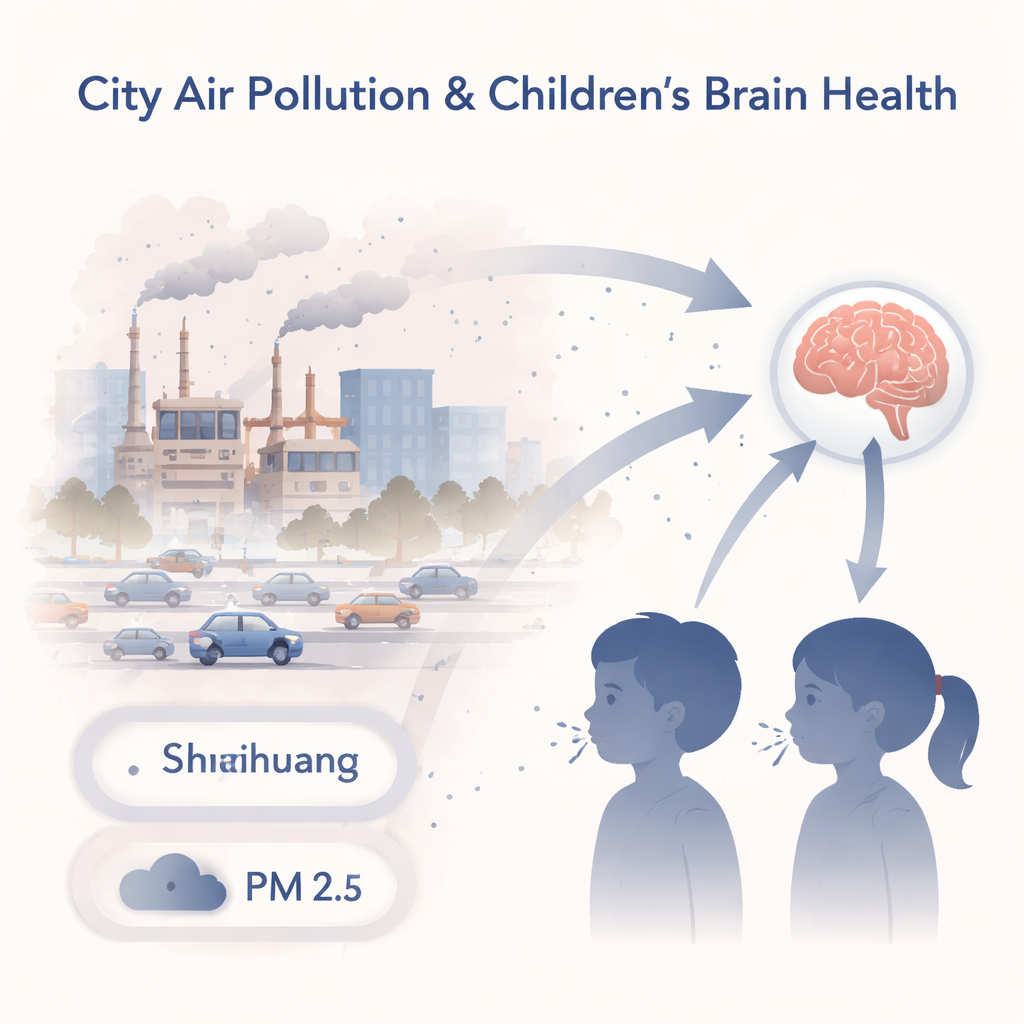
Parents usually worry about air pollution because of coughs and asthma. But tiny particles in city smog may also affect something far less visible: children’s brains. This study from Shijiazhuang, a heavily polluted city in northern China, looks at whether short bursts of fine particle pollution (PM2.5) are followed by more hospital visits for neurological problems in children. The findings suggest that dirty air does not just irritate lungs; it may also nudge vulnerable young brains into crisis, especially in the youngest children and in girls.
Fine Dust That Reaches the Brain
PM2.5 refers to microscopic particles so small they can slip deep into the lungs and pass into the bloodstream. Once there, they can stir up inflammation and chemical stress throughout the body. Scientists have been increasingly concerned that these particles might also affect the brain, either by weakening the brain’s protective barriers or by traveling along the nerves that connect the nose and brain. Earlier work linked PM2.5 to stroke, memory problems, and worsening epilepsy in adults. However, few large studies had examined how short-term spikes in this pollution affect children’s nervous systems, even though children’s brains are still developing and may be especially sensitive.
Tracking Clinic Visits Over Nine Years
The researchers analyzed all neurological outpatient visits for children up to 14 years old at the main children’s hospital in urban Shijiazhuang from 2013 to 2021—more than 150,000 visits in total. These visits covered a wide range of conditions, including brain infections such as meningitis, sudden problems like seizures and migraines, and long-term disorders such as cerebral palsy. They combined this hospital data with daily readings of PM2.5 and other pollutants from seven monitoring stations, as well as weather records like temperature and humidity. Using time-series statistical methods, they asked a simple question: on days following higher PM2.5 levels, did the hospital see more children with neurological problems than expected?
Spikes in Pollution, Spikes in Neurological Visits
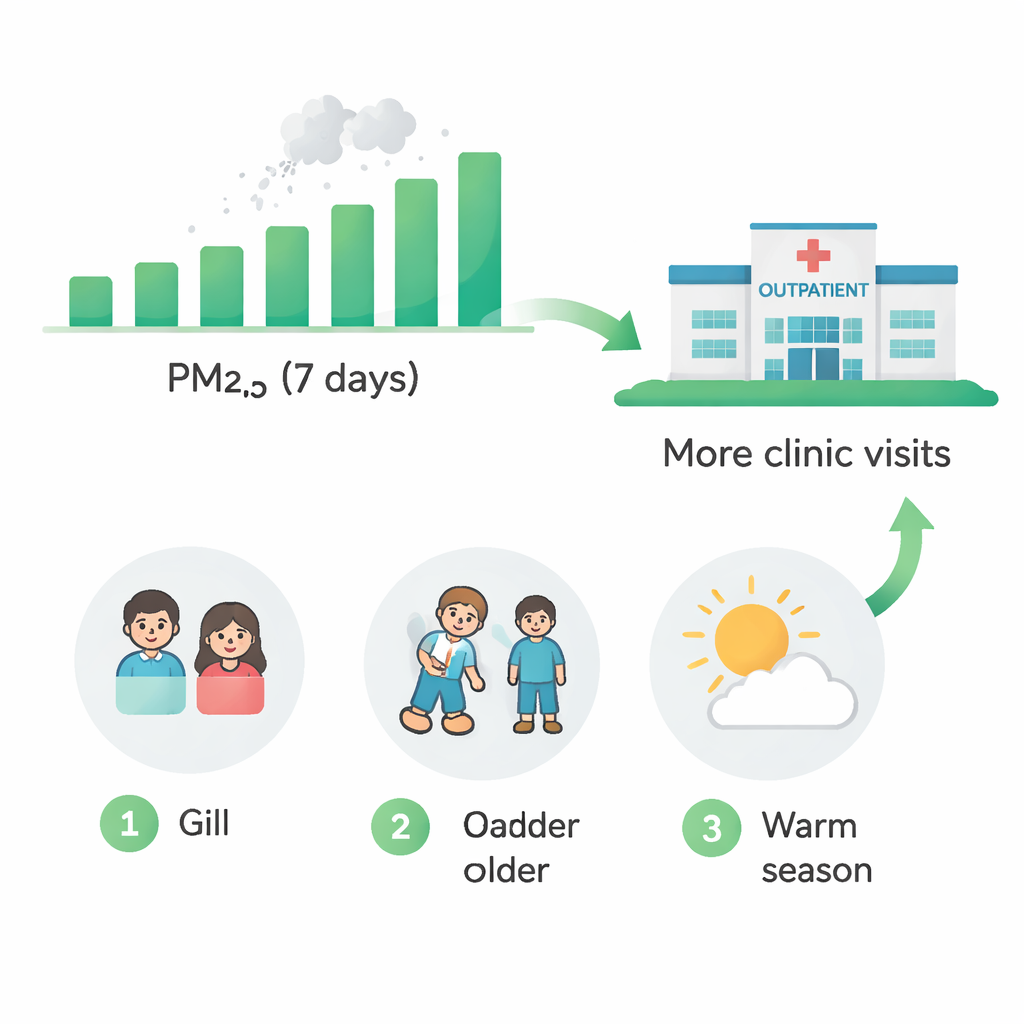
The answer was yes. When PM2.5 levels were higher over the course of a week, the number of children visiting the clinic for nervous system problems rose by about 2 percent. The effect was not immediate; it was strongest when pollution was averaged over the previous seven days, suggesting that the harm builds up over several days of bad air rather than coming from a single smoky afternoon. All three major groups of neurological conditions—brain infections, sudden noninfectious problems such as seizures and migraines, and chronic brain disorders—showed increases in visits after pollution spikes, with some of the largest jumps seen in visits for long-standing brain problems.
Young Children, Girls, and Warm Weather at Higher Risk
The pattern was not the same for every child. Girls showed a larger rise in visits than boys after weeks with higher PM2.5, hinting that differences in body size, hormone levels, or how particles settle in the lungs may make girls more vulnerable. Children younger than six were also more affected than older children, which fits with what is known about rapid early brain growth and heightened sensitivity to toxic exposures in the first years of life. Another surprise was the role of seasons. Although winter in northern China often has worse smog, the study found a stronger link between PM2.5 and neurological visits during the warm months. The authors suggest that heat may amplify the strain of pollution on the body, or that children spend more time outdoors when it is warm, increasing exposure.
What This Means for Families and Cities
In everyday terms, the study implies that a run of hazy, polluted days can slightly increase the chances that a child with a fragile nervous system will need medical care, particularly if she is very young or a girl, and especially in the warmer season. The research cannot prove that PM2.5 directly causes each child’s symptoms, but the consistent patterns over nine years, even after accounting for other pollutants and weather, strengthen the case that fine particles are a real threat to children’s brain health. For families, this points to practical steps—checking air quality forecasts, limiting outdoor play and using air filters on bad-air days. For city leaders, it adds another reason to cut emissions from traffic and industry: cleaning the air may help protect not only children’s lungs, but also their developing minds.
Citation: Liang, Z., Gao, A., Kang, H. et al. Short-term effect of PM2.5 exposure on pediatric neurological outpatient visits in Shijiazhuang China 2013–2021. Sci Rep 16, 6469 (2026). https://doi.org/10.1038/s41598-026-36877-5
Keywords: air pollution, children’s brain health, PM2.5, neurological disorders, public health