Clear Sky Science · en
Integrative molecular simulations reveal NeuroAid II mechanisms in ischemic stroke through network pharmacology, molecular dynamics, and pharmacophore modeling
Why a Herbal Stroke Remedy Matters
Stroke is one of the leading causes of death and disability, yet today’s treatments mainly work in the first few hours after the attack. A herbal formula called NeuroAid II, developed from traditional Chinese medicine, has shown promise in helping patients recover even later on, but doctors still do not fully understand how it protects the brain. This study uses powerful computer simulations to look under the hood of NeuroAid II and explore, at the molecular level, how its plant-based ingredients might shield brain cells from damage after an ischemic stroke.
A Complex Herbal Mix Aimed at a Complex Disease
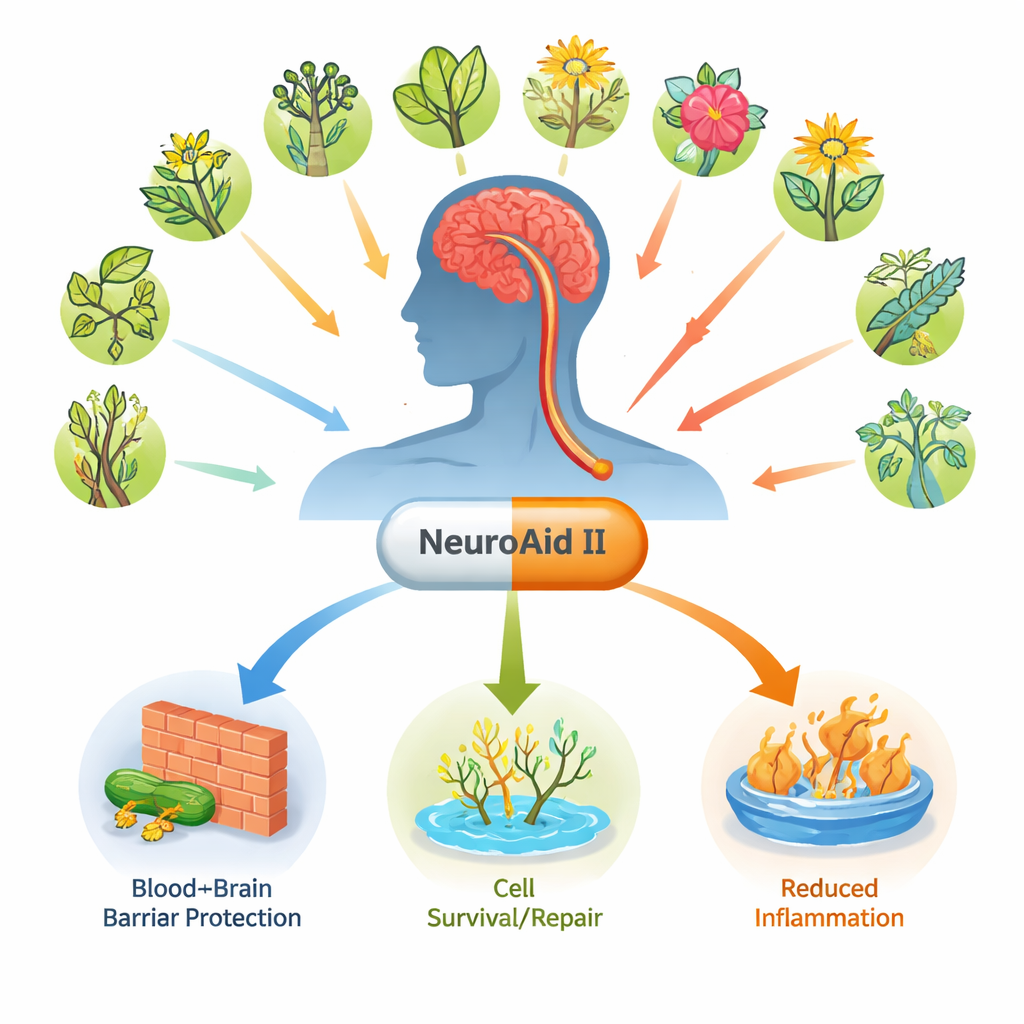
Ischemic stroke happens when a blood vessel in the brain is blocked, starving brain tissue of oxygen and triggering a chain reaction of inflammation, oxidative stress, and cell death. NeuroAid II is a pill made from nine medicinal plants long used in Asia for circulation and brain health. Rather than acting like a single “magic bullet,” it contains hundreds of natural chemicals that may act together on many biological pathways at once. The researchers first compiled more than a thousand plant compounds and filtered them for drug-like properties such as oral absorption and stability in the body, ending up with 143 promising candidates. They then used databases of human proteins to identify which of these compounds might interact with proteins known to be involved in stroke.
Mapping the Web of Targets Inside the Brain
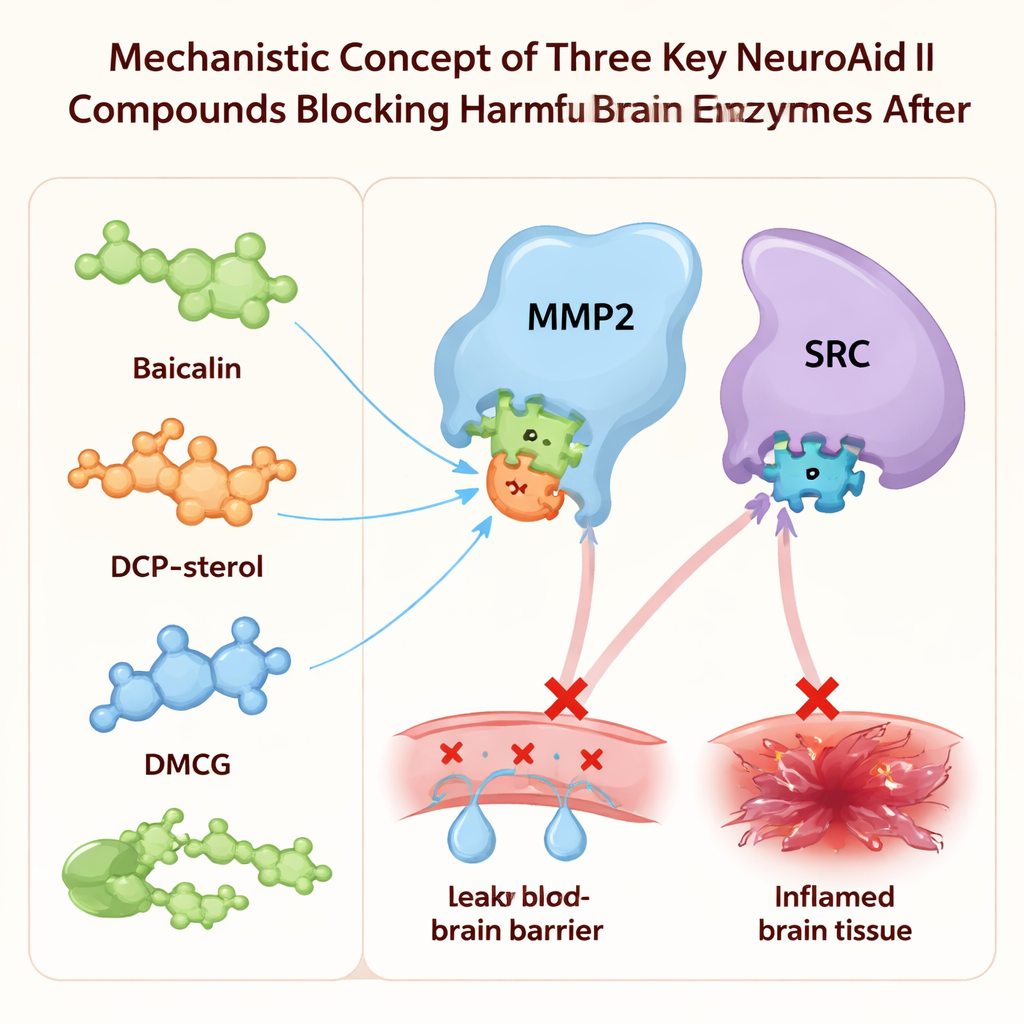
Using a technique called network pharmacology, the team built an interaction map that linked NeuroAid II’s compounds to hundreds of human proteins and then overlapped this with proteins tied to ischemic stroke. This revealed 189 shared targets, but some stood out as central “hubs” in the network—proteins that connect to many important pathways in brain injury and repair. Two of these, called MMP2 and SRC, are of particular interest. MMP2 helps break down the blood–brain barrier, making it leaky after stroke, while SRC is a switch that can ramp up inflammation and cell death. The analysis suggested that several NeuroAid II components repeatedly converged on these two proteins, hinting that they might be key points where the herbal medicine exerts its protective effects.
Three Star Molecules and How They Lock Onto Their Targets
The researchers then zoomed in on nine plant compounds most likely to hit many of the core stroke-related proteins and used molecular docking—essentially 3D digital “trial fittings”—to see how tightly they might bind to MMP2, SRC, and related targets. Three molecules emerged as standouts: baicalin (a flavonoid), DCP-sterol (a sterol-like molecule), and DMCG (a sugar-linked chroman). All three docked into the active regions of MMP2 and SRC more strongly than standard reference drugs such as aspirin or known laboratory inhibitors. In follow-up molecular dynamics simulations, which model how molecules move and flex over time in a watery environment like the body, these three compounds formed stable complexes with the proteins, staying snug in place and maintaining key hydrogen bonds and hydrophobic contacts for the full 100‑nanosecond simulations.
Blocking Damage and Supporting Repair Pathways
From these simulations, the team calculated binding energies—a way of quantifying how energetically favorable it is for a compound to stay attached to a protein. DCP-sterol, in particular, showed very strong binding to MMP2 and SRC, even exceeding that of established inhibitors in the models. Baicalin and DMCG also showed favorable binding patterns, often sharing the same anchoring amino acids seen in known blockers. When these proteins are dampened, earlier experiments suggest that the blood–brain barrier becomes less leaky, brain swelling is reduced, and inflammatory cascades are toned down. The paper links its computational results with existing laboratory and animal work showing that baicalin and the NeuroAid family can promote nerve cell survival, new nerve growth, and better blood vessel repair through pathways such as PI3K/AKT, while also dialing down pro-inflammatory signals like NF‑κB.
What This Means for Patients
For non-specialists, the takeaway is that this study helps explain, at the atomic scale, how a multi-herb stroke remedy could genuinely influence brain recovery rather than acting as a placebo. By showing that specific NeuroAid II ingredients can firmly latch onto two key enzymes that drive blood–brain barrier breakdown and inflammation, the work offers a plausible mechanism for the clinical benefits seen in trials. These are still computer-based predictions, so they need to be confirmed in cells, animals, and further patient studies. But the findings highlight baicalin, DCP-sterol, and DMCG as promising lead molecules that might one day be refined into targeted stroke drugs—or help optimize NeuroAid II itself—offering new options for protecting the brain when time-critical emergency treatments are no longer possible.
Citation: Dermawan, D., Simatupang, S.T., Nadia, N. et al. Integrative molecular simulations reveal NeuroAid II mechanisms in ischemic stroke through network pharmacology, molecular dynamics, and pharmacophore modeling. Sci Rep 16, 6161 (2026). https://doi.org/10.1038/s41598-026-36872-w
Keywords: ischemic stroke, NeuroAid II, herbal neuroprotection, molecular docking, blood–brain barrier