Clear Sky Science · en
Toxicological impacts of biogenic zinc oxide nanoparticles on blue Parrotfish using multibiomarker assessment
Why tiny particles in the water should concern us
Nanoparticles—materials so small that thousands could fit across a human hair—are now used in sunscreens, paints, electronics, and medicines. But once they wash down drains or out of factories, they do not simply disappear. This study looks at what happens when one common type, zinc oxide nanoparticles made from seaweed extract, enters the sea and interacts with blue parrotfish, colorful reef grazers that help keep coral reefs healthy. The findings show how something designed to be “green” and useful can still quietly harm marine life if it reaches the ocean in high enough amounts.
Tiny tech meets reef fish
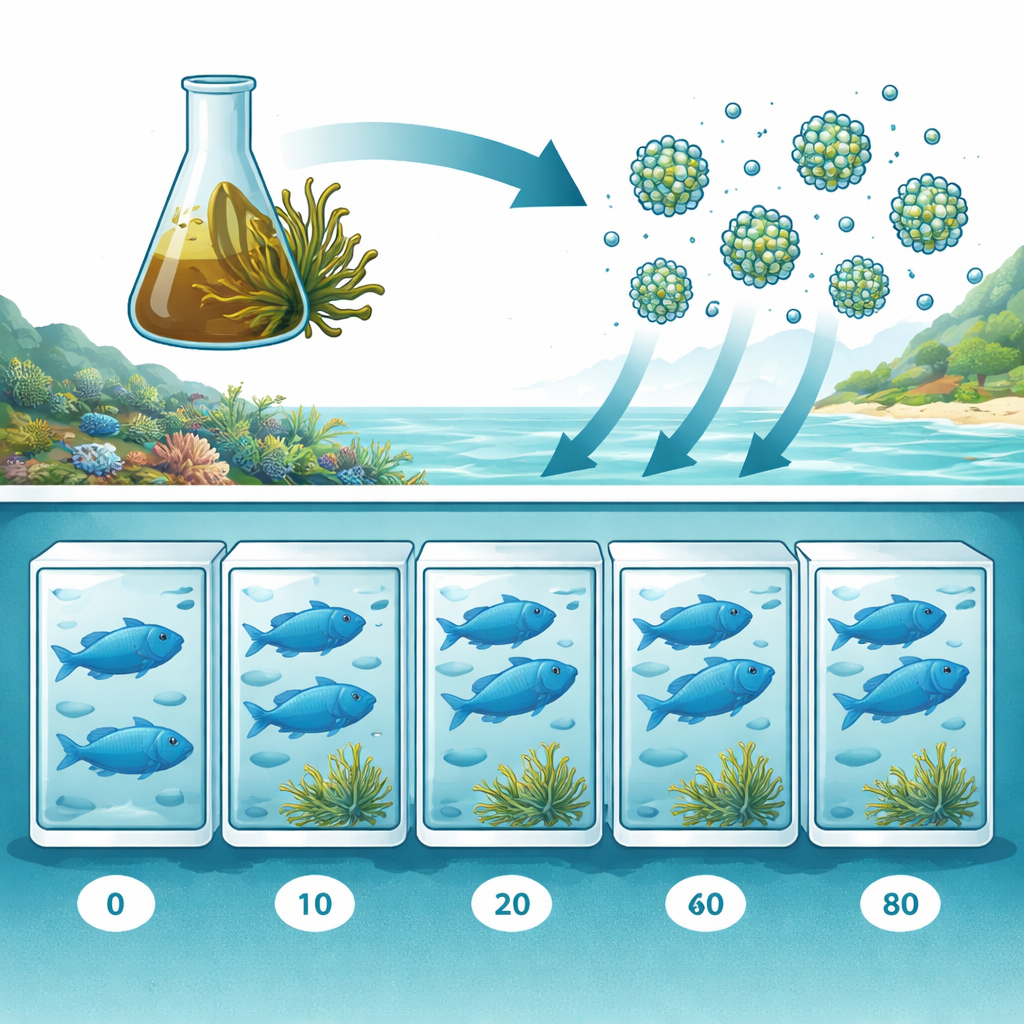
Researchers first produced zinc oxide nanoparticles using an eco-friendly method: they boiled brown seaweed (Padina pavonica) collected from Egypt’s Red Sea coast to make an extract, then used it to turn a zinc salt solution into solid nanoparticles. Tests confirmed that the particles were very small, highly pure crystals with reactive surfaces, the same features that make them attractive for industry and as antibacterial agents. To see how these particles behave in living creatures, the team exposed juvenile blue parrotfish (Scarus coeruleus) to different nanoparticle concentrations in tanks for 15 days, comparing them with fish kept in clean water.
From helpful mineral to deadly dose
Zinc is an essential nutrient, but in nanoparticle form it can dissolve quickly and flood the water with zinc ions. In this experiment, as nanoparticle levels rose from zero to 80 milligrams per liter, dissolved zinc in the water also climbed and fish deaths increased sharply. No fish died in the control tanks, but two-thirds of the fish died in all middle doses from 10 to 60 milligrams per liter, and every single fish died at the highest dose. Even surviving fish stopped gaining weight or lost weight, suggesting that the particles were stressing their bodies, reducing appetite, and interfering with normal metabolism long before they died.
Stress, damaged livers, and scrambled salts
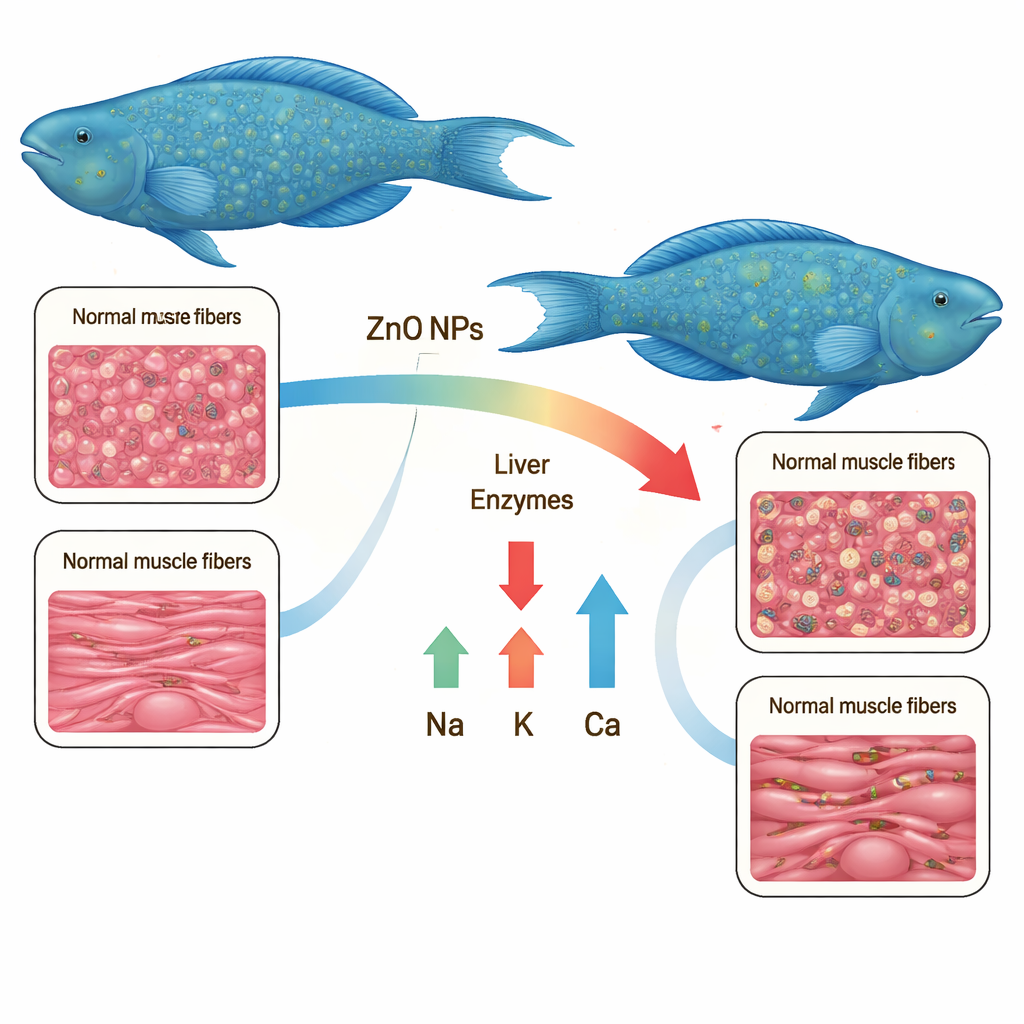
To understand what was happening inside the fish, the scientists measured markers of oxidative stress—chemical “firestorms” inside cells—and key liver enzymes in muscle tissue. As exposure increased, a major antioxidant molecule called glutathione dropped to a fraction of its normal level, showing that cells were burning through their defenses. Enzymes that signal healthy liver activity also fell, pointing to organ damage rather than good health. At the same time, basic salts in the muscles—sodium, potassium, and calcium—rose well above normal levels. Because these minerals control nerve signals, muscle contraction, and water balance, their buildup suggests that nanoparticle exposure was punching holes in the normal control systems that keep fish cells stable.
Injured tissues under the microscope
Microscopic examination of liver and muscle tissues gave a stark visual of this silent damage. In healthy fish, liver cells looked orderly, and muscle fibers were tightly packed and smooth. After exposure to zinc oxide nanoparticles, livers showed swollen, degenerated cells, clogged blood vessels, and areas of dead tissue. Muscles developed gaps between fibers, fluid-filled spaces, and signs of inflammation. These injuries became more severe as nanoparticle levels increased, even in some groups where many fish were still alive. At certain doses, the same particles also reduced harmful bacteria such as Vibrio and some forms of Streptococcus in the tank water, underscoring their double-edged nature: antimicrobial in the water, but toxic to the fish themselves.
What this means for oceans and people
For a non-specialist, the message is straightforward: even when nanoparticles are made using “green” methods from natural seaweed, they can still be dangerous to marine life if enough of them enter the water. In blue parrotfish, which help coral reefs thrive by grazing algae, zinc oxide nanoparticles disturbed basic body chemistry, damaged organs and muscles, and caused high death rates at concentrations that might occur near polluted discharges. The study suggests that we cannot assume new nanomaterials are harmless just because they are useful or made sustainably. To protect coastal ecosystems—and the fisheries and tourism they support—society will need clear limits on nanoparticle releases and more research on how these ultra-small materials behave in real-world waters.
Citation: Alprol, A.E., Hamad, T.M., Sharaf, H.E.R. et al. Toxicological impacts of biogenic zinc oxide nanoparticles on blue Parrotfish using multibiomarker assessment. Sci Rep 16, 6546 (2026). https://doi.org/10.1038/s41598-026-36870-y
Keywords: nanoparticle pollution, zinc oxide nanoparticles, blue parrotfish, aquatic toxicology, coral reef health