Clear Sky Science · en
Skin lesions associated with chronic exposure to arsenic in drinking water in rural Western Iran
Why this matters for everyday life
In many rural areas, people rely on wells and underground water they assume is safe. This study from western Iran shows how a naturally occurring poison—arsenic—can quietly contaminate drinking water and leave its mark on the skin years later. The research helps explain why unusual dark spots and thickened patches on the hands and feet are more than a cosmetic problem: they can be early warning signs of long-term poisoning and possible future cancers.
Hidden danger in the village well
Arsenic is a metal-like element found in rocks and soil around the world. In some regions, including parts of Iran, it seeps from deep layers of volcanic and mineral-rich rock into groundwater. People cannot see, taste, or smell arsenic in water, and boiling does not remove it. Over many years, however, regular drinking of arsenic-contaminated water can harm blood vessels, nerves, and organs, and it is firmly linked to several cancers. Because skin is the body’s most visible organ, long-term exposure often leaves telltale changes on the surface long before internal disease is diagnosed. 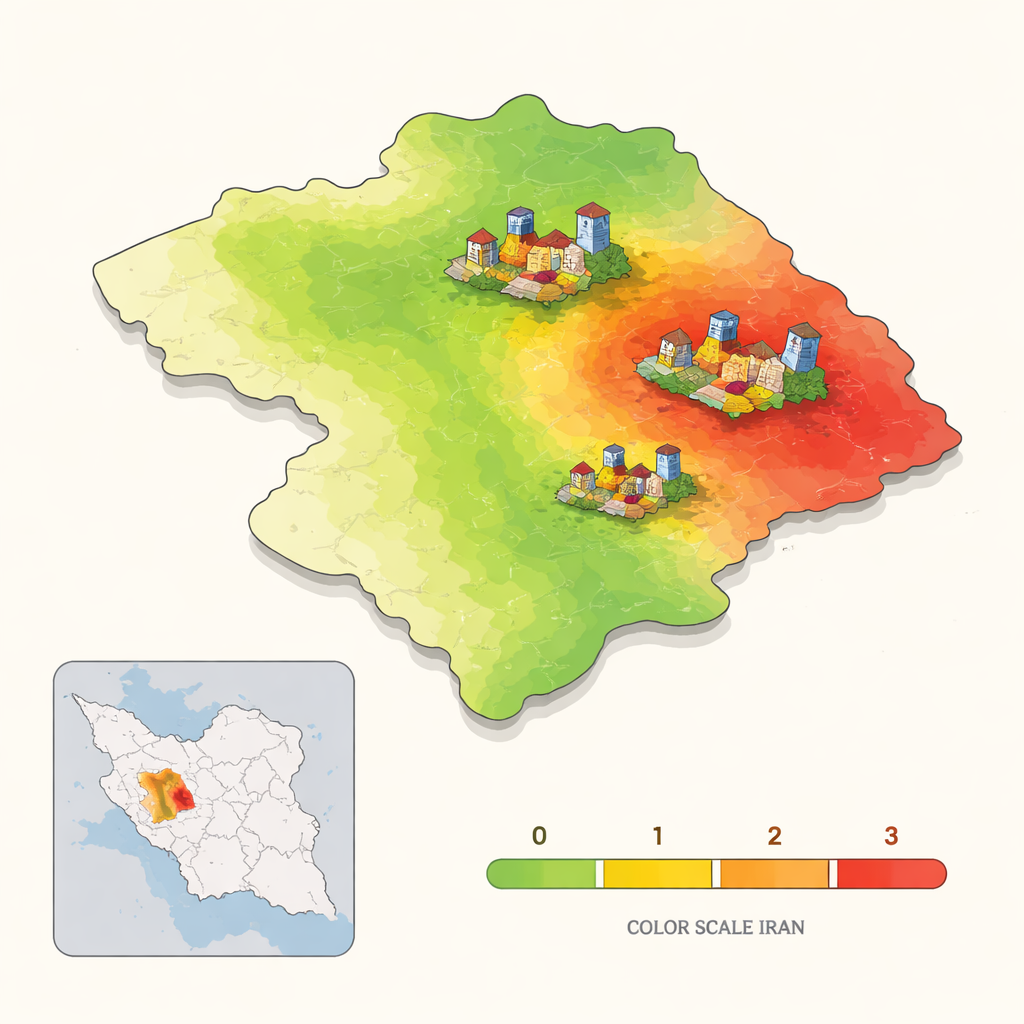
Comparing high-risk and low-risk villages
The researchers focused on five villages in Kabudarahang County, Hamadan Province. Three villages had arsenic levels in drinking water far above the World Health Organization’s safety guideline of 10 micrograms per liter, often reaching 50–100 or even more than 100 micrograms per liter. Two nearby villages with very low arsenic levels acted as a comparison group. From these communities, 412 non-smoking residents aged 6 to 83 years were randomly selected and examined by doctors and a dermatologist who did not know which village each person came from. Along with questions about age, occupation, blood pressure, and health history, the team carefully inspected the skin for two key problems: patchy changes in color (hyperpigmentation or “rain-drop” light spots) and rough, thickened areas on the palms and soles known as keratosis.
What the doctors saw on people’s skin
Skin problems were far more common in residents of the high-arsenic villages than in those from the low-arsenic villages. After taking into account age, sex, job type, and how long people had lived in the area, the odds of having keratosis were about ten times higher in the exposed group. The odds of having arsenic-type dark or mixed light-and-dark spots were nearly four times higher. Other conditions such as acne, eczema, psoriasis, and infections also appeared more often among those drinking contaminated water. Older age increased the chance of having these skin changes by a few percent each year, suggesting that the damage accumulates slowly over time. Some puzzling links with blood pressure appeared in the data, but the authors believe these are more likely due to statistical quirks than to real protective effects.
How this fits into the global picture
The pattern seen in these Iranian villages closely matches what has been reported in other arsenic “hot spots” in Bangladesh, India, China, and elsewhere. In all of these regions, long-term use of arsenic-laced groundwater leads to characteristic changes on the skin, especially on the hands and feet, and can later progress to cancers of the skin, bladder, liver, and kidneys. The study also found that women appeared to have more keratosis than men, echoing hints from earlier work that sex, hormones, or daily routines that involve more water contact might alter vulnerability. Because this research looked at one moment in time and used village-level water measurements instead of tests in individual people, it cannot prove cause and effect on its own, but it strongly reinforces the existing body of evidence.
What needs to happen next
The authors conclude that high arsenic in drinking water is strongly linked to a striking rise in skin lesions in rural Hamadan, signaling a serious public health issue rather than isolated cases. They argue that regular monitoring of well water, mapping of contaminated zones, and providing safe alternative water sources are urgently needed. Local health centers should also be trained to look for early arsenic-related skin signs so that affected families can be identified and protected sooner. For the general public, this work carries a simple message: clear-looking well water is not always safe, and unusual spots or thickened patches on the skin—especially in communities known to have arsenic in groundwater—deserve careful medical attention. 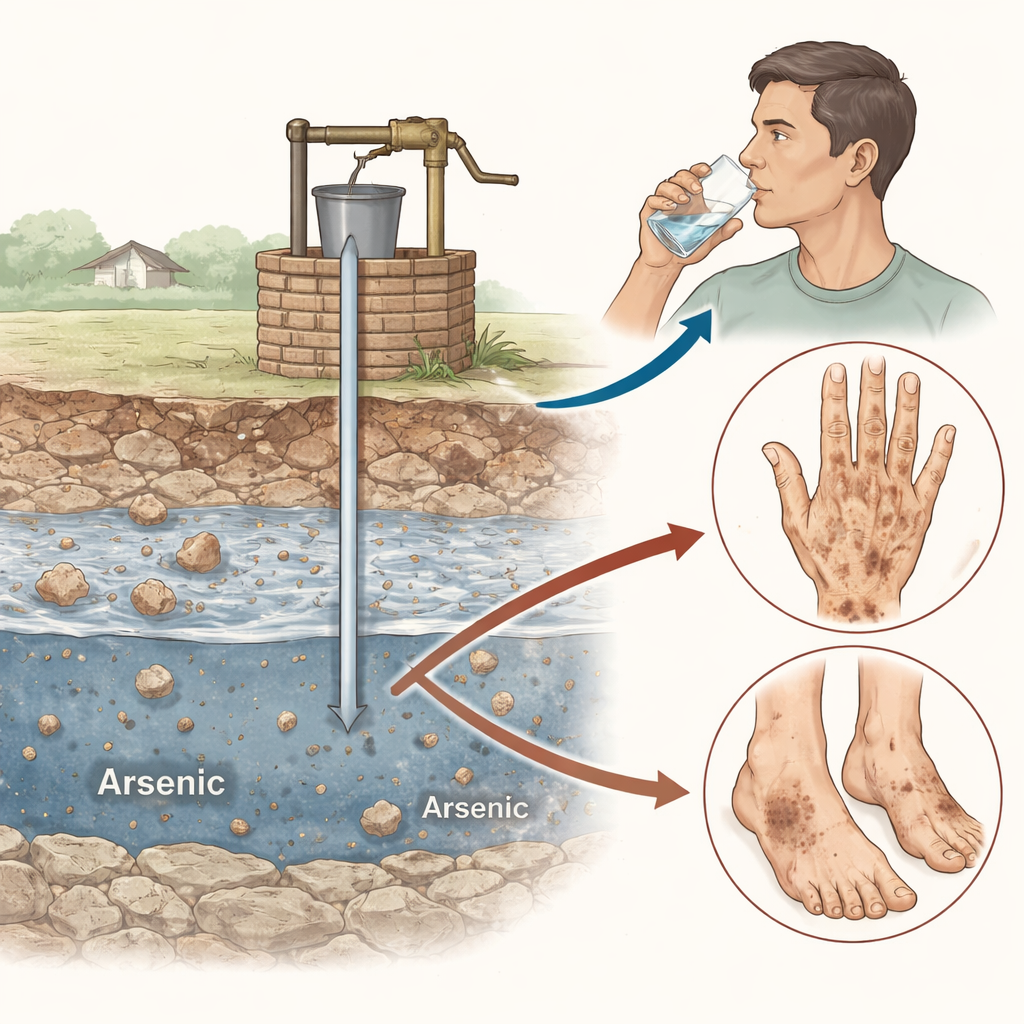
Citation: Rahmani, A., Khamutian, S., Samiee, F. et al. Skin lesions associated with chronic exposure to arsenic in drinking water in rural Western Iran. Sci Rep 16, 6389 (2026). https://doi.org/10.1038/s41598-026-36869-5
Keywords: arsenic in drinking water, skin lesions, rural Iran, groundwater contamination, public health