Clear Sky Science · en
Effects of instrument assisted and functional soft tissue mobilization on hamstring flexibility and skinfold thickness in sedentary adults
Why sitting all day can tighten the back of your thighs
Many people who spend hours at a desk notice that the backs of their thighs feel tight, making it harder to bend forward, exercise comfortably, or avoid nagging back pain. This study looked at simple, hands‑on treatments that might help these “hamstring” muscles become more flexible and explored whether certain massage‑like techniques could also thin the soft tissue just under the skin in this area. The findings matter for anyone with a mostly seated lifestyle who wants to move more easily and protect their joints over time.
Three different ways to ease tight muscles
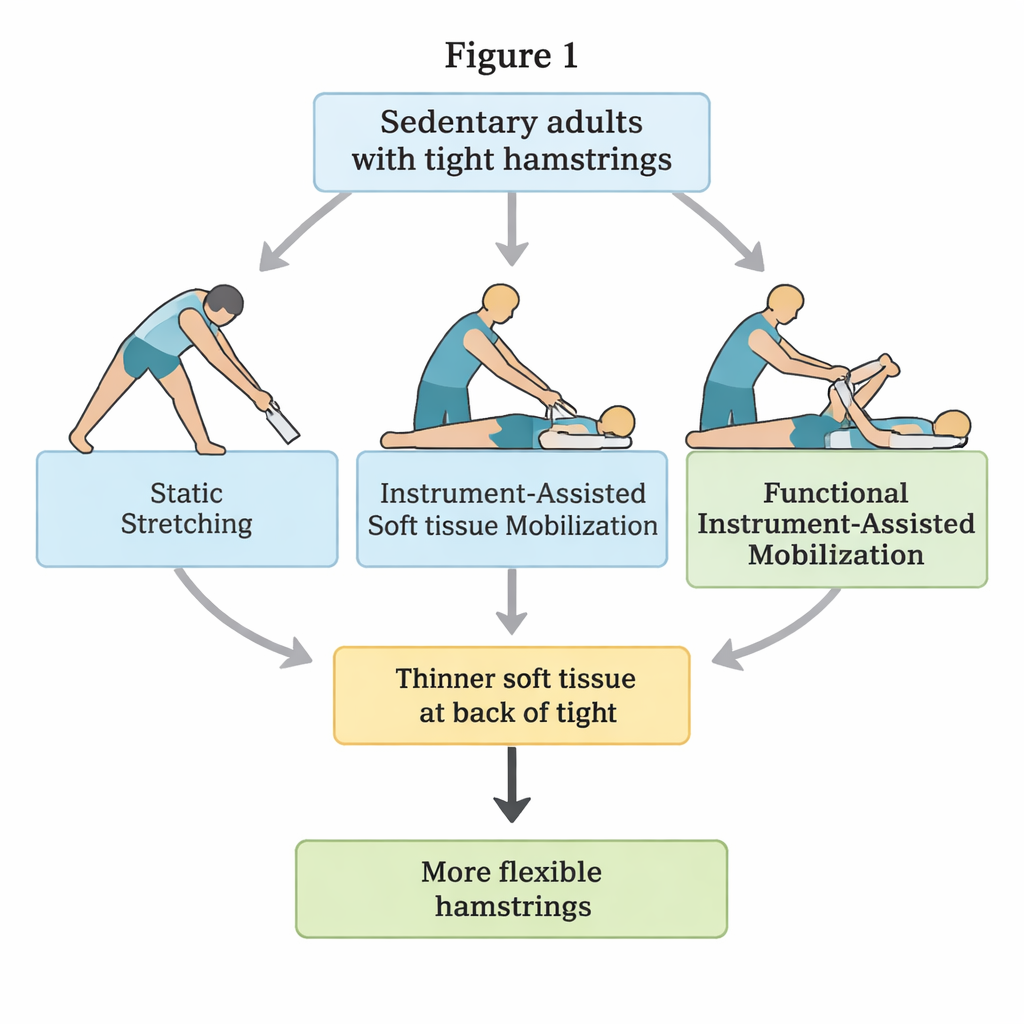
Researchers in Cyprus recruited 51 young adults who were mostly sedentary and had measurably tight hamstrings. Everyone sat a lot during the day and did not have injuries or nerve problems, so their stiffness was thought to come mainly from shortened, less stretchy tissue. Participants were randomly assigned to one of three groups: classic static stretching, a tool‑based massage method called instrument‑assisted soft tissue mobilization (IASTM), or a “functional” version of IASTM that adds joint movement while the tool is applied. All three groups received supervised treatment three times a week for four weeks, in short sessions lasting about 6–7 minutes.
How flexibility and soft tissue thickness were measured
To track changes in flexibility, the team used a standardized test. Volunteers lay on their backs with one hip bent to a right angle, then tried to straighten the knee as far as they could; a smartphone app measured the angle at the knee, giving an objective readout of how tight the hamstring was. The researchers also measured the thickness of the soft tissue at the back of the thigh—mainly skin and the fat layer just beneath it—using a simple pinching device called a skinfold caliper. These measurements were taken before the program began, right after the four‑week treatment, and again two and four weeks later to see whether any benefits lasted.
Stretching helps, but tools add something extra
All three groups improved their hamstring flexibility over the course of the study. In other words, whether people stretched, received IASTM, or received functional IASTM, they ended up able to straighten their knees more in the test position. There were no meaningful differences among the groups in this basic measure of tightness: for flexibility alone, simple stretching worked just as well as the more specialized methods. However, when the researchers looked at skinfold thickness—the amount of soft tissue under the skin at the back of the thigh—a clearer pattern emerged. Both tool‑based treatments led to greater thinning of this tissue than stretching alone, and the functional IASTM approach produced the largest and most lasting reduction.
What is changing under the skin
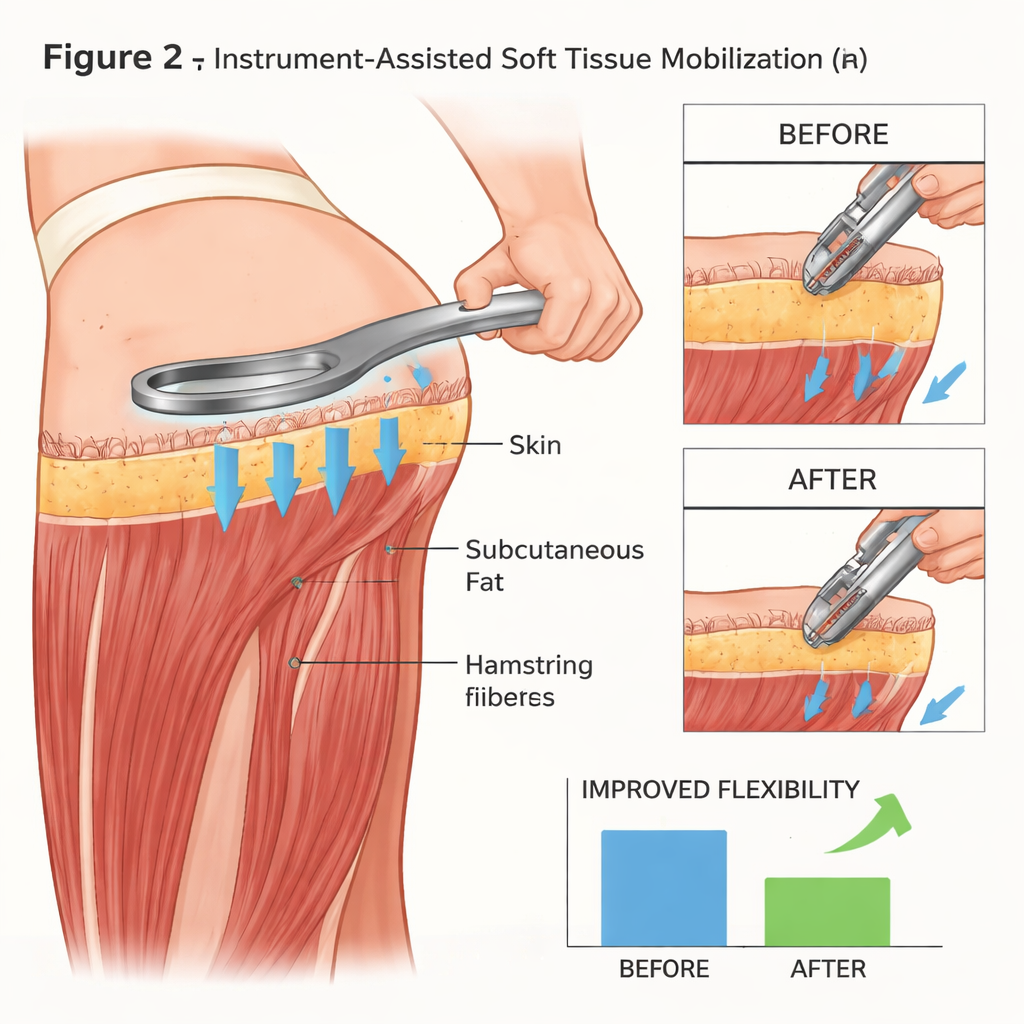
The drop in skinfold thickness in the tool groups was small in absolute terms—about 2 millimeters—but it happened over just four weeks of brief sessions and was consistently greater than in the stretching‑only group. Earlier research has suggested that firm, repeated soft‑tissue work can alter how connective tissue and fat are organized, improve blood flow and fluid movement, and make tissues glide more easily. Although this study did not directly measure fat cells or chemical changes, the authors suggest that regular, targeted tissue work with tools may improve the quality and organization of the soft tissues in a way that goes beyond the immediate “loosened up” feeling after a massage.
What this means for people who sit a lot
For everyday people with tight hamstrings from too much sitting, the study sends a practical message. Regular stretching is worthwhile and, on its own, can restore much of the lost flexibility. But when the goal also includes improving the health of the soft tissues under the skin—potentially easing stiffness, improving comfort, and lowering the risk of future aches—adding short sessions of tool‑based soft tissue work, especially the functional style that combines movement with pressure, may offer extra benefits. The authors conclude that a combined approach of stretching and soft tissue mobilization could be an efficient, realistic way for sedentary adults to care for their muscles and move more freely in everyday life.
Citation: Miçooğulları, M., Özgökalp, İ. & Angın, S. Effects of instrument assisted and functional soft tissue mobilization on hamstring flexibility and skinfold thickness in sedentary adults. Sci Rep 16, 5990 (2026). https://doi.org/10.1038/s41598-026-36856-w
Keywords: hamstring tightness, sedentary lifestyle, stretching, soft tissue mobilization, skinfold thickness