Clear Sky Science · en
Plasma fatty acid profiles and coronary artery disease burden assessed by coronary CT angiography: an observational study
Why the fats in your blood matter to your heart
Heart disease remains the world’s leading killer, and many people suffer heart attacks even when they lack the usual red flags like high blood pressure or smoking. This study asks a deceptively simple question with big implications for everyday eating: do the types of fats circulating in our blood relate to how much hidden plaque is building up in the arteries that feed the heart?
Looking inside arteries, not just at risk factors
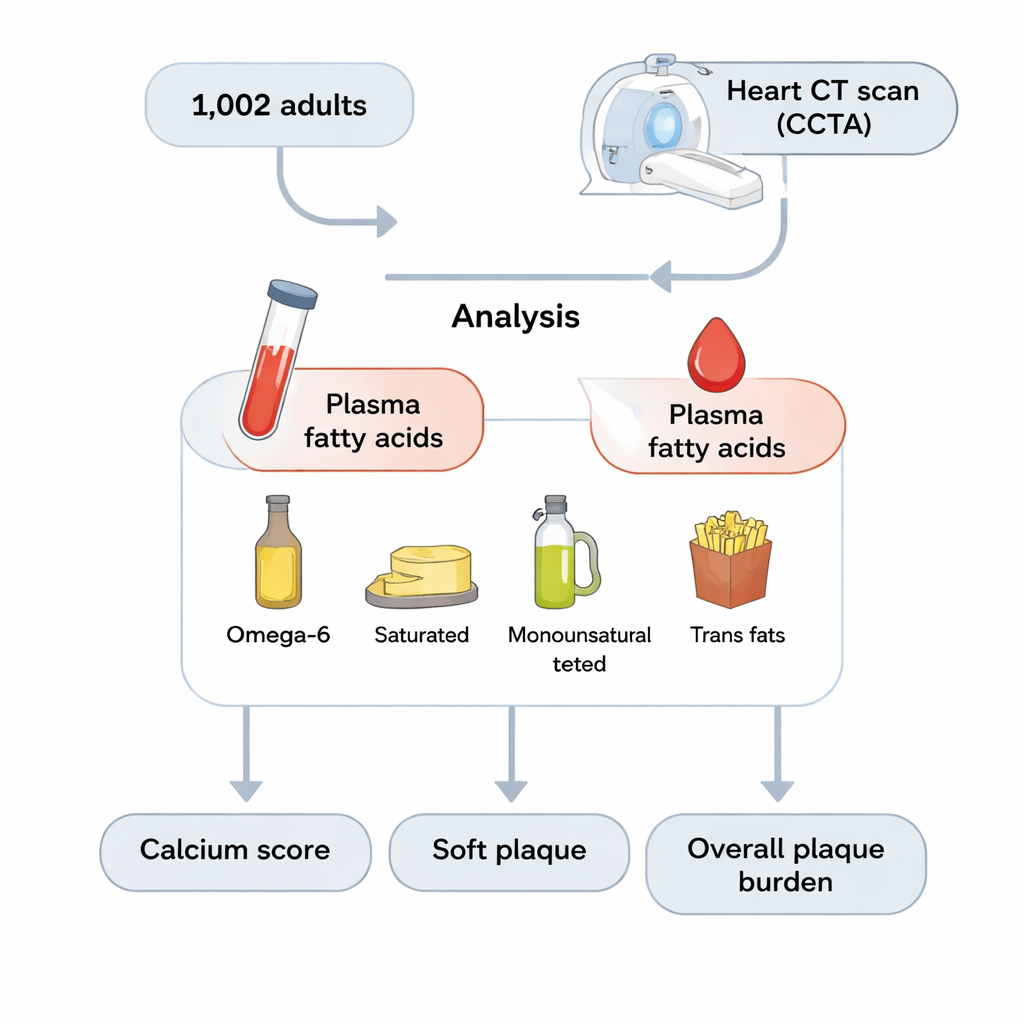
Instead of waiting for heart attacks to happen, the researchers studied 1,002 adults who were already getting a specialized heart scan called coronary CT angiography. This scan creates detailed 3D images of the heart’s arteries and can show both hard, calcified plaque and softer, earlier-stage deposits inside the vessel walls. At the same visit, participants gave blood samples so scientists could measure different types of fatty acids in the liquid part of the blood, or plasma. By pairing blood chemistry with high-resolution pictures of the arteries, the team could see how blood fats lined up with actual plaque burden, not just cholesterol readings on a lab report.
Four families of fats under the microscope
The team focused on four major groups of fats in the blood: omega-6 fats, saturated fats, monounsaturated fats, and trans fats. Omega-6 fats—common in many vegetable oils, nuts, and seeds—have long been debated, with some arguing they may be harmful and others suggesting they protect the heart. Saturated fats are found in foods like butter and fatty meats, while monounsaturated fats occur in olive oil and many plant and animal foods. Trans fats, once widespread in processed foods, have been largely removed from many products. The scientists expressed each fat group as a percentage of total plasma fatty acids and then compared these percentages with several measures of artery disease from the scans, including calcium score, soft plaque, and an overall severity score.
What the scans revealed about "good" and "bad" fats
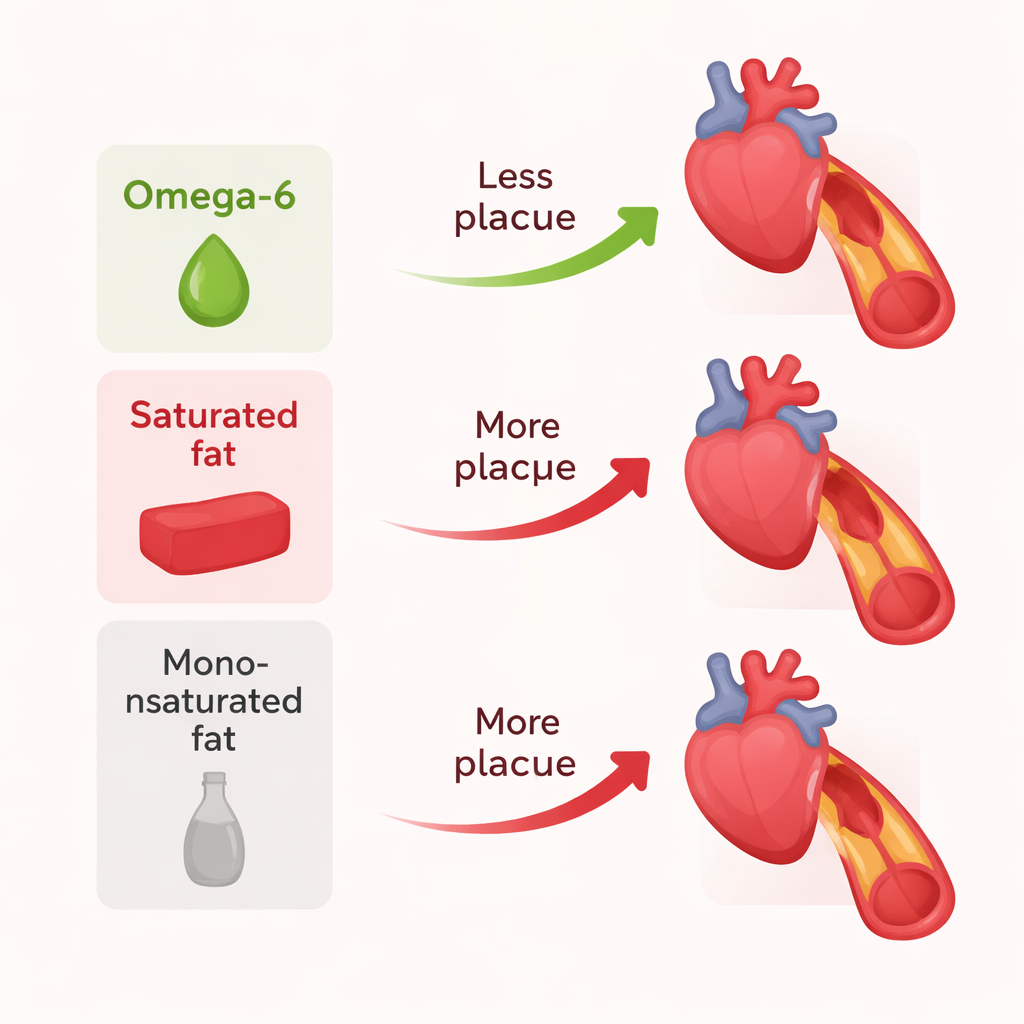
After accounting for age, sex, and traditional risk factors such as blood pressure, cholesterol levels, diabetes, smoking, and body weight, a clear pattern emerged. People with higher levels of omega-6 fats in their blood tended to have less evidence of coronary artery disease on their scans: lower calcium scores, less soft plaque, and lower overall plaque severity. In everyday terms, more omega-6 in the bloodstream went hand in hand with cleaner-looking heart arteries. In contrast, higher levels of saturated and monounsaturated fats were linked to more plaque and higher calcium scores, suggesting greater artery disease burden. Trans fats did not show a meaningful relationship with artery disease in this group, likely reflecting their generally low levels in modern Australian diets.
What this might mean for everyday diets
These findings support the idea that not all fats are created equal when it comes to heart health. The results suggest that diets which lead to higher omega-6 levels—often those rich in plant-based oils, nuts, and seeds—may be associated with less plaque build-up in the heart’s arteries. At the same time, patterns that raise saturated and certain monounsaturated fats in the bloodstream may be linked with more plaque. Importantly, the study could not determine cause and effect or distinguish whether individual fats came from food or from the body’s own fat-making processes, so it does not prove that changing one’s diet will directly reshape artery plaque.
Take-home message for heart-conscious readers
For non-specialists, the bottom line is straightforward: when researchers looked directly at artery plaque with advanced scanning, people whose blood carried more omega-6 fats tended to have less hidden heart disease, while those with more saturated and monounsaturated fats tended to have more. While more long-term studies are needed before turning these findings into firm dietary rules, the work adds weight to current advice favoring plant-based oils and limiting saturated fat to help keep heart arteries clearer over time.
Citation: Chhay, P., Zhu, D., Tang, O. et al. Plasma fatty acid profiles and coronary artery disease burden assessed by coronary CT angiography: an observational study. Sci Rep 16, 6314 (2026). https://doi.org/10.1038/s41598-026-36845-z
Keywords: heart disease, blood fats, omega-6 fatty acids, coronary calcium score, diet and cardiovascular risk