Clear Sky Science · en
Comparison of body composition in female college students with different degrees of obesity
Why where fat sits on the body matters
Many people judge weight and health with a single number on the scale or a body mass index (BMI) chart. But two people can have the same BMI and carry very different amounts of fat in risky places deep inside the body. This study looked closely at how fat is stored in young women with different levels of obesity and what that pattern might mean for their future health. By going beyond BMI and measuring how much fat sits around the waist, hips, under the skin, and around organs, the researchers show why early, personalized attention to body fat is so important for female college students.
Who was studied and how
The researchers focused on 80 female college students between 18 and 22 years old who were already in the obese range based on body fat percentage. Instead of relying on BMI, they used a scanning technique called DEXA, which acts like a low-dose X-ray to separate bone, muscle, and fat throughout the body. The students were divided into three groups: mild, moderate, and severe obesity, based on how much of their body was made up of fat. The team then compared total body fat, muscle mass, and where fat was stored—around the abdomen, hips and thighs, under the skin, and deep inside the belly around the organs.
More fat, same muscle
One of the clearest findings was that as obesity became more severe, total body fat rose steadily, but lean tissue such as muscle did not change much between groups. In other words, the difference between mild and severe obesity in these young women was not that the heavier group had lost muscle; it was that they had gained a great deal more fat on top of a similar amount of lean mass. This growing fat load, even in the presence of stable muscle, can still strain the heart, blood vessels, and metabolism, setting the stage for health problems later in life.
Shifting fat toward the waist
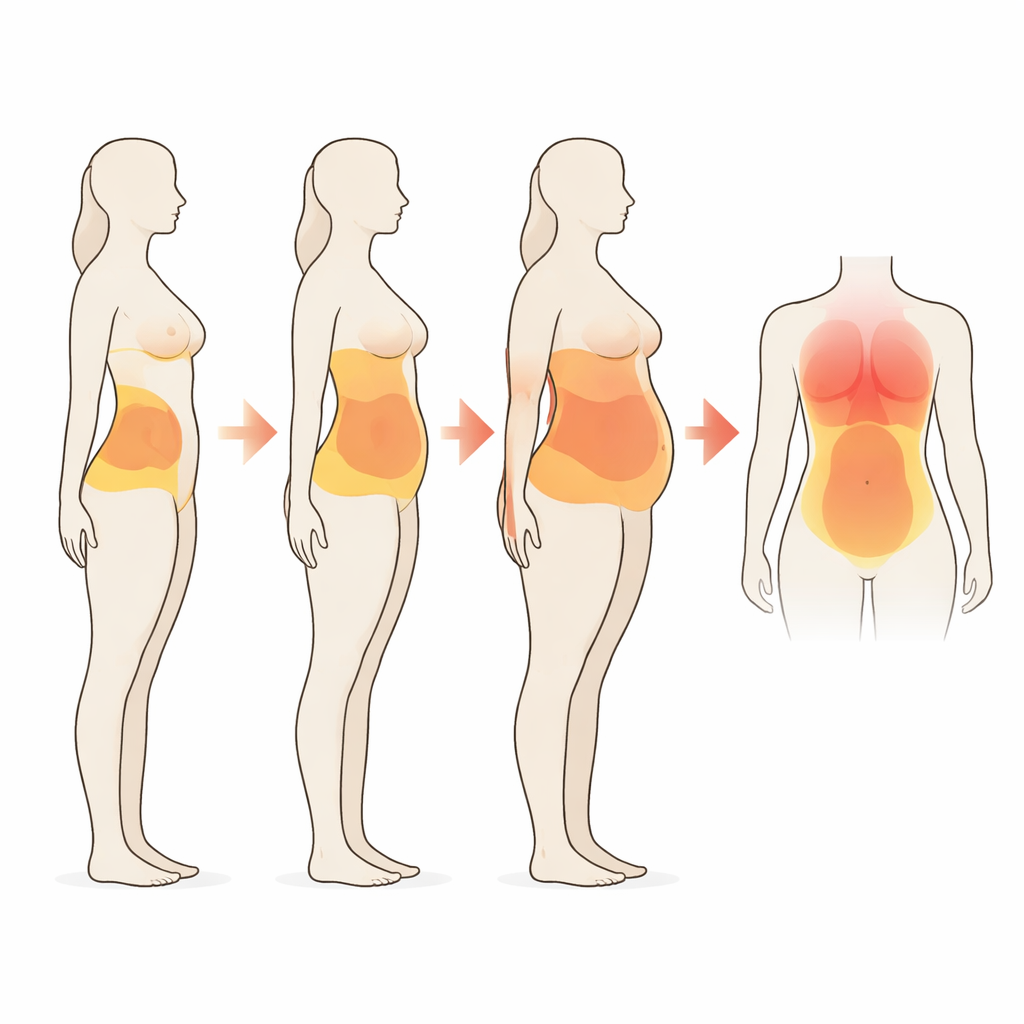
The study also showed that where fat went in the body changed as obesity became more severe. Measures of fat around the trunk and abdomen, compared with fat in the legs, rose with each step from mild to moderate to severe obesity. Both the “android” region (around the belly) and the “gynoid” region (around the hips and thighs) gained fat, but the central trunk area grew especially quickly. Ratios that compare belly fat to hip-and-thigh fat increased, signaling a shift toward a more waist-centered pattern of fat storage. This pattern is strongly linked in past research to higher risk of heart disease, diabetes, and other metabolic disorders.
Hidden fat around the organs
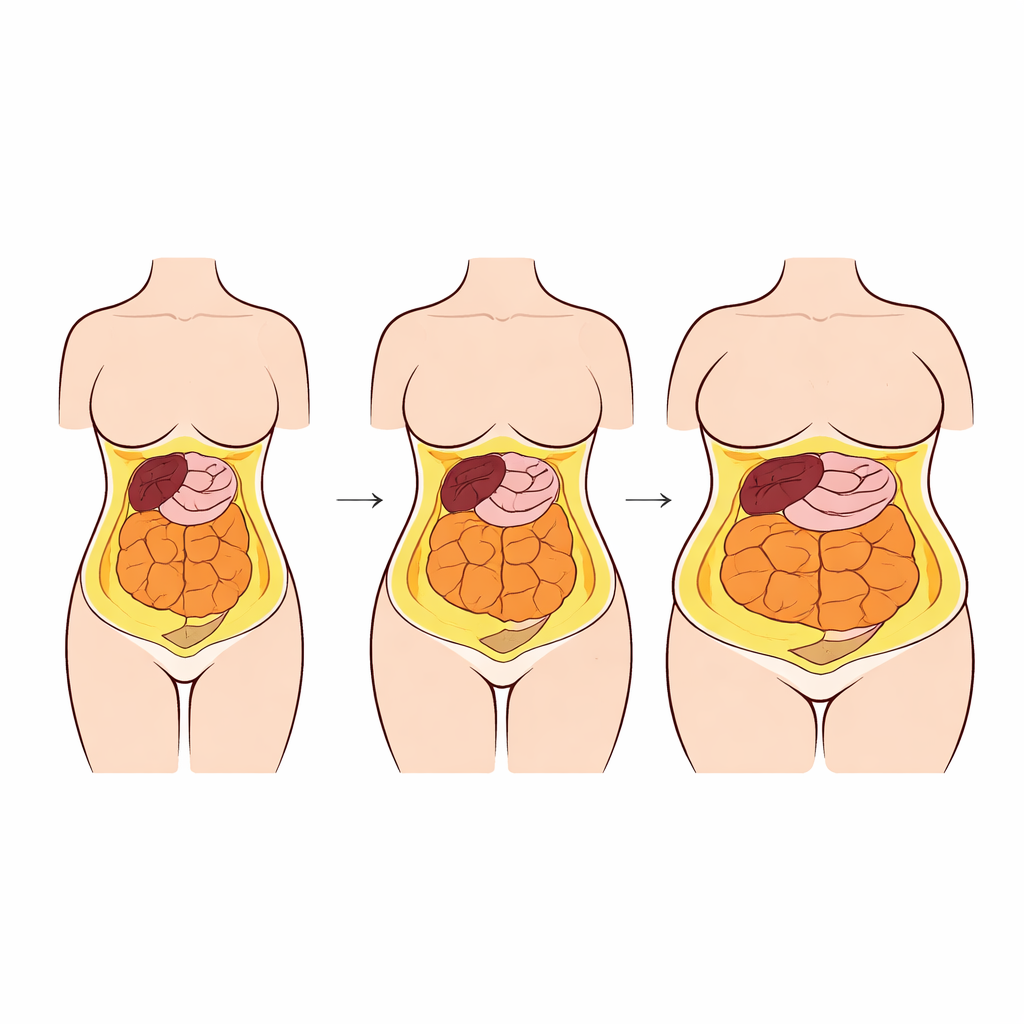
Perhaps most concerning, the scans revealed large jumps in fat deep inside the abdomen—the visceral fat that wraps around organs such as the liver and intestines—as well as in the subcutaneous fat layer just under the skin. Both types of fat increased across the mild, moderate, and severe obesity groups, but the most severely obese students had the highest values by far. Visceral fat is known to be especially dangerous, closely tied to inflammation, insulin resistance, and cardiovascular disease. Although subcutaneous fat is sometimes thought of as less harmful, this study shows that when it becomes excessive, it also tracks with higher health risks.
What this means for young women
For a layperson, the takeaway is that body fat percentage and fat placement tell a richer story about health than weight or BMI alone. In these female college students, higher levels of obesity meant much more fat concentrated around the waist and organs, while muscle stayed roughly the same. This pattern may not cause disease right away in young adults, but it quietly raises future risk. The authors argue that tracking body fat percentage and distribution can help spot problems early and guide tailored lifestyle changes, such as diet and exercise programs that reduce central and visceral fat while preserving muscle. Paying attention to where fat is stored, not just how much a person weighs, could improve long-term health for young women at risk of obesity-related diseases.
Citation: Chen, S., Liu, H., Wen, Q. et al. Comparison of body composition in female college students with different degrees of obesity. Sci Rep 16, 8522 (2026). https://doi.org/10.1038/s41598-026-36837-z
Keywords: body fat distribution, female college students, visceral fat, obesity risk, DEXA scan