Clear Sky Science · en
Effects of 12-week aquatic HIIT on blood pressure lipid profile and BaPWV in postmenopausal women with different ACE genotypes
Why a Pool Workout Matters After Menopause
For many women, menopause brings more than hot flashes. Falling estrogen levels can quietly raise blood pressure, worsen cholesterol, and stiffen arteries—changes that boost the risk of heart attack and stroke. This study asks a timely question: can a carefully designed, high-intensity water workout improve heart and blood vessel health in postmenopausal women, and does a common blood pressure–related gene change how well it works?
A Gene That Shapes Heart and Vessel Reactions
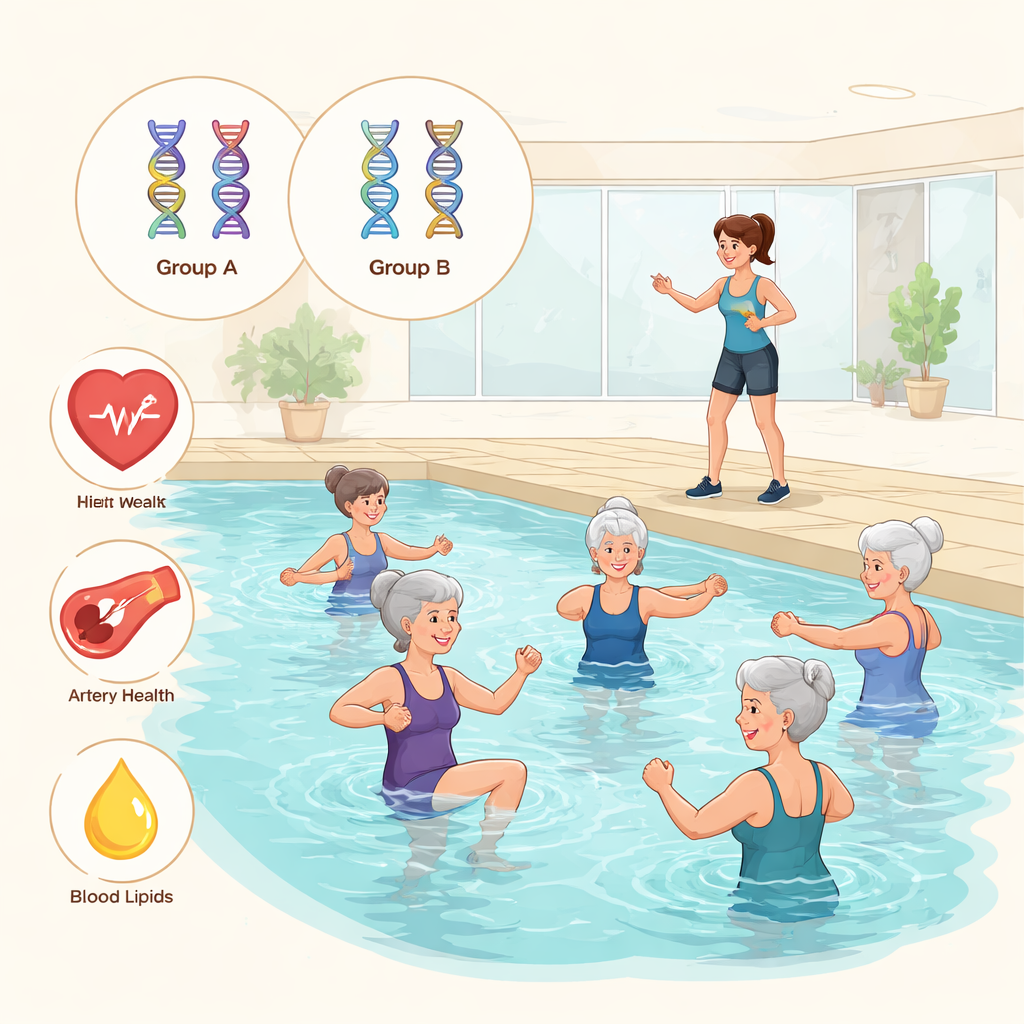
The researchers focused on a gene called ACE, which helps regulate blood pressure and fluid balance. People inherit different versions of this gene, broadly grouped here as type II or ID/DD. Those with the D version tend to produce more ACE, which can tighten blood vessels and potentially raise blood pressure. Scientists have suspected that these genetic differences might partly explain why some people’s blood pressure improves with exercise while others see little change—or even a worsening—despite doing the same program.
The 12-Week Water Workout
Forty-seven postmenopausal women, ages 45 to 75, completed a 12‑week aquatic high‑intensity interval training (HIIT) program in a 1‑meter‑deep pool. Three times a week, they did 40‑minute sessions that began with a warm‑up, followed by three intense 10‑minute blocks of upper‑body strength moves against water resistance and explosive jumps, then a cool‑down. Heart rate monitors and perceived‑effort ratings ensured the intervals were truly vigorous while recovery periods stayed moderate. Before and after the program, the team measured blood pressure, cholesterol and triglycerides, and a marker of artery stiffness called brachial‑ankle pulse wave velocity (baPWV), which tracks how fast pressure waves move through the arteries.
What Happened to Blood Pressure and Arteries
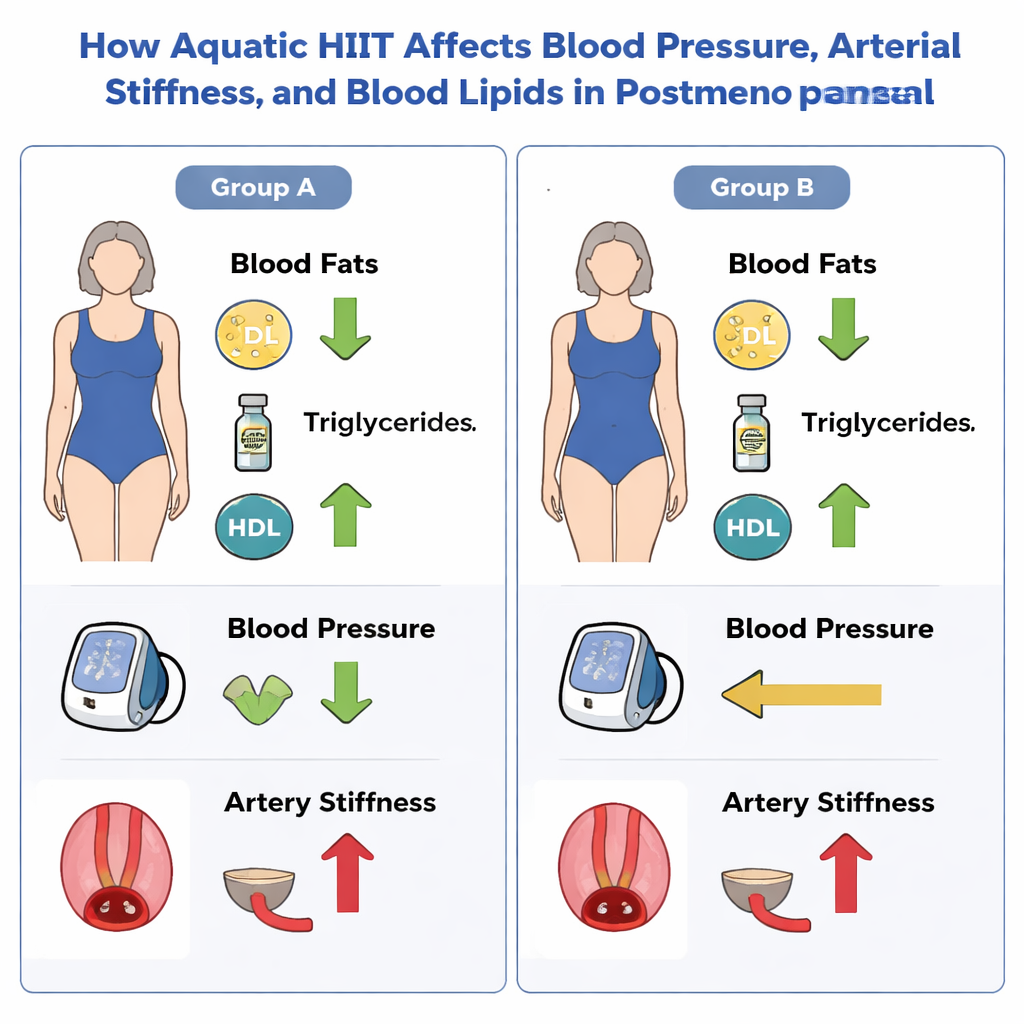
When the scientists compared the two genetic groups overall, they did not find clear-cut differences in blood pressure or artery stiffness after the program. But looking within each group told a more nuanced story. Women with the II version of the ACE gene, on average, lowered their systolic and diastolic blood pressure and their mean arterial pressure after 12 weeks in the pool. By contrast, women carrying at least one D variant (ID/DD) saw little change in blood pressure. Even more concerning, artery stiffness increased in both groups, and the rise was more pronounced in the D‑carrier group, suggesting that high‑intensity, resistance‑like water workouts may have trade‑offs for the arteries, especially in those genetically inclined toward higher ACE activity.
Changes in Cholesterol and Blood Fats
The news was more encouraging for blood fats. Across both genetic groups, the program improved the balance of lipids linked to heart disease risk. Levels of “bad” LDL cholesterol dropped and “good” HDL cholesterol rose, changes that are known to protect against clogged arteries and heart attacks. Interestingly, women with the D‑containing genotypes finished the program with significantly lower triglyceride levels than II carriers, and they showed a trend toward even higher HDL levels. This suggests that while D‑carriers might not gain the same blood pressure benefits as II carriers, they could enjoy particular advantages in how their bodies handle circulating fats after high‑intensity aquatic exercise.
What This Means for Real-World Workouts
For postmenopausal women, this study underscores both the promise and the complexity of exercise as “medicine.” A vigorous, supervised aquatic HIIT routine improved cholesterol patterns in all participants and lowered blood pressure in those with one version of the ACE gene. Yet it also appeared to stiffen arteries, particularly in women with the alternative gene form, hinting at hidden vascular strain. In plain terms, a tough pool workout can be a powerful tool for better blood fats and, for some, lower blood pressure—but it may not be ideal for everyone’s arteries. The authors suggest that older women, especially those with cardiovascular risks, should pair such programs with medical check‑ups that include simple measures of artery health, and that future, more personalized exercise plans might one day be tailored not just to age and fitness, but also to our genes.
Citation: Zhou, Ws., Li, Yh., Xu, N. et al. Effects of 12-week aquatic HIIT on blood pressure lipid profile and BaPWV in postmenopausal women with different ACE genotypes. Sci Rep 16, 6531 (2026). https://doi.org/10.1038/s41598-026-36835-1
Keywords: aquatic exercise, high-intensity interval training, postmenopausal women, ACE gene, cardiovascular health