Clear Sky Science · en
High prevalence of polypharmacy and nervous system medications in people with HIV: a cross-sectional analysis
Why Many People with HIV Take So Many Pills
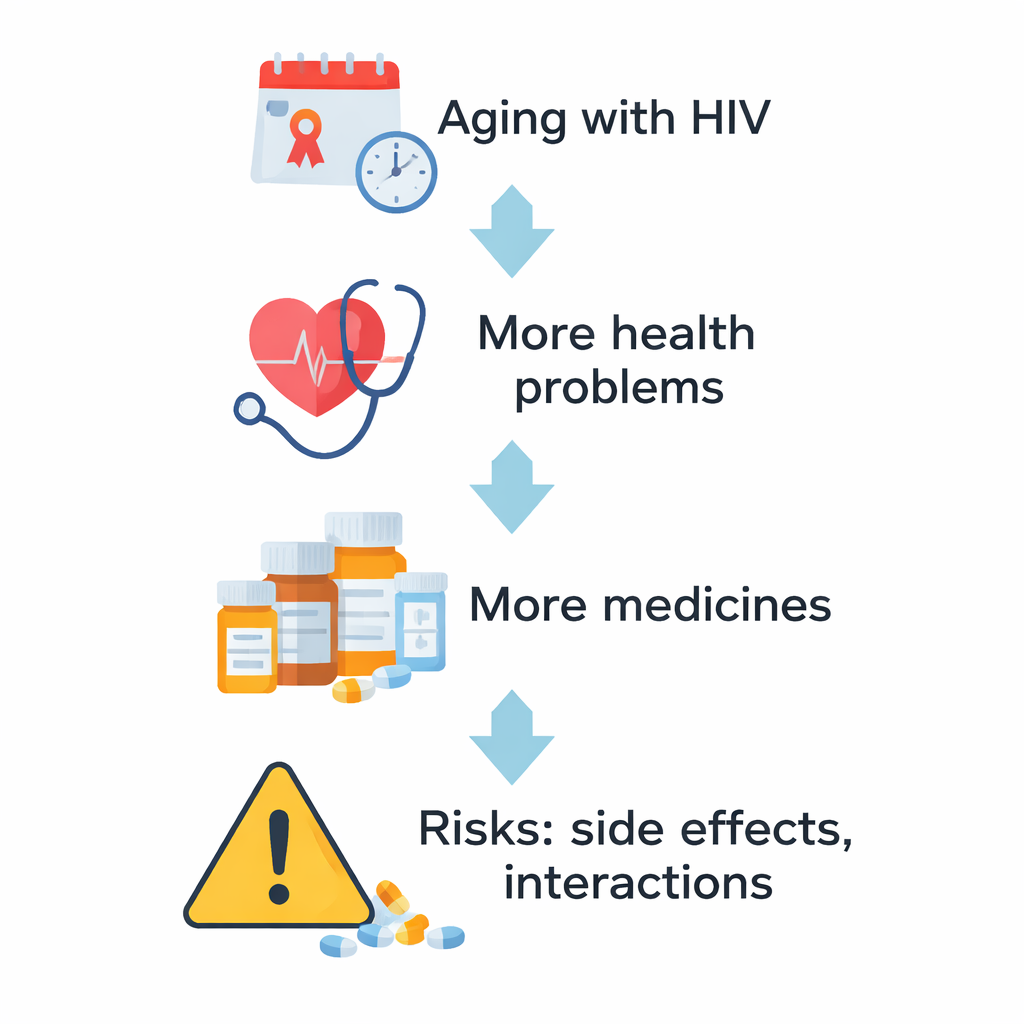
Thanks to modern treatment, people living with HIV are living longer, often into their 60s, 70s, and beyond. But long life can come with a new challenge: juggling many different medicines for HIV and other health problems at the same time. This study from a hospital in Vigo, Spain, looks closely at how common it is for people with HIV to take multiple non-HIV drugs—especially those that act on the brain and nerves—and what that means for their health.

Living Longer, With More Health Problems
The researchers followed 268 adults receiving HIV care between 2020 and 2023. On average, they were about 50 years old, and half were already over 50. Almost everyone had their virus well controlled with antiretroviral therapy, and many had been living with HIV for nearly two decades. As in the general population, getting older meant more medical problems: over half had at least two other chronic illnesses besides HIV, such as bone thinning, past hepatitis B or C infections, high cholesterol, high blood pressure, or lung disease. Many also had a history of smoking, heavy drinking, or use of drugs like heroin and cocaine, which can further complicate care.
When One Prescription Becomes Many
The team focused on “polypharmacy,” defined here as the long-term use of five or more non-HIV medicines. They found that over one-third of patients met this definition, and nearly all were taking at least one additional drug beyond their HIV treatment. Polypharmacy was especially common among people over 50, those who had lived with HIV for more than 10 years, and those with a history of heroin use. People with many medicines were also more likely to be hospitalized during the study period, hinting at the strain that multiple drugs and illnesses can place on the body and the health system.
Heavy Use of Drugs That Act on the Brain
Medications that affect the nervous system—especially drugs used for anxiety, depression, sleep, pain, and addiction—stood out. Nearly half of the patients took at least one such drug. About one in four used anxiety drugs, almost all of them benzodiazepines like alprazolam and lorazepam. Nearly one in four used antidepressants, most often modern agents that boost serotonin or both serotonin and norepinephrine. A smaller but notable share took strong painkillers such as opioids or medicines for opioid dependence like methadone. Interestingly, the official medical charts showed relatively low rates of diagnosed mental health conditions compared with how many psychotropic drugs were prescribed, suggesting that problems like depression, anxiety, and substance use may be underdiagnosed or under-recorded.
Links With Smoking, Drug Use, and HIV Treatment
By using statistical models, the researchers identified patterns in who was most likely to receive certain nervous system medicines. Older age, being a woman, current smoking, and past cocaine use were all tied to higher use of anxiety drugs. Antidepressants were more likely to be prescribed to current and former smokers. Antipsychotic drugs were strongly linked with past or ongoing cocaine use, consistent with the known risk of drug-induced psychosis. Sleep medicines were more often used in people taking certain HIV drug combinations that include protease inhibitors, which have been associated with sleep problems such as insomnia or vivid dreams. Although most drug combinations were considered safe, about 12% of patients had at least one clinically important interaction between their HIV treatment and another chronic medication, particularly cholesterol-lowering drugs, diabetes pills, and antidepressants.
What This Means for Everyday Life
For people living with HIV, this study shows that long, healthier lives often come with a complicated mix of medicines and health needs. Multiple chronic illnesses, high use of drugs that affect the brain, and the added layer of smoking or past drug use all make day-to-day care more complex. The authors argue that doctors should pay closer attention to mental health, screen more actively for conditions like depression and anxiety, and regularly review all of a patient’s medicines to reduce unnecessary pills and risky combinations. In simple terms, as people with HIV grow older, good care is no longer just about controlling the virus—it is about managing the whole person, mind and body, in a safe and balanced way.
Citation: López López, A., Pérez González, A., Alonso Domínguez, J. et al. High prevalence of polypharmacy and nervous system medications in people with HIV: a cross-sectional analysis. Sci Rep 16, 6413 (2026). https://doi.org/10.1038/s41598-026-36832-4
Keywords: HIV and aging, polypharmacy, mental health, psychotropic medication, drug interactions