Clear Sky Science · en
Unveiling drought-tolerant mungbean genotypes through integrated multi-trait selection
Why Thirsty Beans Matter
Mungbean—often known simply as mung—is a small green bean with a big footprint in Asian, African, and Australian diets. It is rich in protein, helps farmers restore soil fertility, and is a key ingredient in many everyday foods. But mungbean is usually grown with little or no irrigation, which makes it highly vulnerable to drought. As climate change brings more frequent dry spells, finding versions of this crop that can keep yielding under water shortage is increasingly important for farmers’ incomes and for food security.
Inside a Carefully Managed Dry Spell
To hunt for naturally drought-tolerant mungbean types, researchers grew 122 genetically diverse lines in a controlled greenhouse in western India. Each line was split into two groups: one set of plants was kept comfortably moist, while the other was subjected to a carefully measured shortage of water, mimicking the kind of dry spell that often strikes during flowering and pod filling in farmers’ fields. By weighing pots daily and replacing only the water that had evaporated, the team ensured that all plants experienced the same level of stress, allowing fair comparisons among genotypes.
How Drought Changes a Plant
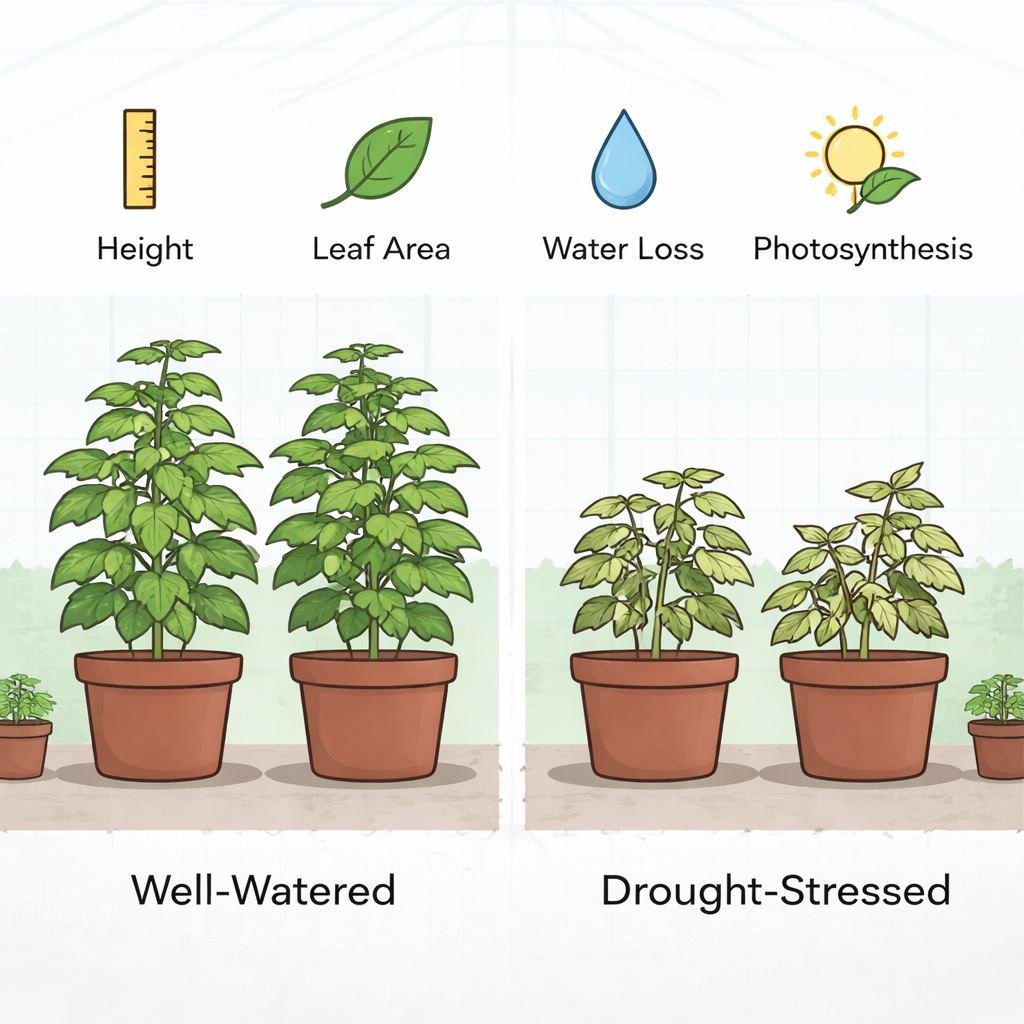
Under drought, almost every part of the plant’s life cycle was affected. Overall grain yield per plant dropped by about one fifth, while leaf area shrank by more than a third and the plants turned paler, reflecting a loss of canopy “greenness.” The machinery of photosynthesis slowed sharply, with the rate of carbon capture cut in half and the flow of water through leaves (transpiration) nearly halved. At the same time, leaf temperature and the drying power of the air increased, signs that plants were under heat and water stress. Yet the extent of damage differed widely among lines: some plants remained relatively tall, leafy, and productive, while others became stunted and yielded very little.
Many Traits, One Goal
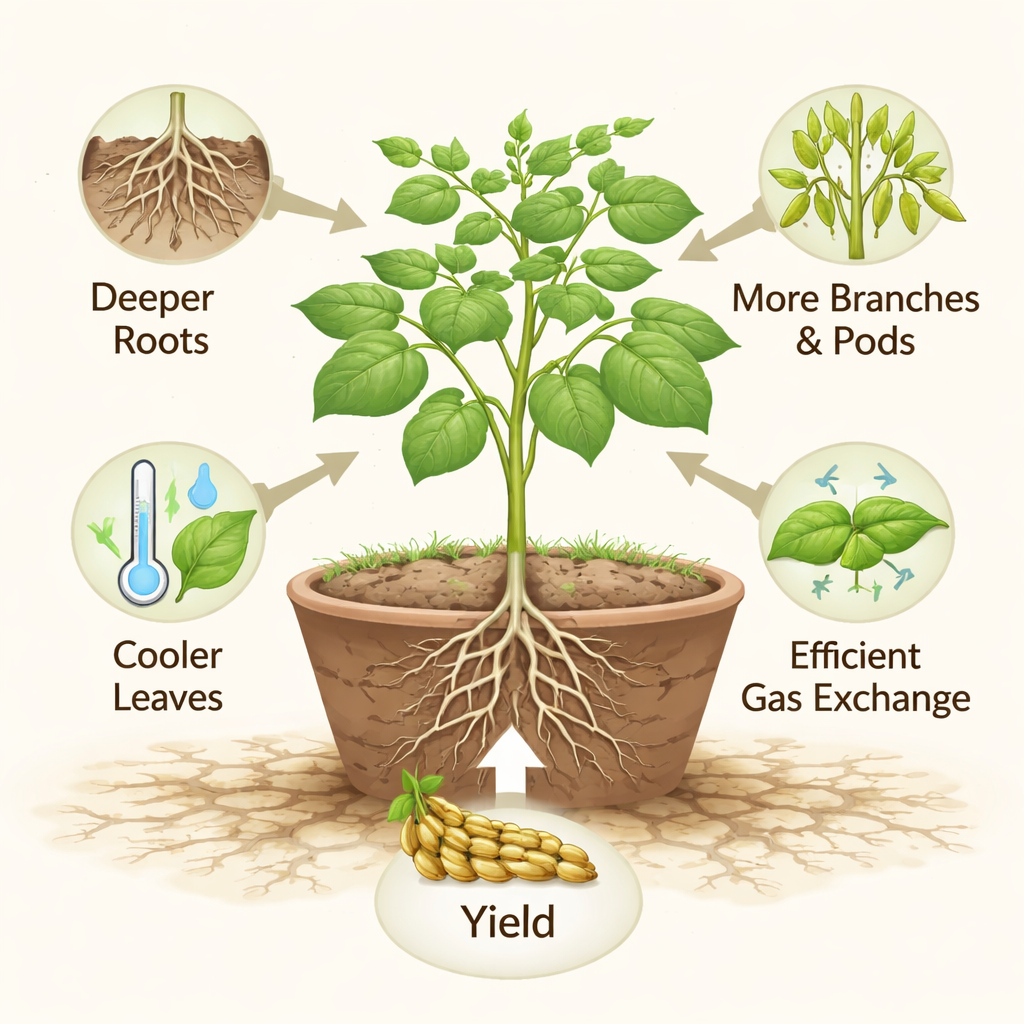
Because drought tolerance is not controlled by a single gene or feature, the team measured a broad suite of characteristics, from plant height and number of branches to subtle physiological signals like how easily water passed through leaf pores and how efficiently the plant’s light-harvesting system worked. They then applied statistical tools that look at all these traits together rather than in isolation. One approach, called principal component analysis, grouped traits into clusters related to plant architecture, reproductive performance, and water-use behavior. Another, the multi-trait genotype–ideotype distance index, scored each line on how close it came to an “ideal” plant that stays tall, leafy, and productive under drought while keeping its leaves relatively cool.
Standout Survivors in a Dry World
By combining traditional drought indices, correlation analyses, and the multi-trait index, the researchers identified a small group of mungbean lines that consistently performed well under both well-watered and dry conditions. Several lines, including those labeled VI003685AG, VI002051BG, VI000852AG, VI002402BG, and VI003957AG, maintained relatively high yields while also showing desirable features like more branches and pods, larger leaf area, strong photosynthesis, and better control over water loss. Many of these traits showed high heritability, meaning they are strongly influenced by genetics rather than the environment, which makes them promising targets for plant breeders who want to develop new, more resilient varieties.
From Greenhouse Hope to Field Reality
For non-specialists, the takeaway is that there is real genetic potential within mungbean to cope better with drought. The study offers a shortlist of promising lines and a powerful way of judging them that goes beyond simply asking, “How much grain did they produce?” However, the work was done in pots under greenhouse conditions, where roots are confined and weather is controlled. Before farmers can benefit, these candidate lines must be tested across many real-world fields and climates to confirm that their apparent toughness holds up outside the greenhouse. If it does, these drought-hardy mungbeans could help stabilize yields in dry years and support more reliable food supplies in a warming world.
Citation: Basavaraj, P.S., Babar, R., Gangurde, A. et al. Unveiling drought-tolerant mungbean genotypes through integrated multi-trait selection. Sci Rep 16, 6018 (2026). https://doi.org/10.1038/s41598-026-36830-6
Keywords: mungbean drought tolerance, climate-resilient crops, legume breeding, multi-trait selection, food security