Clear Sky Science · en
Culturable and unculturable periodontal microorganisms in non-small cell lung cancer: an exploratory analysis
A Hidden Link Between Gums and Lungs
Lung cancer and gum disease might seem worlds apart, but both are surprisingly connected through the tiny microbes that live in our mouths. This study explores whether specific bacteria that thrive in diseased gums differ between people with non-small cell lung cancer (NSCLC) and similar individuals without cancer. Understanding these invisible communities could open the door to new ways of spotting lung cancer earlier or tailoring treatment using something as simple as saliva or dental plaque.
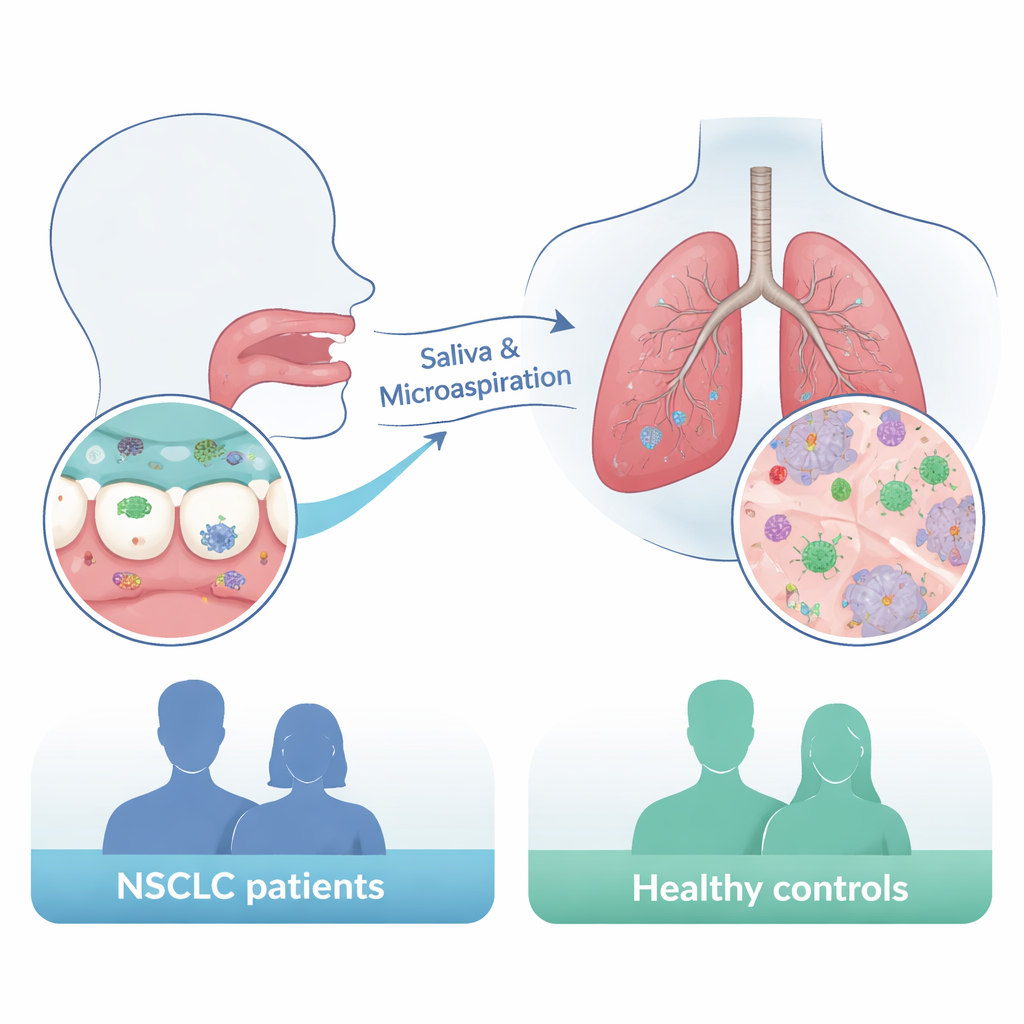
Why Mouth Germs Matter for Lung Cancer
Scientists have learned that our bodies are home to vast microbial ecosystems that can shape health and disease, including cancer. The lungs were once thought to be nearly sterile, but we now know that bacteria from the mouth can reach them through tiny aspirations of saliva. At the same time, periodontitis—advanced gum disease—creates deep pockets around teeth where specialized bacteria flourish. Previous research hinted that people with gum disease might be more likely to develop lung cancer, but most studies looked only at saliva, not at the bacteria hiding deep in the gums. This study set out to compare both saliva and subgingival plaque (the film beneath the gumline) in people with NSCLC and matched healthy volunteers.
How the Study Was Carried Out
Researchers enrolled 24 adults in Colombia: 12 with advanced NSCLC receiving first-line immunotherapy and 12 cancer‑free controls. Each cancer patient was matched to a healthy person of similar age and gum disease stage, so that differences in microbes would be less likely to come just from worse oral health. A trained periodontist measured classic signs of gum disease, such as pocket depth, attachment loss, plaque build‑up, and bleeding. Then saliva was collected and subgingival plaque samples were taken from specific tooth sites. Using a sensitive method called quantitative PCR, the team counted DNA from several well‑known gum bacteria, including both those that can be grown in the lab and more elusive species that normally cannot be cultured.
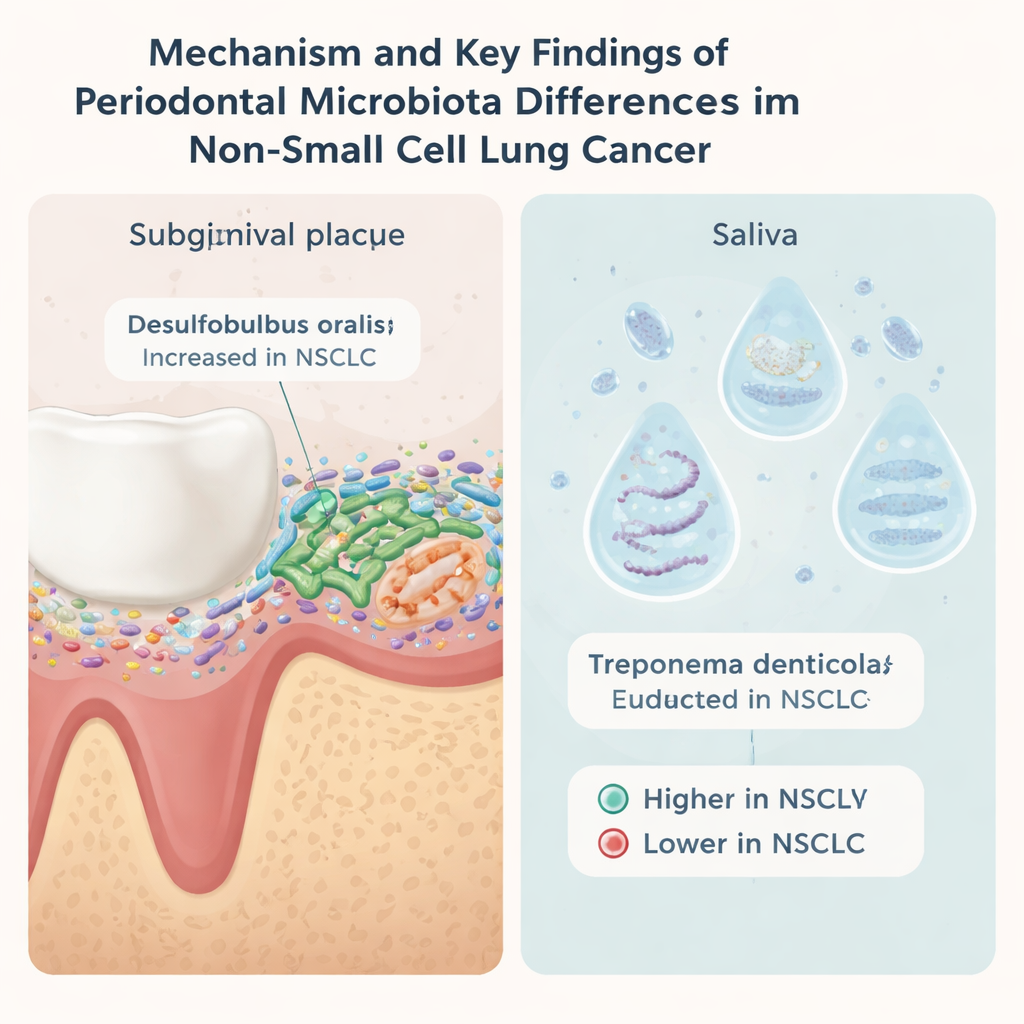
What the Researchers Found in Gums and Saliva
Although the two groups had similar stages of periodontitis, NSCLC patients tended to have deeper gum pockets and more plaque. In the plaque samples under the gums, most bacteria did not differ between groups, but one unculturable species, Desulfobulbus oralis, stood out: it was more frequent and present at higher levels in NSCLC patients. Another species, Eubacterium brachy, was less abundant in their plaque. In saliva, the pattern looked different. NSCLC patients showed significantly lower frequency and concentration of Treponema denticola and E. brachy compared with healthy volunteers. Several other classic periodontal species, including the often‑suspected Porphyromonas gingivalis, did not show a clear association with lung cancer in this study.
A Shifting Microbial Network
Beyond simple counts, the team examined how different bacteria tended to appear together. Using statistical mapping, they found that NSCLC patients showed stronger and more complex associations between gum bacteria than healthy controls, especially in subgingival plaque. Certain organisms clustered tightly in cancer patients’ mouths, suggesting a reorganized microbial network, or dysbiosis, rather than just the rise or fall of a single species. Interestingly, saliva samples from NSCLC patients also showed more correlations between species than those from controls, implying that the salivary microbiome in cancer may be more dynamically altered and potentially more informative for future diagnostic tests.
What This Could Mean for Patients
For a layperson, the key message is that lung cancer may leave a fingerprint not only in tumors and blood, but also in the bacteria that inhabit the mouth—especially the gums and saliva. In this small exploratory study, Desulfobulbus oralis emerged as a promising candidate marker, being more common and more concentrated under the gums of NSCLC patients, while some other periodontal bacteria were surprisingly reduced in their saliva. The work is too early and the sample too small to use these microbes as clinical tests today, but it supports the idea that a simple mouth swab or plaque sample might one day help doctors understand lung cancer risk, disease behavior, or even response to immunotherapy.
Citation: Chamat, M., Lafaurie, G.I., Castillo, D.M. et al. Culturable and unculturable periodontal microorganisms in non-small cell lung cancer: an exploratory analysis. Sci Rep 16, 6041 (2026). https://doi.org/10.1038/s41598-026-36829-z
Keywords: oral microbiome, non-small cell lung cancer, periodontitis, saliva bacteria, microbiota biomarkers