Clear Sky Science · en
Salinity stress enhances protein content and amino acid profile in Gracilaria cornea (Rhodophyta)
Turning Seaweed Stress into Food Opportunity
As the world searches for new, sustainable protein sources, seaweeds are emerging as quiet contenders. This study shows that stressing an edible red seaweed, Gracilaria cornea, with salty water can actually boost its protein content and improve the balance of key amino acids that humans need. By carefully tuning conditions in indoor tanks and using smart sensors and computer models, the researchers outline how seaweed could become a more competitive alternative to land-based protein crops.
Why Red Seaweed Matters for the Dinner Plate
Seaweeds grow without fertilizer on land, fresh water, or pesticides, yet they are naturally rich in protein and other nutrients. One obstacle, however, is that seaweeds are mostly water, making their protein seem dilute compared with beans or grains. Gracilaria cornea, a red seaweed already grown for agar used in food and biotechnology, is especially promising because its dry matter can contain as much protein as some conventional plant foods. The central question of this work was how to grow this seaweed so that every kilogram of dried biomass delivers more protein and a strong nutritional profile.
Growing Seaweed Under Different Salt Levels
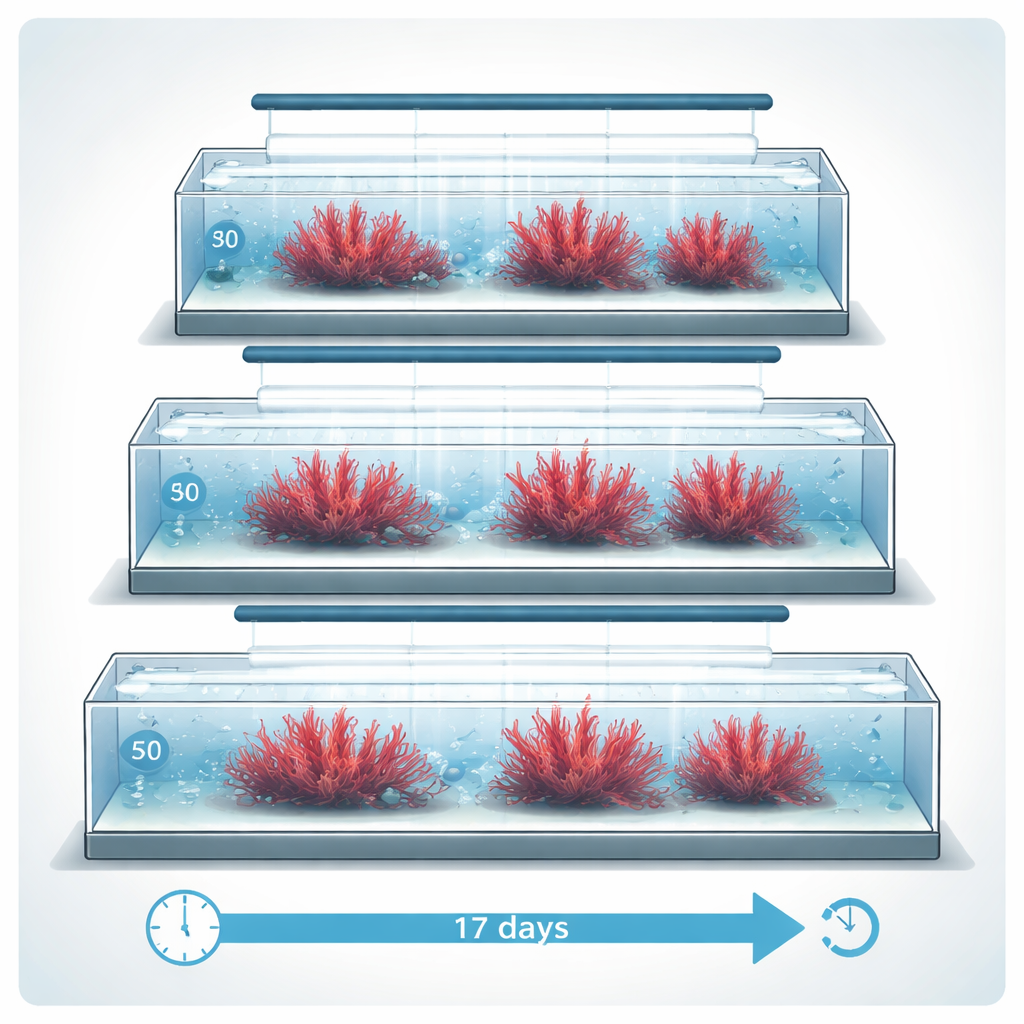
The team grew Gracilaria cornea indoors in a series of 16-liter aquaria set to three salt levels: slightly diluted seawater (30 parts per thousand), natural seawater (40), and extra-salty water (50). All tanks received the same gentle blue–white lighting, air bubbling, and regular pulses of nitrogen and phosphorus to avoid simple nutrient shortages. Over 17 days, the scientists tracked changes in moisture, dry mass, and protein, and then analyzed the seaweed’s amino acids in the lab. At the same time, they shone visible and near‑infrared light on the seaweed and used an artificial‑intelligence model to estimate protein levels non‑destructively from its color and light absorption.
More Salt, Less Water, and a Protein Boost
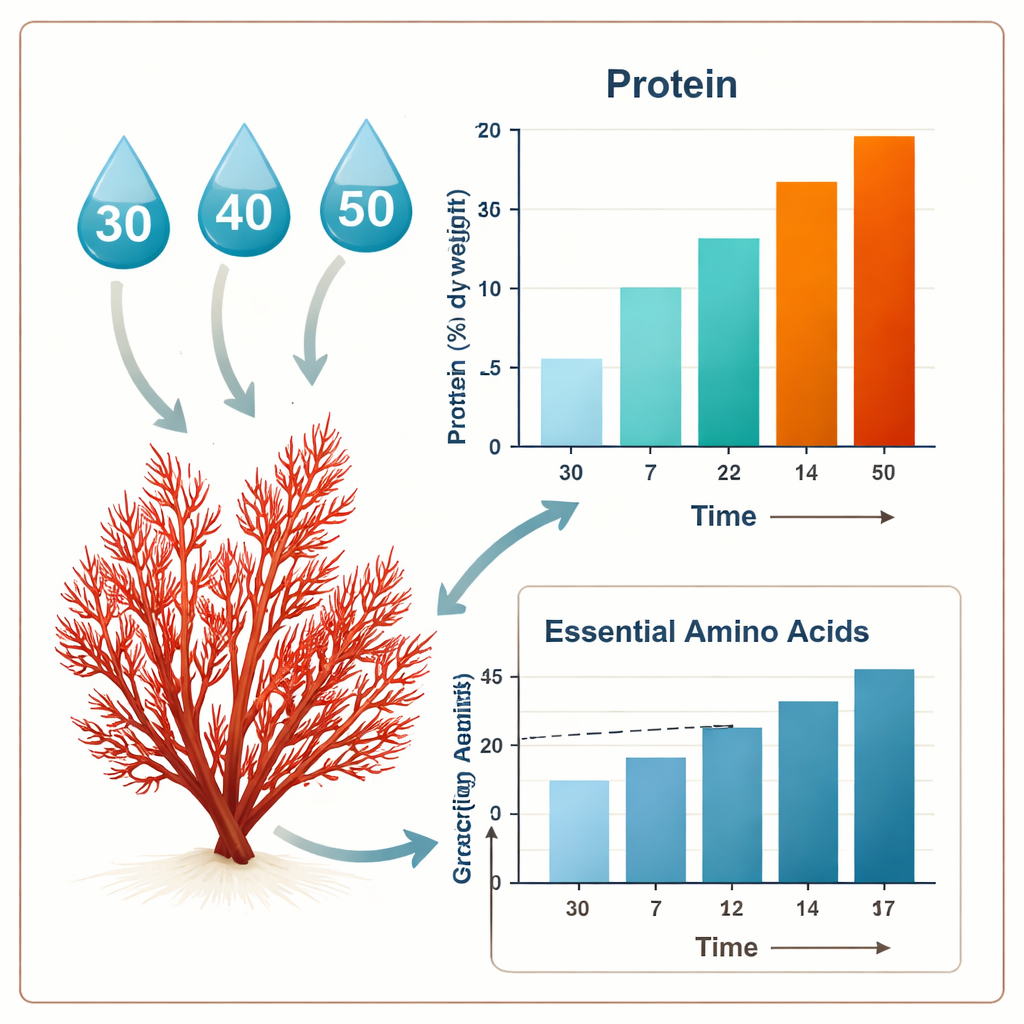
Contrary to what one might expect, the most stressful treatment—hypersaline water—gave the best protein outcome. Under the highest salt level, the seaweed held slightly less water and produced a higher ratio of dry to fresh weight, meaning more solid material per kilogram harvested. While overall growth in fresh weight slowed, protein content in that dried biomass climbed steadily and peaked around day 14, surpassing 35 percent of dry weight—about 12 percent higher than under normal seawater. This protein surge did not track the usual growth rate, showing that fast-growing seaweed is not necessarily the most protein‑dense. The work also revealed that protein was highest when the surrounding water was both salty and slightly alkaline, suggesting a link between photosynthesis, carbon use, and protein formation during salt stress.
Improving the Building Blocks of Protein
Beyond total protein, the researchers examined which amino acids were present and in what proportions. Gracilaria cornea proved rich in essential amino acids—the ones humans cannot make and must obtain from food. Valine, leucine, and isoleucine, all important for muscle maintenance and energy, were among the most abundant. Across all salt treatments, the share of essential amino acids rose from about a third of the total at the start to over 40 percent later in the cultivation period, with particularly strong values around day 14. Nonessential amino acids such as glutamic and aspartic acid, which support metabolism and flavor, also increased and peaked slightly later. A decision‑support model accurately predicted these shifts, allowing the researchers to pinpoint both the best salinity and the best harvest day.
From Lab Tanks to Future Seaweed Farms
For a lay reader, the key message is straightforward: by carefully “stressing” seaweed with salt in controlled systems, it is possible to harvest more protein and a better mix of amino acids per unit of dried biomass, even if the plants grow a bit more slowly. Indoor tank farms or photobioreactors can use higher salinity to naturally reduce water content and concentrate protein, cutting drying and transport costs after harvest. Combined with sensor‑based monitoring and predictive algorithms, this approach could turn red seaweeds like Gracilaria cornea into reliable, nutrient‑dense ingredients for foods, supplements, and other products, helping diversify the world’s protein supply in a climate‑friendly way.
Citation: Tadmor-Shalev, N., Shemesh, E., Israel, Á. et al. Salinity stress enhances protein content and amino acid profile in Gracilaria cornea (Rhodophyta). Sci Rep 16, 6943 (2026). https://doi.org/10.1038/s41598-026-36828-0
Keywords: seaweed protein, Gracilaria cornea, salinity stress, amino acid profile, marine aquaculture