Clear Sky Science · en
Global insights into [177Lu]Lu-DOTATATE safety: a comprehensive disproportionality analysis from the WHO pharmacovigilance database
Why this matters for people with rare cancers
For people living with rare neuroendocrine tumors, a drug called [177Lu]Lu-DOTATATE has become a beacon of hope, shrinking tumors and easing symptoms when few other options remain. But because this treatment delivers targeted radiation inside the body, patients and doctors naturally worry about its long-term safety. This study takes a global look at real-world reports of side effects to better understand how often serious problems occur, when they appear, and how they might be prevented or managed in everyday practice, not just in highly selected clinical trial groups.
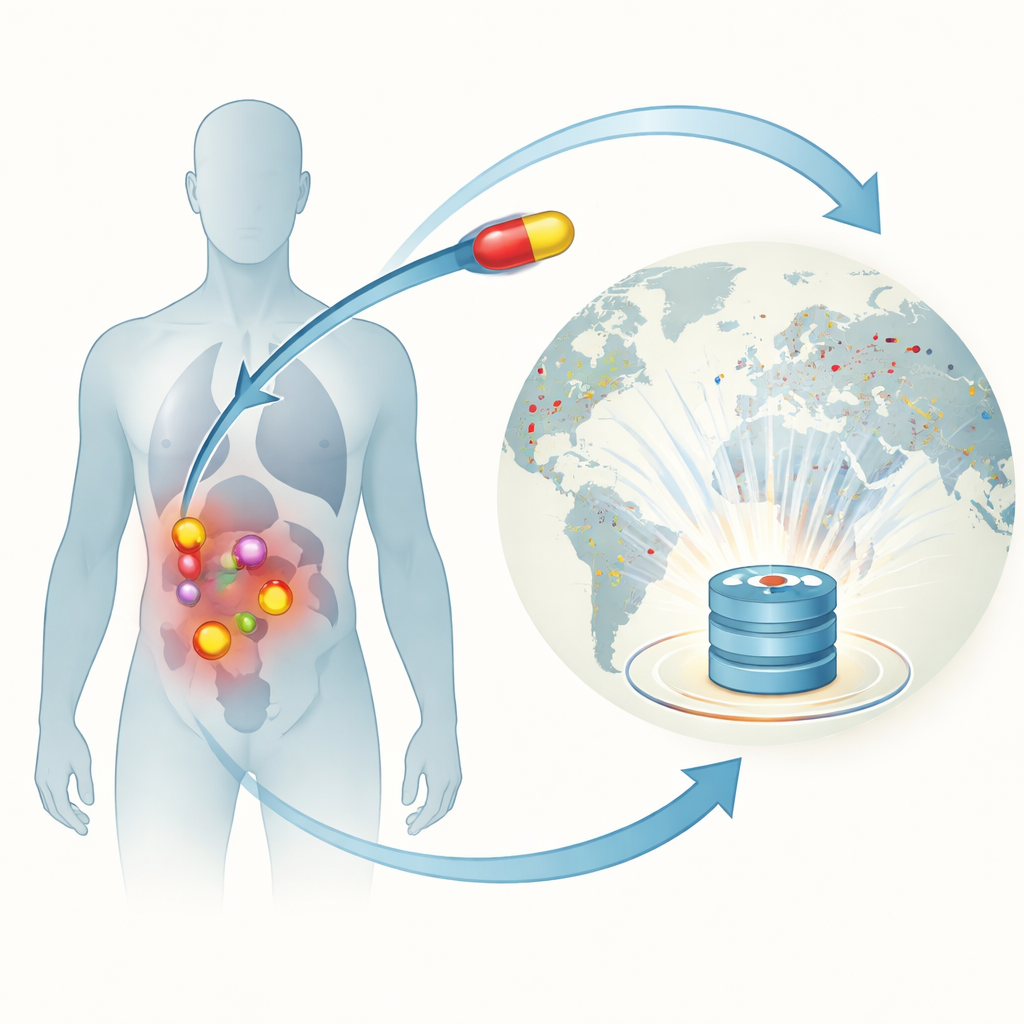
A targeted cancer treatment under the microscope
[177Lu]Lu-DOTATATE is a form of “radiotheranostic” therapy: it seeks out tumor cells that display specific docking sites (somatostatin receptors) and delivers radiation directly where it is needed, sparing most healthy tissue. Large clinical trials showed that it can slow or stop tumor growth and improve quality of life for patients with inoperable or metastatic neuroendocrine tumors. However, trial participants are carefully chosen and closely monitored, which can miss rare or delayed side effects that only become visible once thousands of people worldwide receive the treatment under varied conditions. To fill this gap, the authors turned to VigiBase, the World Health Organization’s global database of suspected drug side effects reported by clinicians, pharmacists, and patients from more than 150 countries.
What the global safety reports reveal
The researchers examined 3,984 safety reports linked to [177Lu]Lu-DOTATATE, mostly submitted between 2021 and 2024 and mainly from the Americas and Europe. In nearly nine out of ten reports, [177Lu]Lu-DOTATATE was the only medicine suspected of causing the problem. About one third of cases were classified as serious, and roughly one in twelve involved a death from any cause. The team grouped thousands of reported problems into 13 broad classes (such as blood disorders, infections, kidney problems, or liver problems) and then used a statistical approach to see which types of events appeared more often with this drug than would be expected when looking across the entire database of medicines.
The main safety concerns: blood, infections, and organs
The strongest and most consistent signal involved blood-related problems. These ranged from low blood counts to more severe conditions, and in many cases patients did not fully recover or required intensive care. The analysis also showed clear links to infections, kidney injury, and liver disorders, along with hair loss and some metabolic disturbances. Importantly, a small but meaningful number of reports described blood cancers such as myelodysplastic syndrome and leukemia appearing years after treatment, echoing earlier concerns that repeated radiation exposure can, in rare cases, damage the bone marrow over time. The timing of side effects helped separate early and late risks: hair loss, metabolic issues, liver problems, and general malaise tended to appear within weeks to months, while kidney issues, blood disorders, infections, and especially blood cancers emerged much later, sometimes more than two years after treatment.
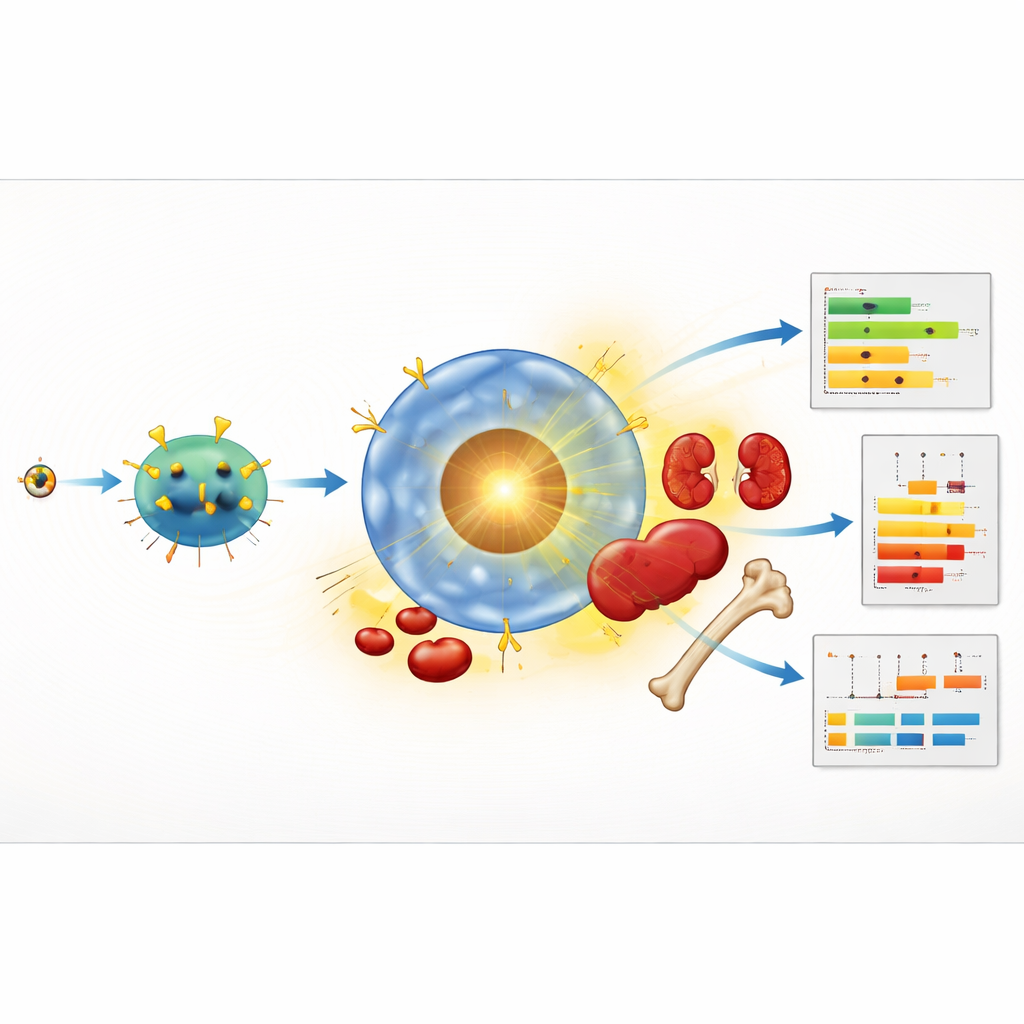
Signals that fade and side effects that overlap
Not all early worries held up over time. Stomach and gut complaints such as nausea, vomiting, and abdominal swelling were among the most frequently reported problems at first, but their statistical signal weakened and eventually turned negative as more data accumulated. This shift likely reflects better prevention strategies, including improved protocols for protective amino acid infusions that reduce both nausea and kidney exposure. Many gut symptoms may also stem from other medicines or from the underlying tumor itself rather than the radiotherapy. The study also mapped how different side effect types overlapped in the same patients—for example, blood problems paired with infections, or general fatigue paired with gut or nerve-related complaints—highlighting how a single treatment can set off a cascade of related health issues in vulnerable individuals.
What this means for patients and future care
For patients, the overall message is cautiously reassuring: the safety profile seen in real-world use largely matches what was observed in clinical trials, and most side effects remain manageable or reversible. At the same time, the global data underline that [177Lu]Lu-DOTATATE can carry meaningful risks to the blood, kidneys, and liver, and that rare therapy-related blood cancers do occur after long delays. The authors stress that these “signals” do not prove the drug caused every problem but do flag patterns that deserve close clinical attention. Their work supports continued, worldwide monitoring of patients on [177Lu]Lu-DOTATATE, more research into who is most at risk, and smarter use of tools like genetics, dosimetry, and machine learning to tailor doses and catch serious toxicities early—helping more people benefit from this powerful targeted therapy while keeping its dangers as low as possible.
Citation: Ladrière, T., Chrétien, B., Bignon, AL. et al. Global insights into [177Lu]Lu-DOTATATE safety: a comprehensive disproportionality analysis from the WHO pharmacovigilance database. Sci Rep 16, 8292 (2026). https://doi.org/10.1038/s41598-026-36823-5
Keywords: neuroendocrine tumors, targeted radiotherapy, drug safety, pharmacovigilance, [177Lu]Lu-DOTATATE