Clear Sky Science · en
Neurotoxicogenomic impact of 4-nonylphenol on Heteropneustes fossilis via molecular, histopathological and bioinformatic analysis
Why this fish story matters to you
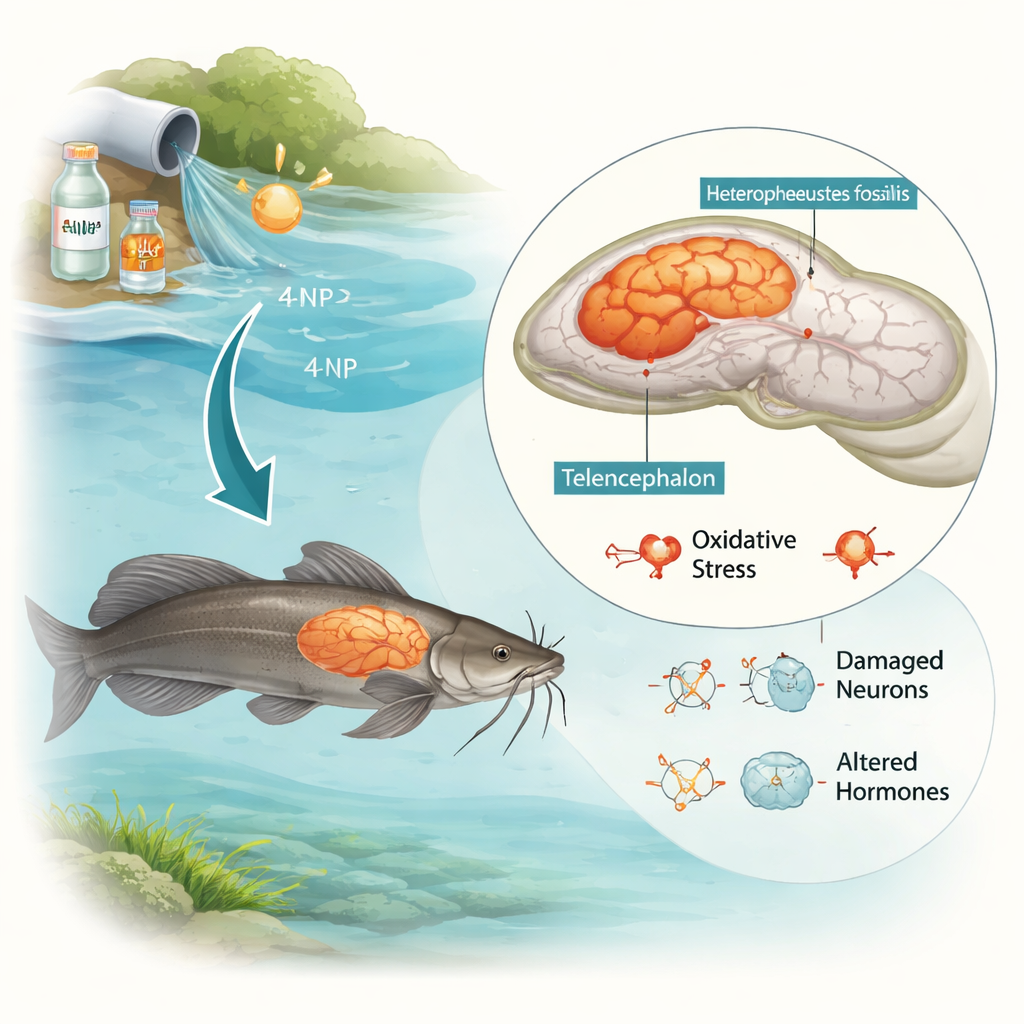
Many everyday products—from detergents to plastics—leave behind a chemical called 4‑nonylphenol (4‑NP) that ends up in rivers and ponds. This study explored what happens to the brain of a common food fish, the stinging catfish Heteropneustes fossilis, when it lives in water contaminated with realistic levels of 4‑NP. Because these pollutants move up the food chain and some can affect human brains and hormones, understanding their impact on fish offers an early warning for wider environmental and public health risks.
A common pollutant with a hidden punch
4‑NP is a breakdown product of industrial surfactants used in cleaners, plastics and other goods. It is oily, slow to degrade and builds up in living tissues. Previous work showed it accumulates especially in the brains of catfish. The researchers exposed male catfish to low and high concentrations of 4‑NP, similar to those found in polluted waters, for 30 or 60 days spanning their breeding season. They then examined the fishes’ brains using microscopy, biochemical tests, gene expression analysis and computer modelling to see whether 4‑NP could cross into the brain, disturb brain chemistry and interfere with reproduction.
Damage in key brain regions
Microscopic examination revealed that 4‑NP physically harms the catfish brain. In the telencephalon, which helps control smell, learning and aspects of behavior, normal neurons seen in control fish were replaced by diffuse, degenerated cells, empty spaces (vacuoles), tiny hemorrhages and inflammatory cells. The cerebellum, important for movement and balance, also showed separation between its layers, vacuolization of the surrounding tissue and necrotic (dead) neurons, especially at higher doses and longer exposure. These structural injuries suggest that exposed fish are likely to suffer impaired swimming, navigation and possibly altered reproductive behavior.
Oxidative stress, stress hormones and cell death
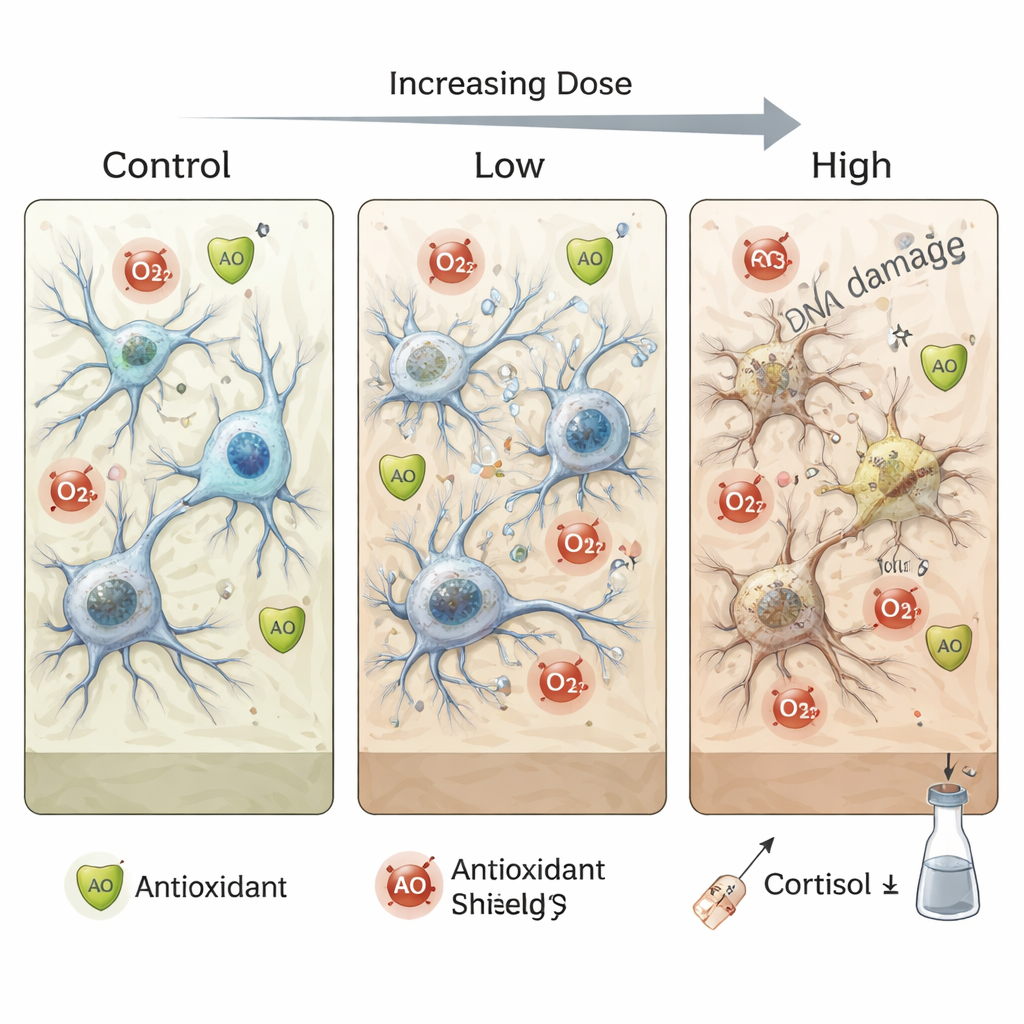
Inside the damaged brain tissue, the chemical balance shifted in a dangerous direction. 4‑NP lowered the activity of key antioxidant enzymes that normally neutralize harmful reactive oxygen species (ROS). At the same time, markers of lipid peroxidation—chemical scars left when ROS attack fatty membranes—rose with dose and exposure time. Overall antioxidant capacity fell, while total oxidant status climbed. Brain levels of the stress hormone cortisol also increased, particularly early in exposure, indicating a strong stress response. Flow‑cytometry tests showed that after 30 days, more brain cells were dying by necrosis (uncontrolled cell death), while after 60 days apoptosis (programmed cell death) became more prominent. DNA “comet” assays confirmed that strands of genetic material were increasingly fragmented at higher doses and longer exposure.
Disrupted brain chemistry and reproductive signals
Beyond physical damage, 4‑NP altered key molecules that keep brain signaling and reproduction on track. Activity of acetylcholinesterase, an enzyme that clears the neurotransmitter acetylcholine, dropped in a dose‑ and time‑dependent way, which can disturb nerve communication and behavior. The researchers also measured brain genes that control reproduction: gonadotropin‑releasing hormone (GnRH) and brain aromatase (Cyp19a1b), the enzyme that converts androgens to estrogens. Both genes were strongly down‑regulated by 4‑NP. This means the pollutant not only injures brain cells but also weakens the hormonal signals that trigger spawning, threatening fish fertility and population health.
Computers confirm a direct brain target
To understand how 4‑NP reaches and affects the brain, the team used bioinformatic tools. SwissADME simulations predicted that 4‑NP is well absorbed from the gut, can cross the blood–brain barrier and has properties similar to small drug‑like molecules. Docking studies and long molecular‑dynamics simulations showed that 4‑NP fits snugly into the active pocket of acetylcholinesterase, forming stable interactions with several amino acids. Calculated binding energies indicated that this association is strong enough to inhibit the enzyme, matching the reduced acetylcholinesterase activity seen in real brain tissue. The same modelling also suggested that 4‑NP can interfere with liver enzymes that normally detoxify foreign chemicals, further amplifying its toxic effects.
What this means for fish and for us
Taken together, the results paint a clear picture: even at sub‑lethal levels, 4‑nonylphenol reaches the brain of male catfish, where it weakens antioxidant defenses, ramps up oxidative and hormonal stress, damages DNA, kills neurons and silences genes essential for reproduction. These changes threaten the health and breeding success of fish living in contaminated waters and highlight how a widely used industrial chemical can act as a stealth neurotoxin. Because 4‑NP persists in the environment and accumulates up the food chain, limiting its release and monitoring its levels in aquatic ecosystems are important steps to protect both wildlife and the humans who depend on them.
Citation: Suman, Agrawal, S., Mishra, R. et al. Neurotoxicogenomic impact of 4-nonylphenol on Heteropneustes fossilis via molecular, histopathological and bioinformatic analysis. Sci Rep 16, 5974 (2026). https://doi.org/10.1038/s41598-026-36820-8
Keywords: aquatic pollution, neurotoxicity, endocrine disruptors, oxidative stress, nonylphenol