Clear Sky Science · en
Effects of cold plasma generated ozone on development of Galleria mellonella induced alterations in hemolymph protein and biochemistry of beeswax
Why beekeepers should care
Honeybee colonies around the world are under pressure, not only from pesticides and disease but also from a surprisingly destructive pest: the greater wax moth. Its caterpillars tunnel through beeswax combs, ruining brood cells where young bees develop and forcing colonies to abandon hives. This study explores a promising, bee‑friendly way to stop wax moths using ozone gas produced by a type of “cold” electrical plasma—offering a potential alternative to conventional chemical fumigants that can leave harmful residues in honey and wax.
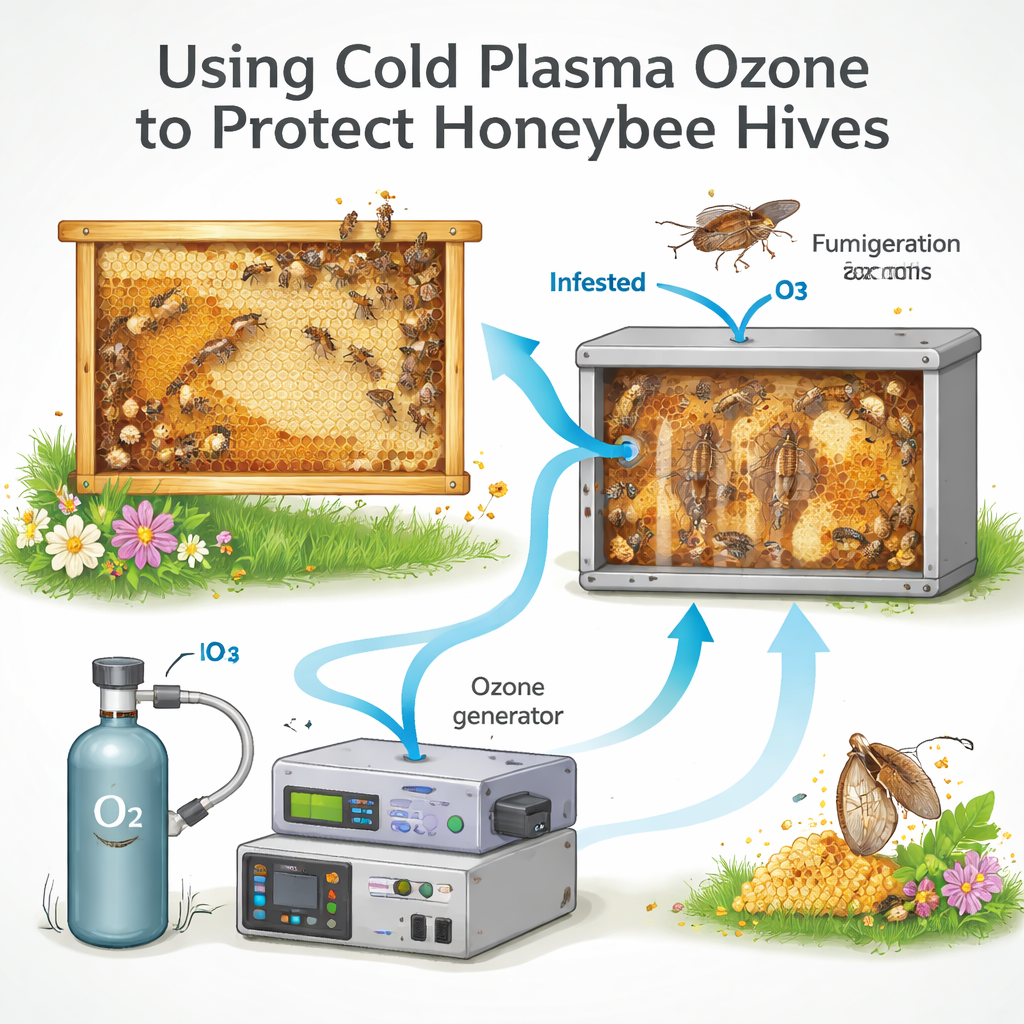
A quiet invader in the hive
The greater wax moth lays its eggs on stored combs or inside weak hives. When the eggs hatch, the larvae chew through the wax, leaving behind silken tunnels and webbing that block bee movement, damage brood cells, and cause honey to leak. Traditional control methods rely on synthetic chemicals and fumigants. These can harm beneficial insects, contaminate hive products, and drive the evolution of pesticide‑resistant pests. Beekeepers and regulators are therefore searching for control tools that are both effective and safe for bees, wax, and honey.
Harnessing charged air to make a cleaner fumigant
The researchers tested ozone gas created in a dielectric barrier discharge, a type of cold plasma generator. In this system, ordinary oxygen flows between two electrodes separated by glass; a high‑voltage current briefly energizes the gas, forming ozone, a reactive form of oxygen already approved in food and water treatment. Wax moth eggs, larvae, and pupae were placed in small containers inside a fumigation chamber and exposed to ozone at two concentrations, 400 and 800 parts per million by volume, for times ranging from 5 to 80 minutes. The team then tracked survival, development into later life stages, and the appearance of any malformations.
Stopping the moth life cycle in its tracks
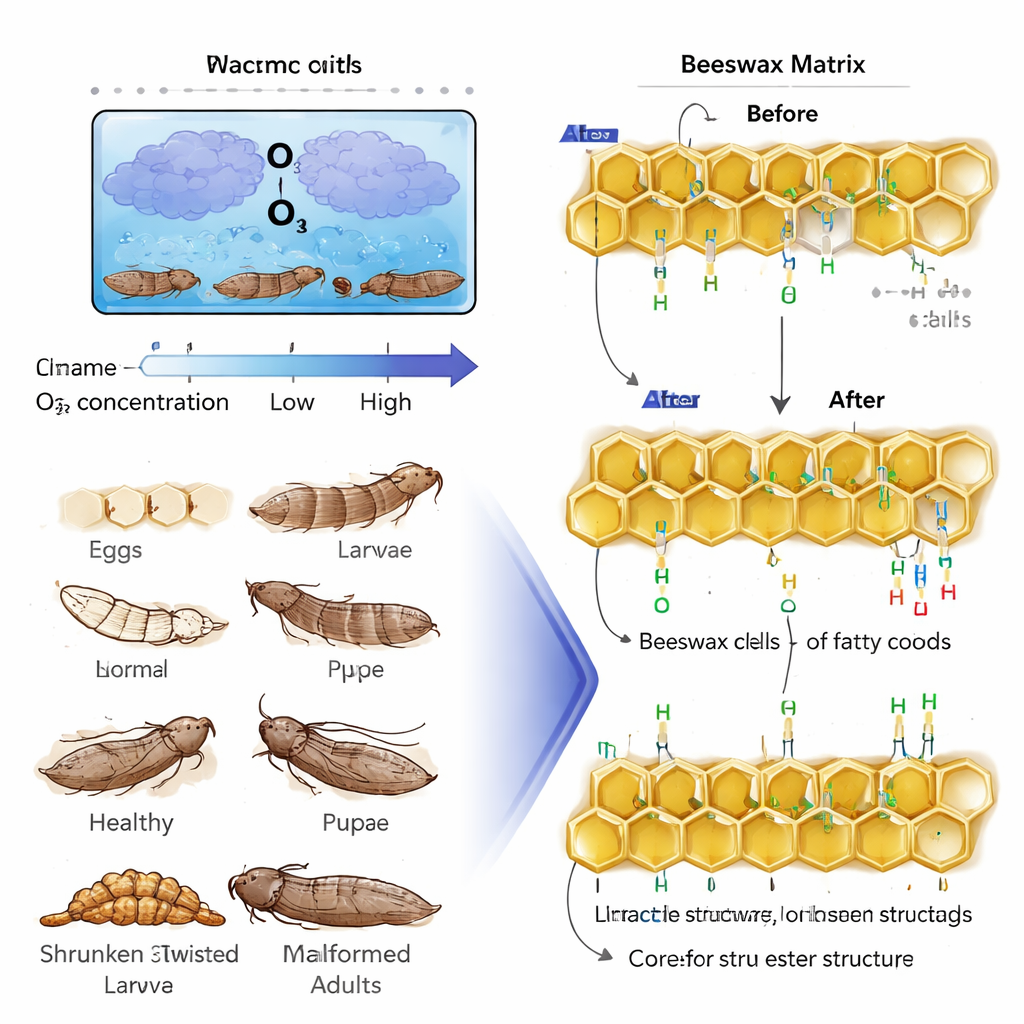
All life stages of the wax moth proved vulnerable to cold‑plasma ozone, but not equally so. Eggs and pupae were especially sensitive: at the higher ozone level, relatively short exposures completely prevented hatching or adult emergence. Larvae were tougher and needed longer treatments, yet extended exposures still caused very high mortality and virtually eliminated the chances of reaching adulthood. In groups that survived the gas, many insects developed twisted bodies, shriveled pupae, or adults with deformed wings that could not fly or reproduce normally. Statistical analysis showed that the length of exposure was even more important than the exact ozone concentration in determining how many insects died or failed to mature.
Inside the insect and inside the wax
To understand what happens biologically, the team examined the blood‑like fluid (hemolymph) of treated larvae. Within a day of ozone exposure, total protein levels rose significantly and the pattern of protein bands on laboratory gels changed, including the appearance of a new protein and the disappearance of another at higher ozone levels. These shifts suggest a strong stress response and possible damage to key molecules. The researchers also exposed clean beeswax sheets to ozone to see whether the treatment would harm this valuable hive material. Chemical analysis showed that while many hydrocarbons and fatty acids in the wax were rearranged or oxidized—adding new, more diverse fatty acids—the core wax ester structure stayed almost unchanged, and practical qualities such as color and flexibility were preserved.
What this could mean for sustainable beekeeping
Overall, the study indicates that ozone generated by cold plasma can kill or severely weaken wax moths at every stage of their life cycle, while leaving beeswax structurally intact and free from persistent chemical residues. For beekeepers, this points to a future in which stored combs and equipment might be disinfected with a short, controllable gas treatment rather than traditional fumigants. Before such methods are widely adopted, researchers still need to confirm that repeated ozone use does not subtly affect honey quality or bee health. But these results suggest that carefully applied ozone could become a powerful, cleaner tool for protecting hives and supporting more sustainable apiculture.
Citation: Abotaleb, A.O., Salem, H.H.A., El-Khashab, L.A.A. et al. Effects of cold plasma generated ozone on development of Galleria mellonella induced alterations in hemolymph protein and biochemistry of beeswax. Sci Rep 16, 5935 (2026). https://doi.org/10.1038/s41598-026-36802-w
Keywords: honeybee health, wax moth control, cold plasma ozone, beeswax chemistry, sustainable apiculture