Clear Sky Science · en
Integrated chemical and biological characterization of Hypericum perforatum extract using LC-MS/MS and in vitro functional assays
Why a Common Herb Matters for Modern Medicine
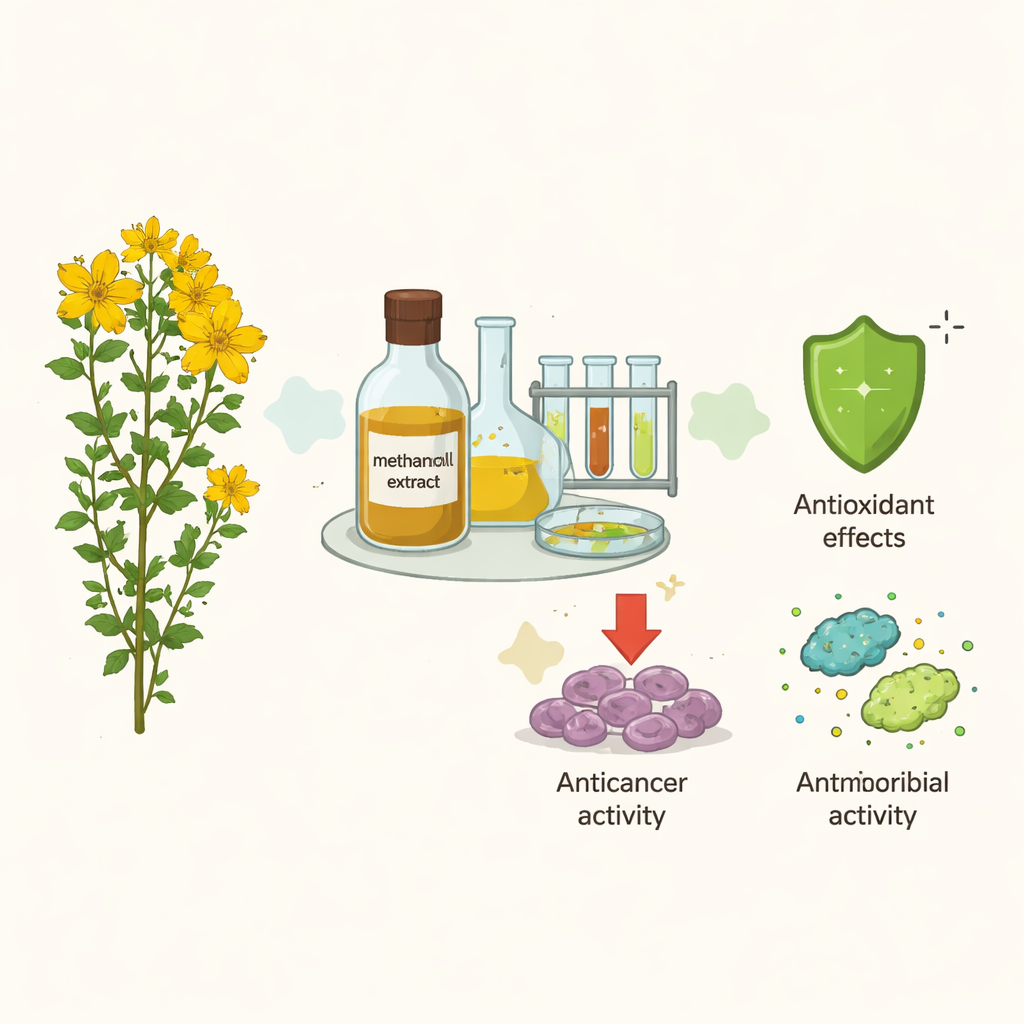
St. John’s wort is best known as an over‑the‑counter remedy for low mood, but this bright yellow wildflower turns out to be a miniature chemical factory. In this study, scientists took a deep look at what is really inside the plant and how those ingredients behave in the lab. They showed that a carefully prepared extract is packed with natural antioxidants, can slow down and kill several types of cancer cells in test tubes, and can modestly inhibit some bacteria. For readers interested in herbal remedies, cancer research, or the search for gentler drugs, this work offers a detailed, science‑based snapshot of what St. John’s wort can and cannot do.
The Plant Behind the Promise
St. John’s wort (scientific name Hypericum perforatum) has been used for centuries to treat wounds, burns, digestive complaints, and mild depression. Researchers now know that its healing potential comes from a rich mix of small plant molecules. These include colorful pigments, bitter compounds, and many types of polyphenols—plant chemicals that often act as natural defenses against stress and sunlight. In this study, the team collected wild plants from the mountains of Türkiye and prepared a methanol‑based extract designed to pull out as many of these molecules as possible, especially those that dissolve better in slightly acidic conditions.
What’s in the Extract
Using a sensitive technique called LC‑MS/MS, which separates and weighs molecules, the scientists identified 36 distinct compounds in the extract. Many were well‑known plant antioxidants, such as chlorogenic acid, rutin, quercetin, and catechin, all present at relatively high levels. They also detected several molecules in St. John’s wort that, to their knowledge, had not been reported there before, including genkwanin, vicenin‑2, schaftoside, and afzelin. These newcomers are already linked in other plants to anti‑inflammatory, anti‑tumor, or blood sugar‑lowering effects. Together, this complex “chemical fingerprint” suggests that the herb’s actions are unlikely to depend on a single magic ingredient; instead, many compounds probably work together.
How the Extract Behaves in the Lab
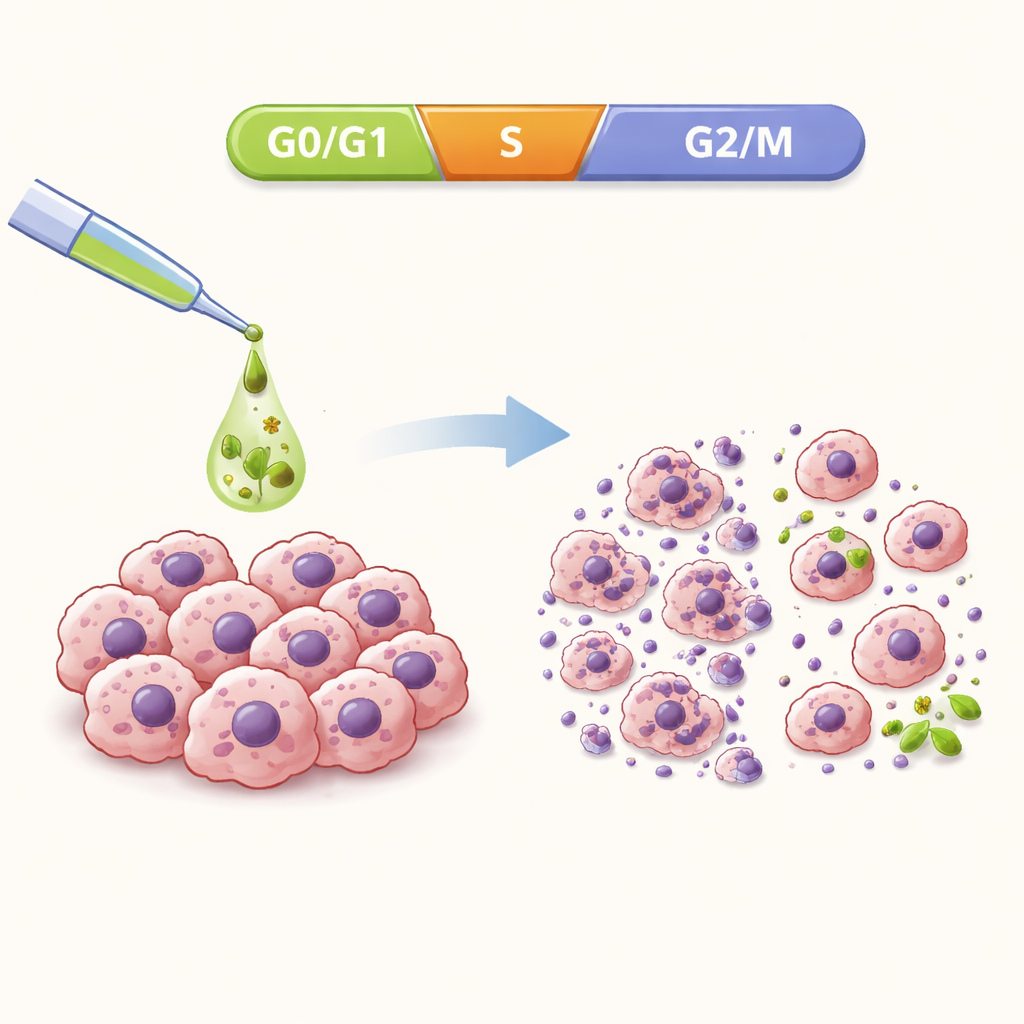
To see how this chemical cocktail performs, the researchers first measured its ability to neutralize free radicals—highly reactive molecules linked to aging and disease. The extract showed very strong radical‑scavenging power and a high overall level of polyphenols, confirming that it is a potent natural antioxidant. Next, they exposed a panel of human cancer cell lines, including lung, breast, colon, cervical, and nerve‑derived cancers, as well as a non‑cancerous lung cell line, to different doses of the extract. At low microgram levels, the extract sharply reduced the survival of all tested cancer cells, and in this lab setting it appeared more potent than the standard chemotherapy drug cisplatin under the same conditions. Follow‑up tests using flow cytometry showed that the extract pushed many cancer cells into programmed cell death (apoptosis) and blocked them in the resting G0/G1 phase of the cell cycle, preventing further division.
Limits and Selective Effects
The extract did not act as a broad‑spectrum natural antibiotic. In petri dish tests, it moderately slowed the growth of two common bacteria, Escherichia coli and Staphylococcus aureus, but had no measurable effect on another tough bacterium, Pseudomonas aeruginosa, or on yeast species such as Candida. Even among human cells, the effects were not uniform: lung and aggressive breast cancer cells were especially sensitive, while normal lung cells were affected to a lesser, though still noticeable, degree. This pattern hints at some selectivity for tumor cells but also underscores that the extract is far from harmless and cannot be assumed safe or effective in people without careful testing.
What This Means for Future Treatments
Overall, the study paints St. John’s wort as a chemically rich plant whose extract strongly mops up damaging radicals, can kill or stall cancer cells in controlled lab experiments, and shows modest activity against certain bacteria. For lay readers, the key message is that this familiar herb holds ingredients with real biological punch, but that does not mean a cup of tea or a supplement is a cancer cure. The promising anticancer signs seen here come from concentrated, well‑defined extracts tested on cells in dishes, not in patients. The authors stress that much more work—especially animal studies, safety assessments, and trials that isolate individual compounds—is needed before any of these findings could translate into new medicines or safe complementary treatments.
Citation: Güzel, M.A., Kolaç, T., Menevşe, İ.N. et al. Integrated chemical and biological characterization of Hypericum perforatum extract using LC-MS/MS and in vitro functional assays. Sci Rep 16, 6276 (2026). https://doi.org/10.1038/s41598-026-36793-8
Keywords: St. John’s wort, natural antioxidants, herbal anticancer research, plant polyphenols, medicinal plants