Clear Sky Science · en
Professional perspectives on recurrent characteristics of dogs with separation-related problems: a qualitative study in three nordic countries
Why some dogs panic when left home alone
Many dog owners know the sinking feeling of closing the front door and hearing their dog begin to bark, howl or scratch. These “separation-related problems” are not just annoying habits; they can signal deep distress in the animal and strain the lives of the people who love them. This study asked a simple but overlooked question: what patterns do experienced dog professionals see, again and again, in dogs that struggle to be left alone?
Everyday behaviour troubles that go together
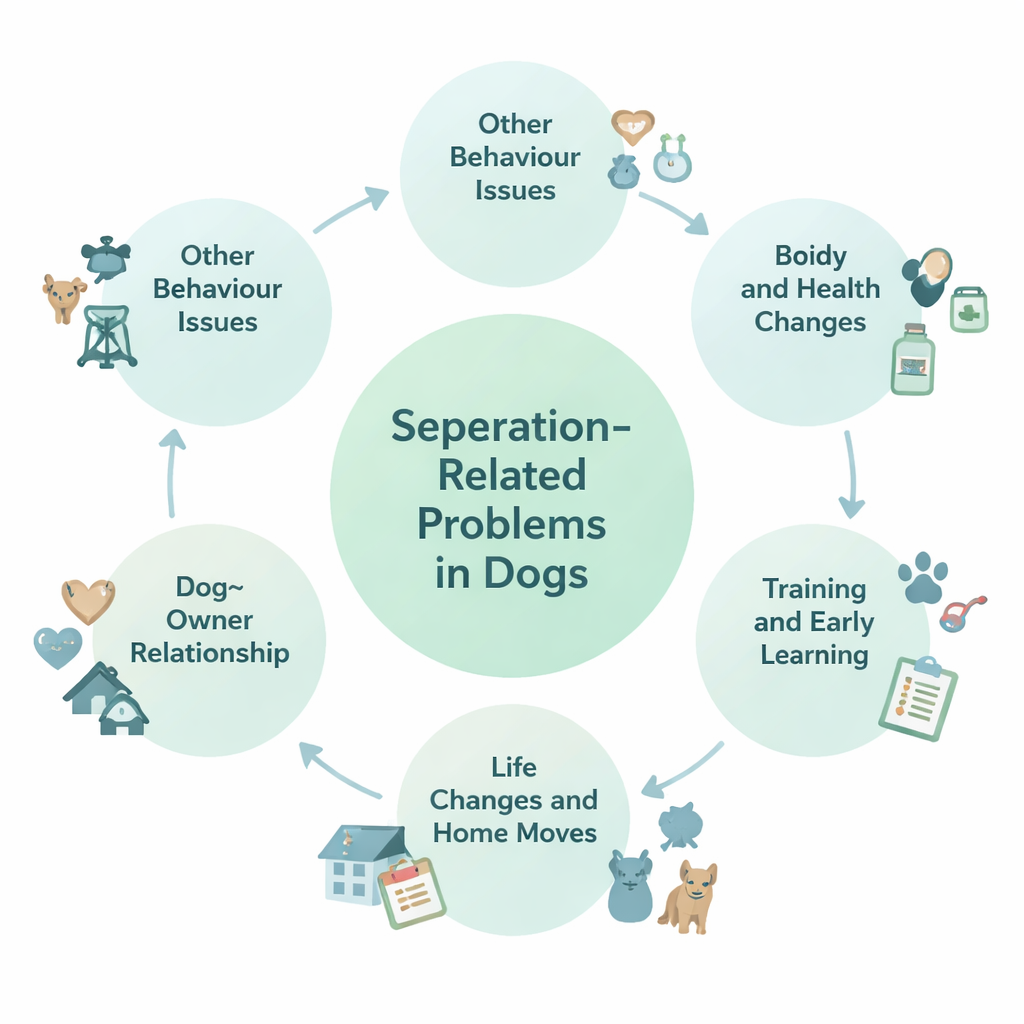
Veterinarians, behaviourists and trainers from Denmark, Sweden and Norway were interviewed about the dogs they see for separation-related problems. Across 15 in-depth conversations, a clear picture emerged. Dogs that panic when left alone often have other behaviour issues too: fear of loud noises, general nervousness, trouble relaxing, or guarding food and toys. Some seem tense and easily overwhelmed from puppyhood; others are restless or bored because their basic needs for exercise and mental activity are not met. The professionals stressed that what looks like “separation anxiety” can sometimes be a dog with excess energy or frustration, left with nothing to do.
Bodies and life stages that shape emotions
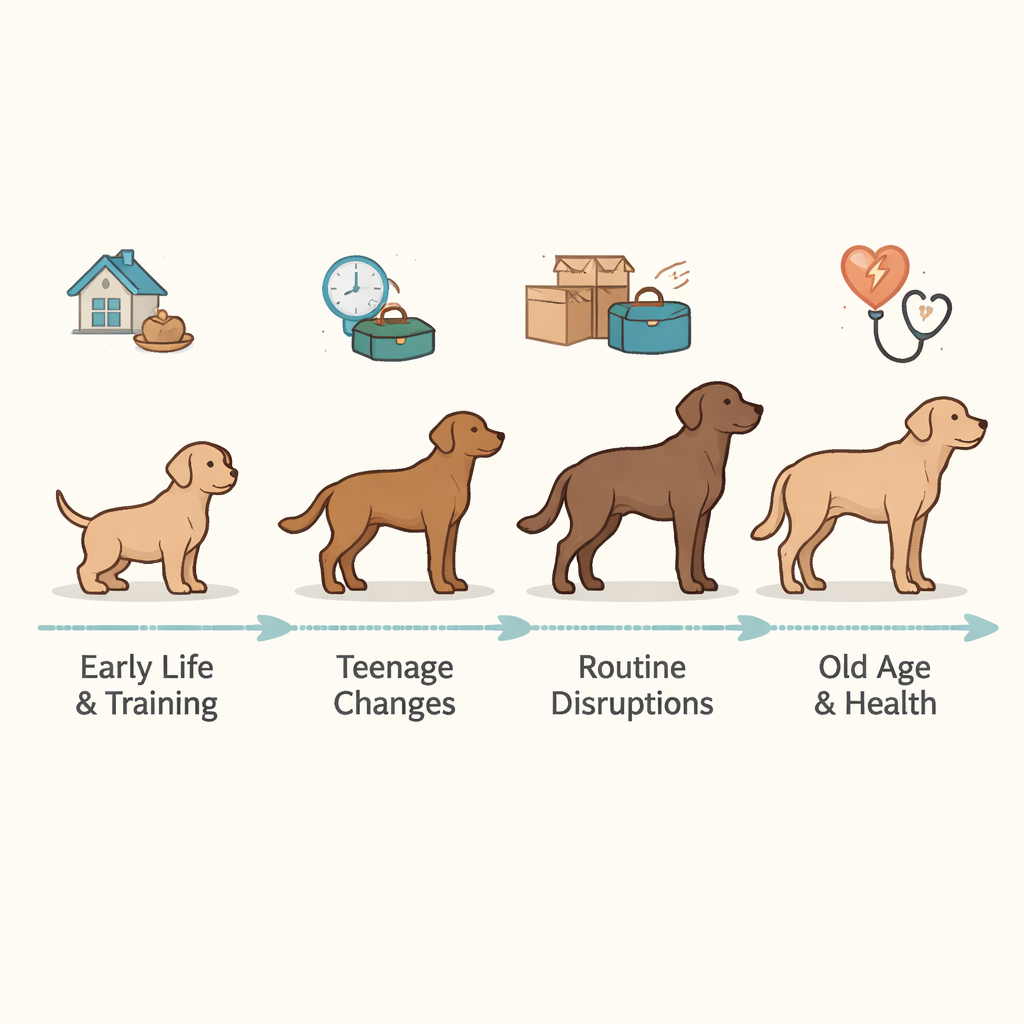
Another recurring theme was the dog’s changing body. Many professionals said problems often surfaced during adolescence, roughly between 6 and 18 months of age, when hormones and social independence are in flux. Some also noticed new worries about being alone in older dogs, possibly linked to memory problems or health issues. While experts did not all agree on how strong the health connection is, several had seen pain, itching, gut troubles or age-related decline make existing problems worse or trigger new ones. Their message to owners was that behaviour and body should be considered together, not in isolation.
When early lessons about being alone go off track
Training history stood out as an area where many problems might be prevented. Professionals frequently met dogs that had never been gently taught how to cope with short absences. This was especially common in “pandemic dogs” that spent months with someone always at home, only to be suddenly asked to stay alone when routines changed. Others had experienced harsh or rushed training, such as being left to “cry it out” behind closed doors. Such approaches may stop the noise but leave the dog just as distressed. The interviewees called for calm, step-by-step training methods that build trust and predictability, noting that surprisingly few scientific studies have tested what actually works best.
Breed, routine changes and moves
Most professionals felt that breed plays some role—certain breeds or lines seemed more nervous or intensely attached—but they also stressed that upbringing and lifestyle matter just as much, if not more. Sudden upheavals in a dog’s life were mentioned repeatedly: moving house, changes in work hours, divorce, new babies or being rehomed from a shelter. Dogs rely heavily on stable routines to feel safe, and when their social world or daily schedule shifts, some start to cling or panic when left alone. Early experiences also matter: how the puppy was cared for by the mother, when it left the litter, and how the first days in a new home were handled may all leave lasting marks on how it copes with loneliness.
The emotional link between dogs and their people
A striking insight from the interviews was the emotional “feedback loop” between dogs and owners. Many professionals noticed that highly stressed or anxious owners often had highly stressed dogs. Dogs may pick up on human tension and mirror it, and owners who feel guilty or overwhelmed by their dog’s distress may struggle to follow through with training plans. Lack of knowledge was also common: some owners underestimated how much time and guidance a dog needs to learn to be alone. At the same time, very close, one-sided bonds—where a dog relies intensely on a single person—were often seen in difficult cases, though research has not yet fully confirmed how this kind of attachment feeds into separation problems.
What this means for dogs who can’t stand being alone
To a layperson, the study’s take-home message is that separation problems rarely have a single cause. Instead, they grow out of a mix of the dog’s temperament and health, its early training, life changes at home, and the emotional climate between dog and owner. The professionals’ experiences do not yet prove cause and effect, but they offer valuable clues for future research and practical help. Teaching puppies, especially during their teenage phase, to be alone in small, positive steps; keeping routines as steady as possible; checking for pain or illness; and supporting owners as well as dogs may all reduce the risk that closing the front door becomes a crisis. In short, helping dogs handle solitude requires looking at the whole story of their lives, not just what happens when we leave the house.
Citation: Almquist, E., Meyer, I., Sandøe, P. et al. Professional perspectives on recurrent characteristics of dogs with separation-related problems: a qualitative study in three nordic countries. Sci Rep 16, 2627 (2026). https://doi.org/10.1038/s41598-026-36791-w
Keywords: dog separation anxiety, canine behaviour problems, dog training and welfare, human–dog relationship, pet anxiety risk factors