Clear Sky Science · en
Blood glucose mediation of the association between SIRI and mortality in T2DM complicated with ischemic stroke
Why inflammation and sugar matter in stroke
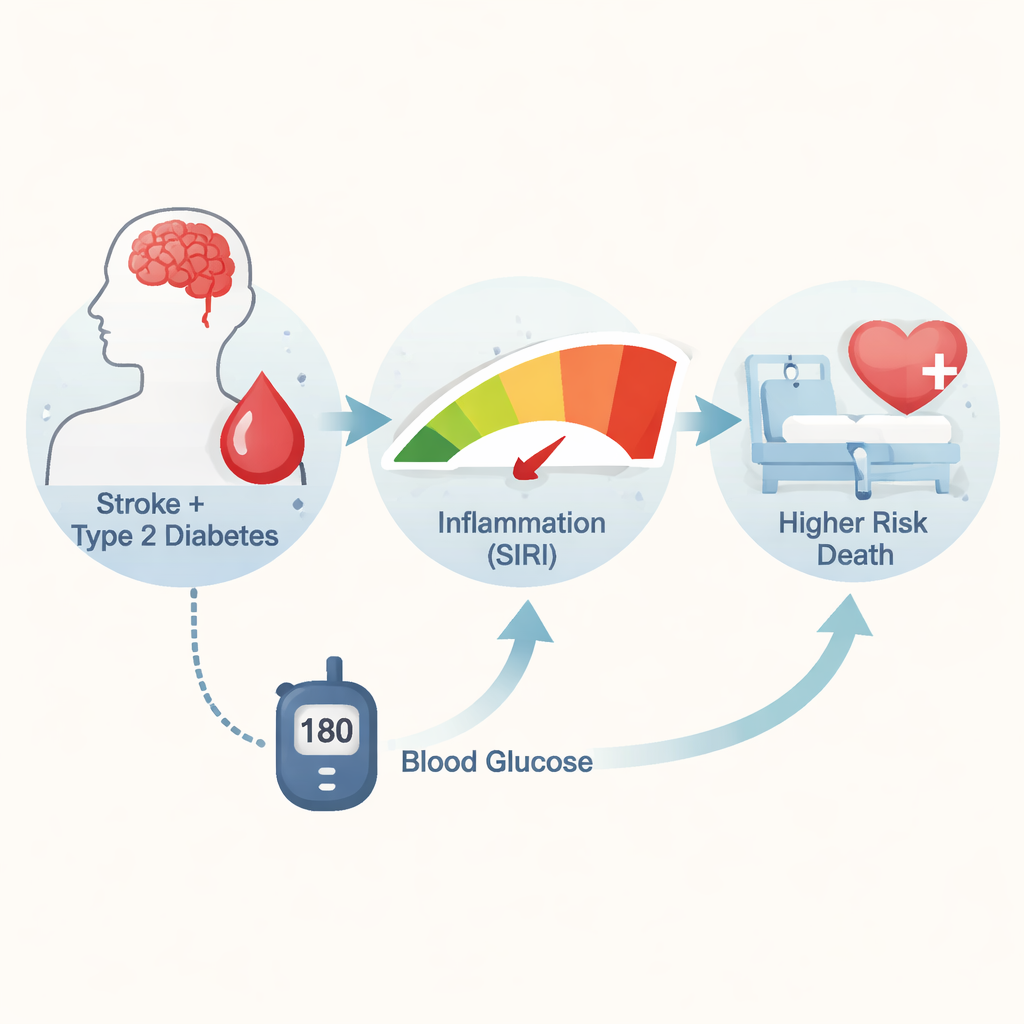
When a person with type 2 diabetes suffers an ischemic stroke—where a blood clot cuts off blood to part of the brain—the stakes are especially high. Doctors know that both high blood sugar and inflammation can worsen damage, but how these two factors work together has been unclear. This study looks at a simple blood test–based inflammation score and asks: can it help predict which diabetic stroke patients in intensive care are most at risk of dying, and does blood sugar help explain that risk?
A simple score from routine blood tests
The researchers focused on the Systemic Inflammatory Response Index, or SIRI, which is calculated from three types of white blood cells: neutrophils and monocytes, which drive inflammation, and lymphocytes, which tend to restrain it. Higher SIRI values reflect a body in a more aggressively inflammatory state. Using the large, publicly available MIMIC-IV intensive care database from a Boston hospital, the team identified 1,235 adults who had both type 2 diabetes and an ischemic stroke during a stay in the intensive care unit. They grouped patients into low, medium, and high SIRI tiers and then examined who survived over the first 28 days and the first year after admission.
Inflammation score linked to survival
Patients with higher SIRI values fared noticeably worse. In the lowest SIRI group, only about 2 out of 100 patients died within 28 days, compared with about 13 out of 100 in the highest group. At one year, deaths rose from 10% in the lowest group to more than 32% in the highest. These patterns held up even after statistical adjustments for age, sex, other illnesses, stroke treatments, and multiple laboratory results. When the researchers treated SIRI as a continuous score rather than simple groups, each step up in SIRI was associated with a higher risk of death in both the short and long term. Curved risk plots showed a non‑linear pattern: risk climbed sharply as SIRI increased from low to moderate levels, then either bent upward again or leveled off at very high values, suggesting thresholds where inflammation becomes especially dangerous.
Blood sugar as part of the story
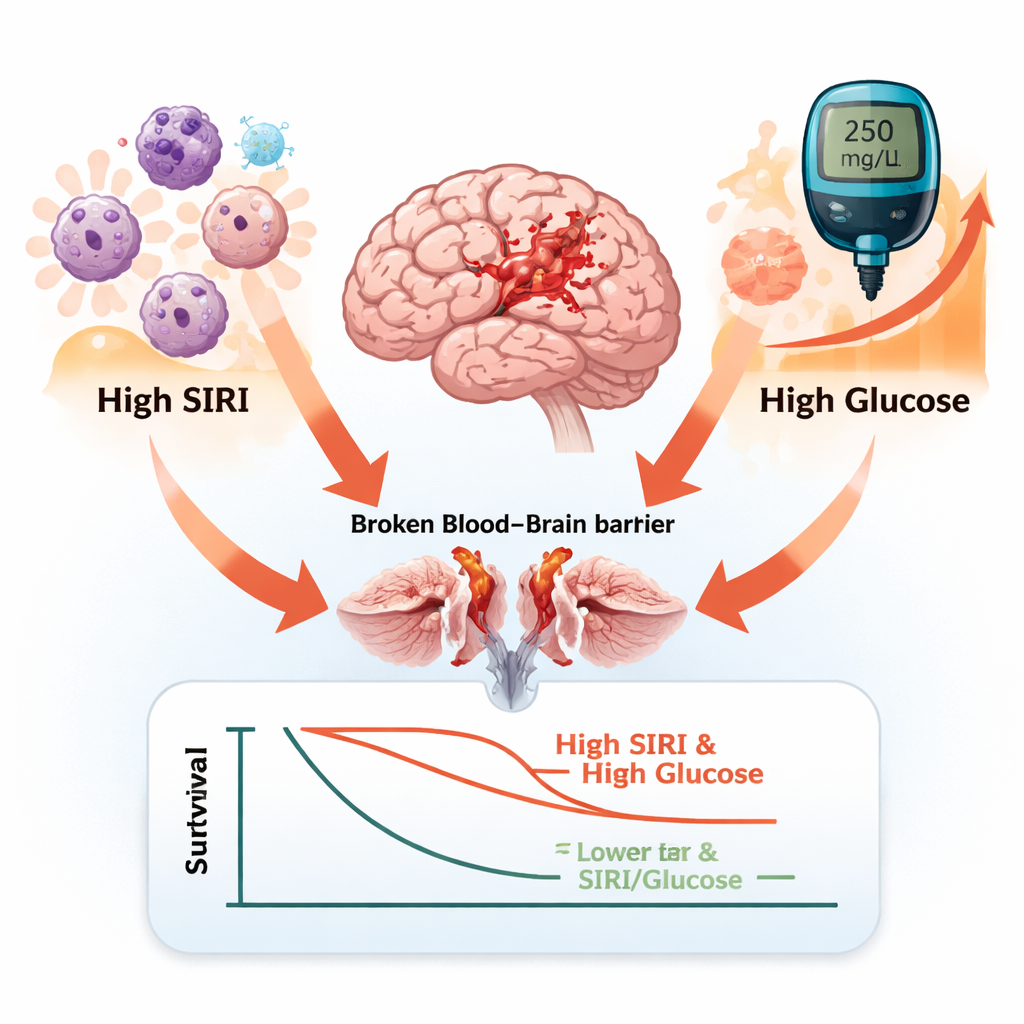
Because diabetes and stroke both disturb the body’s control of blood sugar, the team examined how glucose levels fit into this picture. They found that patients with higher SIRI tended to have higher blood sugar when they arrived in intensive care. Non‑survivors, both at 28 days and at one year, also had clearly higher glucose levels than survivors. Using a statistical technique called mediation analysis, the authors asked whether blood sugar might be one pathway through which inflammation raises the risk of death. They found that, for deaths within 28 days, about 14% of the impact of SIRI on mortality could be explained by higher blood sugar at admission. In contrast, blood sugar did not significantly explain the link between SIRI and deaths over one year, hinting that longer‑term risks are driven more by chronic inflammation and underlying disease than by a single high‑sugar episode.
Consistent results across many patient types
To test how solid their findings were, the researchers repeated their analyses in several different ways. They removed patients who died very quickly after admission, excluded those in deep coma, and divided SIRI into four groups instead of three; in each case, higher SIRI still signaled a greater chance of dying. The relationship held across men and women, married and single patients, and across those with or without heart disease, mechanical ventilation, or clot‑busting treatment. There was some suggestion that high blood pressure might slightly strengthen the long‑term impact of SIRI, but overall the pattern was strikingly stable: more systemic inflammation meant poorer survival.
What this means for patients and care
For people with type 2 diabetes who suffer an ischemic stroke, this study suggests that a simple index calculated from ordinary blood counts can help flag who is at heightened risk of dying, especially in the early weeks. It also shows that part of this danger in the short term runs through spikes in blood sugar, reinforcing the importance of both calming harmful inflammation and carefully managing glucose in the intensive care setting. While the work cannot prove cause and effect, it points toward SIRI as a low‑cost, widely available tool to aid early risk assessment—and toward treatment strategies that address inflammation and blood sugar together to improve outcomes for this vulnerable group.
Citation: Li, Z., Liu, Q., Feng, Y. et al. Blood glucose mediation of the association between SIRI and mortality in T2DM complicated with ischemic stroke. Sci Rep 16, 5785 (2026). https://doi.org/10.1038/s41598-026-36789-4
Keywords: type 2 diabetes, ischemic stroke, inflammation, blood glucose, critical care outcomes