Clear Sky Science · en
Determinants of moderate-intensity physical activity during pregnancy based on the COM-B model
Why Staying Active in Pregnancy Matters
Pregnancy is often portrayed as a time for rest, yet modern research shows that moving your body at a comfortable, moderate pace can be one of the healthiest choices for both mother and baby. This study, carried out in three hospitals in China, asks a simple but important question: what really helps or hinders pregnant women from getting enough everyday physical activity, such as brisk walking or climbing stairs? By unpacking the roles of knowledge, support from others, and the surrounding neighborhood, the researchers point to practical ways families, health professionals, and city planners can make it easier and safer for expectant mothers to stay active.
How the Study Was Set Up
The researchers surveyed 316 pregnant women attending routine checkups, most of them in their third trimester. Instead of focusing on gym-style workouts, they looked at all kinds of daily movement, from housework and job-related activity to walking for transport and simple exercise. Women reported how much time they spent in different activities, which was converted into a standard measure of energy use. They also completed short questionnaires on four areas: what they knew about safe exercise in pregnancy, how confident they felt about being active, how much encouragement and practical help they received from people around them, and how friendly their neighborhood was for walking and outdoor activity.
How Active Were the Mothers-To-Be?
Health authorities such as the World Health Organization recommend at least 150 minutes of moderate activity per week during pregnancy for women without medical restrictions. In this study, nearly two-thirds of participants fell short of that mark. On average, women were just under the recommended level, and 63.9% did not meet the guideline. Most were relatively young, employed, and living in urban areas, yet work and time pressures often limited their movement. Interestingly, the amount of activity did not differ much by stage of pregnancy, likely because so many participants were in late pregnancy that meaningful comparisons across trimesters were hard to make.
What Drives or Blocks Movement?
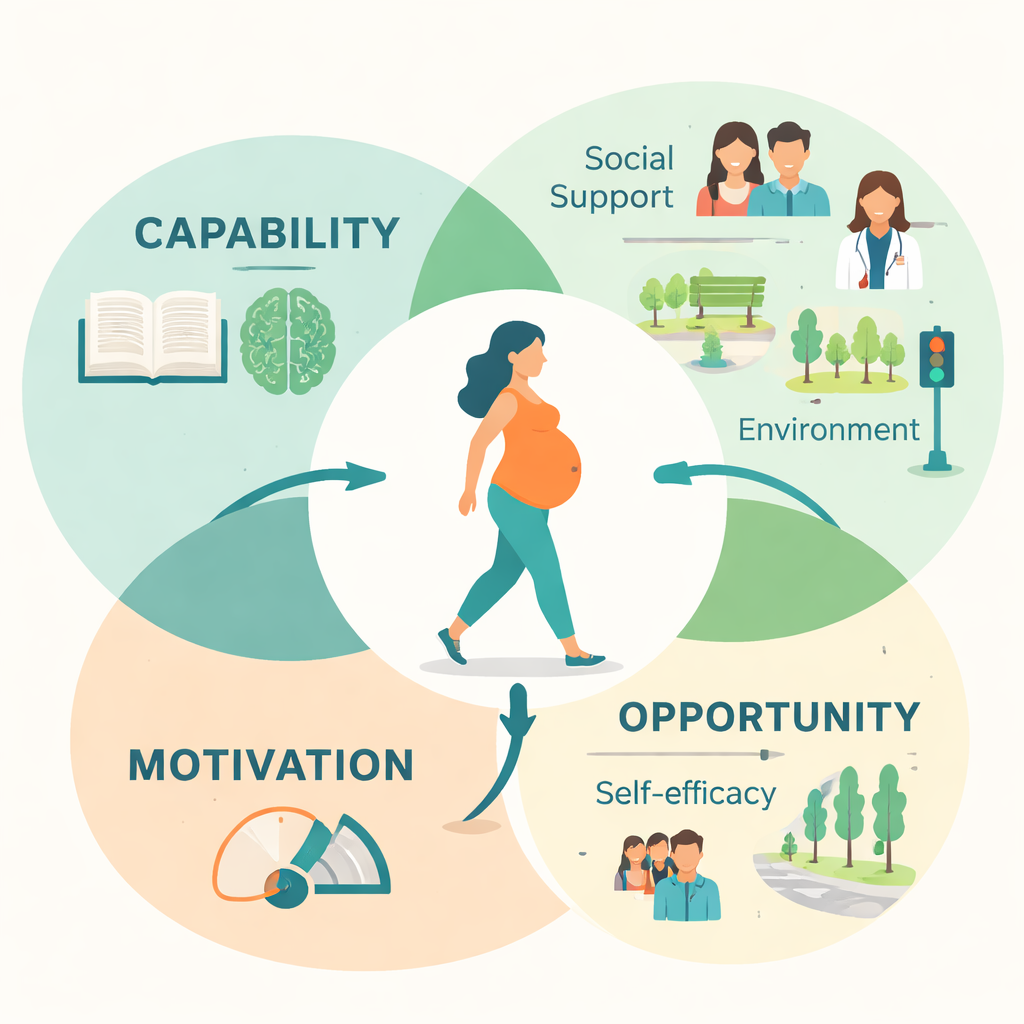
To understand why some women were more active than others, the team used a behavioral framework that groups influences into three simple categories: capability, opportunity, and motivation. Capability was captured as basic knowledge about safe exercise—how often, how hard, and what kinds of activities are recommended, and which warning signs mean you should stop. Opportunity covered both social and physical surroundings: whether family, friends, and health professionals offered encouragement or help, and whether neighborhoods had parks, safe sidewalks, and low crime and traffic danger. Motivation was reflected in self-belief: how confident women felt about keeping active even when tired, busy, or worried.
How These Factors Work Together
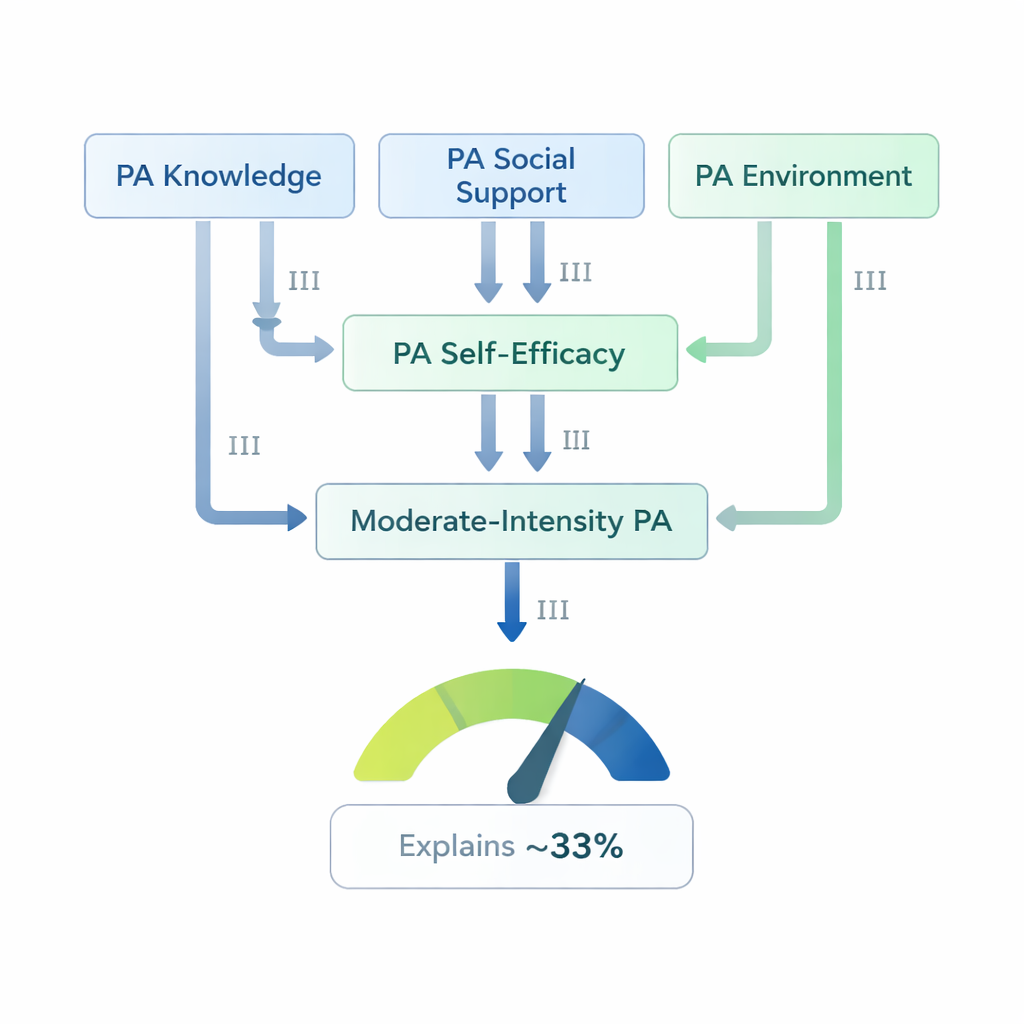
The analysis showed that all four factors—knowledge, social support, neighborhood environment, and self-confidence—were linked to how much moderate activity women did. Women who knew more about pregnancy exercise tended to move more, and part of this effect came from feeling more confident in their ability to be active safely. Strong backing from family, friends, and healthcare staff did double duty: it directly encouraged women to be active and also boosted their confidence, which further raised activity levels. A supportive environment with accessible services, pleasant surroundings, and a sense of safety made it easier to be active and also seemed to foster social support and confidence. Overall, these connected influences explained a little over one-third of the differences in activity levels among women—a sizable share for everyday behavior.
What This Means for Families and Communities
For a lay reader, the study’s message is straightforward: most pregnant women in this sample were not moving as much as current guidelines suggest, but this is not simply a matter of willpower. Clear information about safe exercise, encouragement and practical help from loved ones and health workers, and safe, pleasant places to walk all work together to support an active pregnancy. Helping expectant mothers might mean offering to walk with them, sharing reliable exercise advice during clinic visits, or improving local parks and sidewalks. By addressing knowledge, support, and environment at the same time, families and communities can make it easier for pregnant women to stay comfortably active—and, in turn, support healthier outcomes for both mother and baby.
Citation: Ye, L., Shang, X., Gui, M. et al. Determinants of moderate-intensity physical activity during pregnancy based on the COM-B model. Sci Rep 16, 6114 (2026). https://doi.org/10.1038/s41598-026-36786-7
Keywords: pregnancy exercise, moderate physical activity, prenatal health, social support, neighborhood environment