Clear Sky Science · en
The adaptive nature of the foam proteome produced by Mahanarva spectabilis (Hemiptera: Cercopidae) when infesting forage grasses with different levels of antibiosis-type resistance
Why pasture foam matters
In many tropical pastures, cattle share their grass with an unexpected engineer: the spittlebug nymph. These tiny insects wrap themselves in a blanket of white foam at the base of forage grasses. Far from being simple bubbles, this foam is a sophisticated shield that helps the insect survive heat, dryness, and enemies. The study summarized here asks a deceptively simple question with big implications for livestock production: what is the foam made of, and how does it change when the insect feeds on grasses that are naturally resistant to attack?
A hidden world inside insect foam
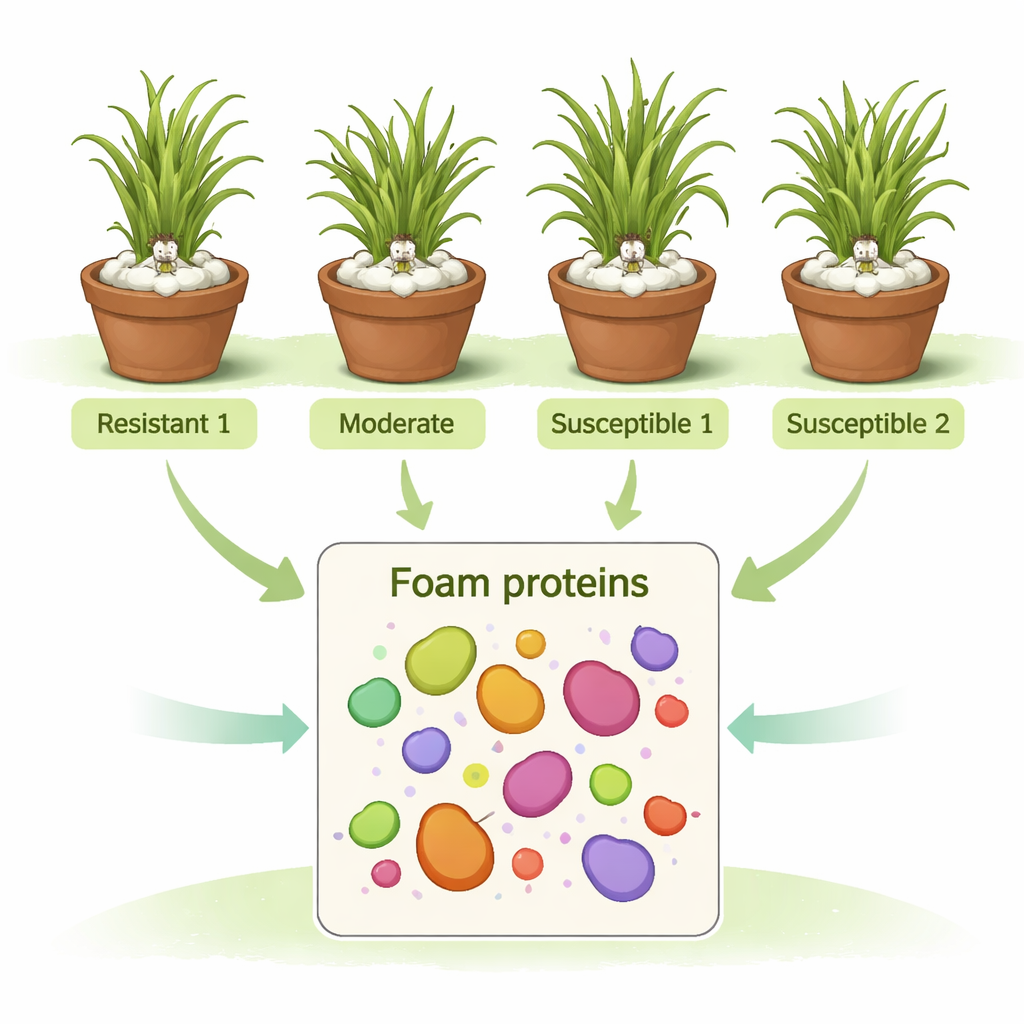
Spittlebug nymphs spend their youth immersed in a frothy mass they produce from plant sap and their own secretions. Earlier work showed that this foam buffers temperature, sticks to plants, and can even slow the growth of microbes. Yet almost nothing was known about its proteins, the working molecules that give foam many of its special properties. To fill this gap, the researchers collected foam from nymphs of the aggressive pasture pest Mahanarva spectabilis while they fed on four common forage cultivars. Two grasses were known to resist the insect well, one had moderate resistance, and two were highly susceptible. Using high‑resolution mass spectrometry, the team catalogued and compared the proteins present in foams formed on each type of plant.
Foam packed with mysterious proteins
The analysis revealed a surprisingly complex molecular soup: 196 distinct proteins, many occurring across all foam samples. About 45 percent of these had no clear match in existing protein databases, meaning they may be unique to spittlebugs or even to this foam. These unknown proteins were also among the most abundant, hinting that they could be crucial for building and stabilizing the bubbles, defending against microbes, or helping the insect cope with stress. Among the proteins that could be identified, many were enzymes known as hydrolases and oxidoreductases, along with various binding proteins. Together, these categories point to foam that is not just a passive blanket but a chemically active micro‑environment that processes nutrients, manages oxidative damage, and shapes interactions with microbes and the plant surface.
Plants fight back by reshaping the foam
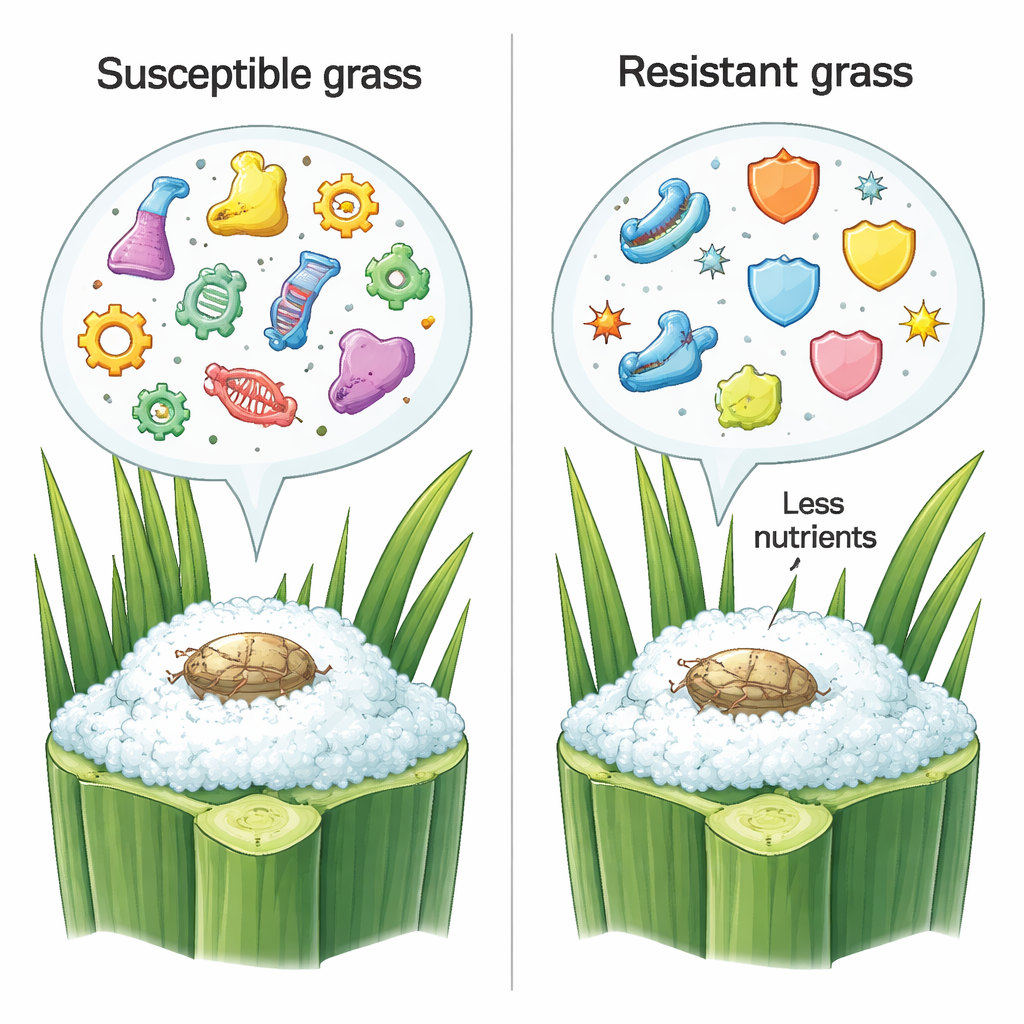
When the team compared foam from nymphs on resistant versus susceptible grasses, clear patterns emerged. On resistant and moderately resistant cultivars, many proteins involved in basic metabolism of sugars and fats were dialed down, while proteins linked to cell structure, energy production, and stress responses were boosted. In practical terms, grasses that are harder for the insect to exploit appear to restrict the quality of sap and trigger a metabolic slowdown inside the foam. The nymphs respond by ramping up proteins that maintain their internal machinery and help them endure harsher conditions. Statistical analyses confirmed that each grass genotype imprints a characteristic protein signature on the foam, showing that it acts as a sensitive readout of the plant–insect tug‑of‑war.
Clues for smarter pest control
Because spittlebug outbreaks can slash pasture yields by more than a third, understanding this foam is more than a curiosity. By highlighting which foam proteins are tied to survival on resistant grasses—such as key energy enzymes, structural proteins, and defence‑related factors—the study points to new targets for pest management. Breeders might select or engineer forages that further disrupt the insect’s foam metabolism, while biotechnologists could design treatments that block critical foam proteins or the genes behind them. The work also shows that many foam proteins remain uncharacterized, offering a rich source of potential molecules for future study, from novel antimicrobials to natural surfactants.
What this means for farmers and ecosystems
For non‑specialists, the main message is straightforward: the spittlebug’s foam is a living, adaptable shield whose ingredients change depending on how tough the host grass is. Resistant grasses seem to starve the insect of easy nutrients and push it into a costly stress‑response mode, captured in the shifting mix of foam proteins. By decoding this hidden chemistry, scientists gain powerful clues for breeding pasture plants and designing biocontrol tools that tip the balance further against the insect. In the long run, such strategies could help protect tropical forage systems, support more sustainable beef and dairy production, and reduce reliance on broad‑spectrum insecticides.
Citation: José Rinaldi, A., Silva Bonjour, M., Barros, E. et al. The adaptive nature of the foam proteome produced by Mahanarva spectabilis (Hemiptera: Cercopidae) when infesting forage grasses with different levels of antibiosis-type resistance. Sci Rep 16, 7114 (2026). https://doi.org/10.1038/s41598-026-36784-9
Keywords: spittlebug foam, forage grass resistance, insect–plant interactions, proteomics, pasture pest management