Clear Sky Science · en
Species composition and vegetation structure of coastal and desert habitats in a hyper-arid environment
Life in some of the driest places on Earth
When most people picture Egypt’s deserts, they imagine endless bare sand. In reality, even the harshest corners of the country host surprisingly rich and varied plant life. This study asks a simple question with big consequences: which plants grow where, and why, across Egypt’s coastal strips and deep inland deserts? The answers help scientists understand how life survives extreme heat and dryness—and how human activity and climate change may be pushing these fragile communities toward the brink.
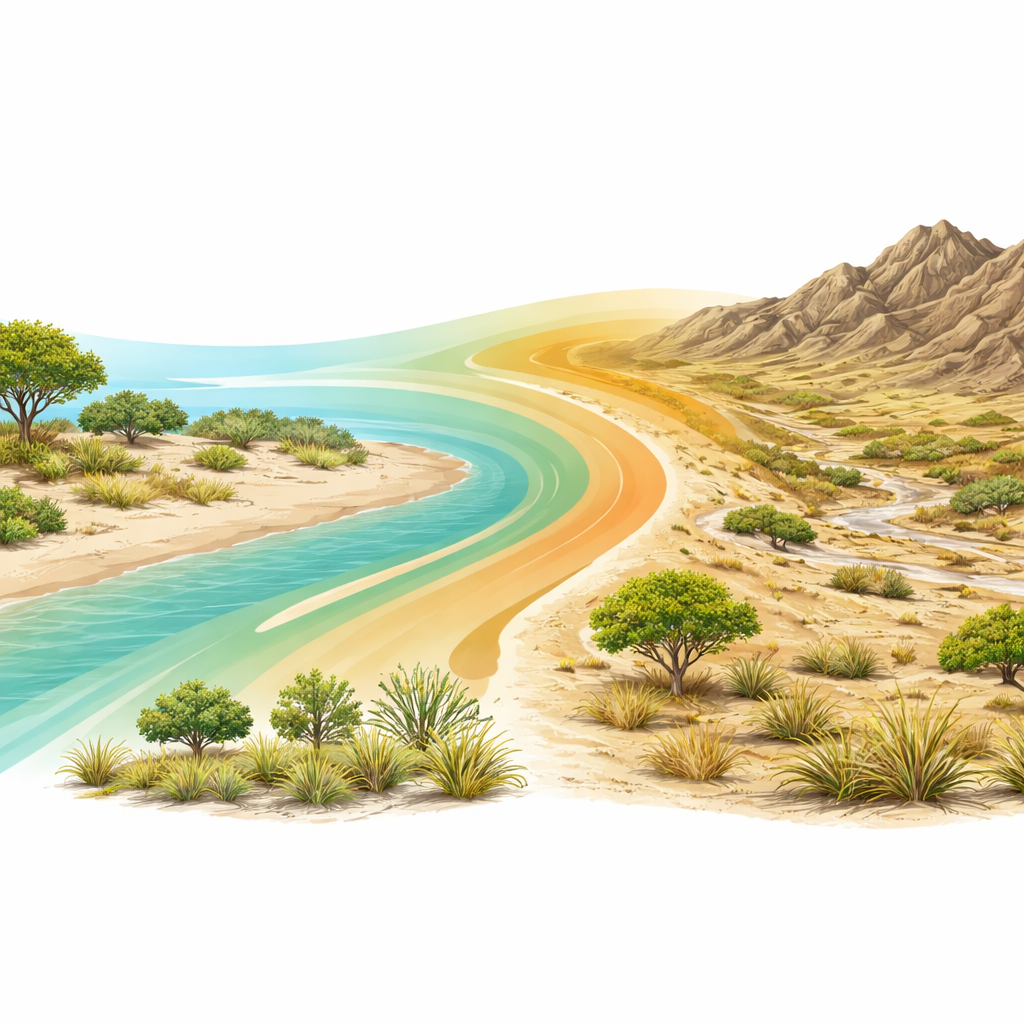
Four desert landscapes, many different plant worlds
The researchers surveyed vegetation in four contrasting regions: the Mediterranean coast near El-Arish, the Red Sea resort area around Hurghada, the rugged inland mountains of Wadi El-Galala, and the protected valleys of Wadi El-Gemal. Together, these places span a gradient from relatively mild, wetter coastal climate to hyper-arid inland terrain with scorching summers and almost no rain. Within these areas they sampled 86 small plots across dunes, rocky plains, salt flats, orchards, croplands, and wastelands to capture how plant communities change from place to place.
Who lives there: a roll call of desert survivors
Across all sites, the team recorded 45 species of vascular plants belonging to 16 families. Most were long-lived shrubs and herbs, with a smaller number of trees and short-lived annuals that race through their life cycle after rare rains. A few plant families dominated: daisies and their relatives (Asteraceae), salt-loving amaranths (Amaranthaceae), and the hardy Zygophyllaceae, known for shrubs that tolerate drought and salinity. Strikingly, more than 95 percent of the species were native to Egypt, and only two were recent arrivals introduced by human activity. Some, such as Anabasis articulata and Haloxylon salicornicum, are already considered vulnerable, while others like the dune grass Panicum turgidum and the reed Phragmites australis are seen as near threatened or of least concern depending on how secure their populations appear.
Seven plant communities shaped from the ground up
Using statistical tools that group similar plots together, the scientists identified seven distinct vegetation types spread among the four regions. Each group was characterized by particular “indicator species” well suited to its conditions—such as shrub-rich sandy plains in inland wadis, salt-marsh communities on coastal flats, or weed-dominated orchards near El-Arish. When they compared these plant clusters with detailed measurements of the underlying soil, clear patterns emerged. Soil texture (how much sand, silt, and clay), salt content, pH, and key ions like sodium and calcium strongly influenced which plants could thrive. Areas with more fine sediments and organic matter tended to support richer and more even plant communities, while highly salty, coarse sands supported fewer, highly specialized species.
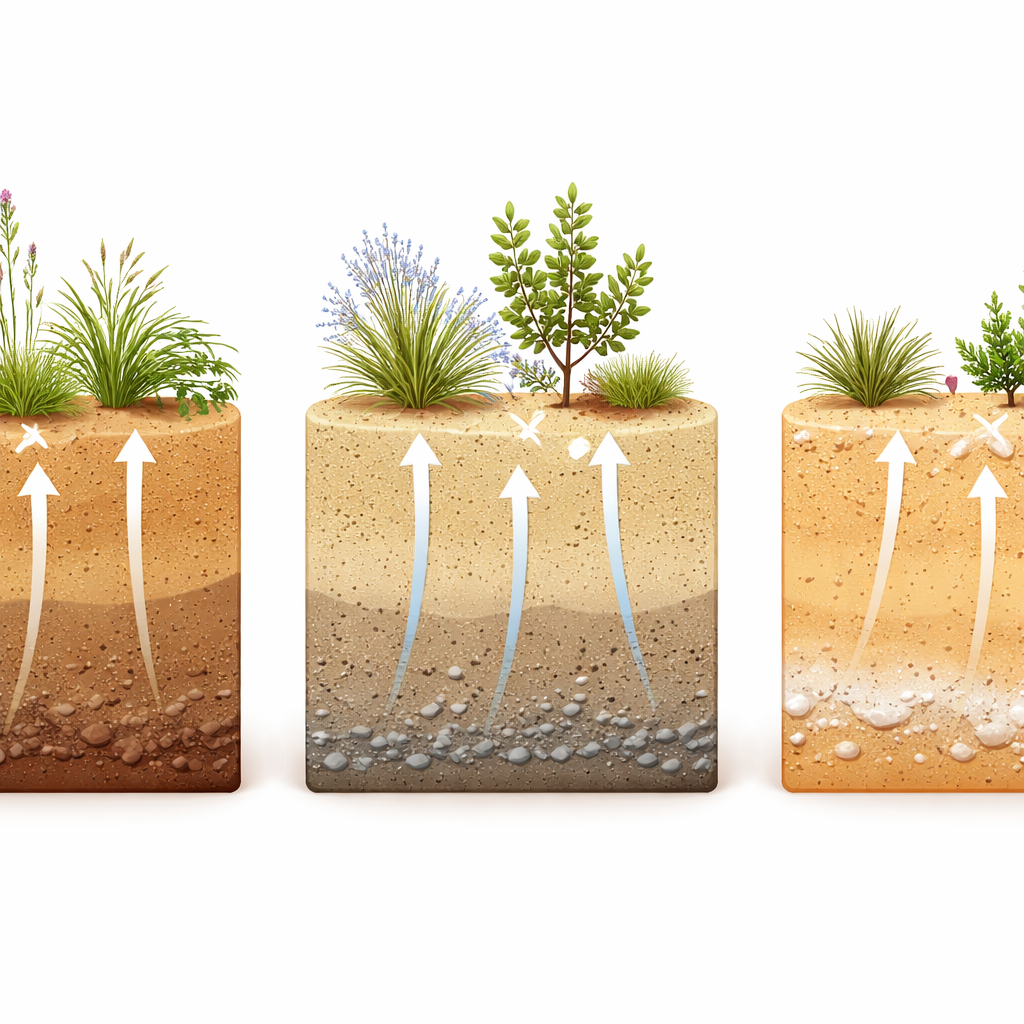
How diversity varies across fragile habitats
The team quantified diversity using measures that capture both how many species are present and how evenly they share space. On average, each small plot hosted about four to five species, but some communities contained far more. One widespread group of sandy-plain and orchard sites held the greatest variety, averaging nearly eight species per plot and the highest diversity scores. In contrast, some salinized coastal areas and disturbed orchards supported only a couple of dominant species, making these habitats more vulnerable to further change. By comparing how much species composition shifts between communities, the study also showed that plant life can change dramatically over relatively small distances as soils and land use differ.
Why this matters for conservation
For non-specialists, the key message is that Egypt’s deserts are not empty—they are mosaics of specialized plant communities finely tuned to subtle differences in soil and climate. Human pressures such as urban expansion, agriculture, tourism, overgrazing, and unsustainable harvesting are eroding this diversity, especially along coasts and in easily accessed valleys. This study offers a detailed map of where different kinds of vegetation still persist, which soil conditions support the richest plant life, and which species face the greatest risk. That knowledge can guide protected-area design, restoration efforts, and ongoing monitoring, helping decision-makers prioritize habitats where relatively small interventions—such as limiting disturbance, managing grazing, or safeguarding rare shrubs and grasses—could make a large difference in preserving Egypt’s desert biodiversity.
Citation: Moustafa, A.A., Mansour, S.R. & El-Ghani, M.M.A. Species composition and vegetation structure of coastal and desert habitats in a hyper-arid environment. Sci Rep 16, 8621 (2026). https://doi.org/10.1038/s41598-026-36782-x
Keywords: desert plants, Egypt biodiversity, coastal ecosystems, soil and vegetation, conservation