Clear Sky Science · en
Ferulic acid promotes hair growth via estrogen receptor alpha activation in cultured human dermal papilla cells
Why this plant-based hair study matters
Hair thinning and loss affect millions of people and can take a real emotional toll. Current medical treatments help some, but they often come with side effects or work poorly for women. This study explores whether a natural compound called ferulic acid, found in the traditional herb Cnidium officinale, can nudge key scalp cells into a more energetic, hair-growing state by gently tapping into the body’s own estrogen signaling.
From kitchen herbs to lab-tested ingredients
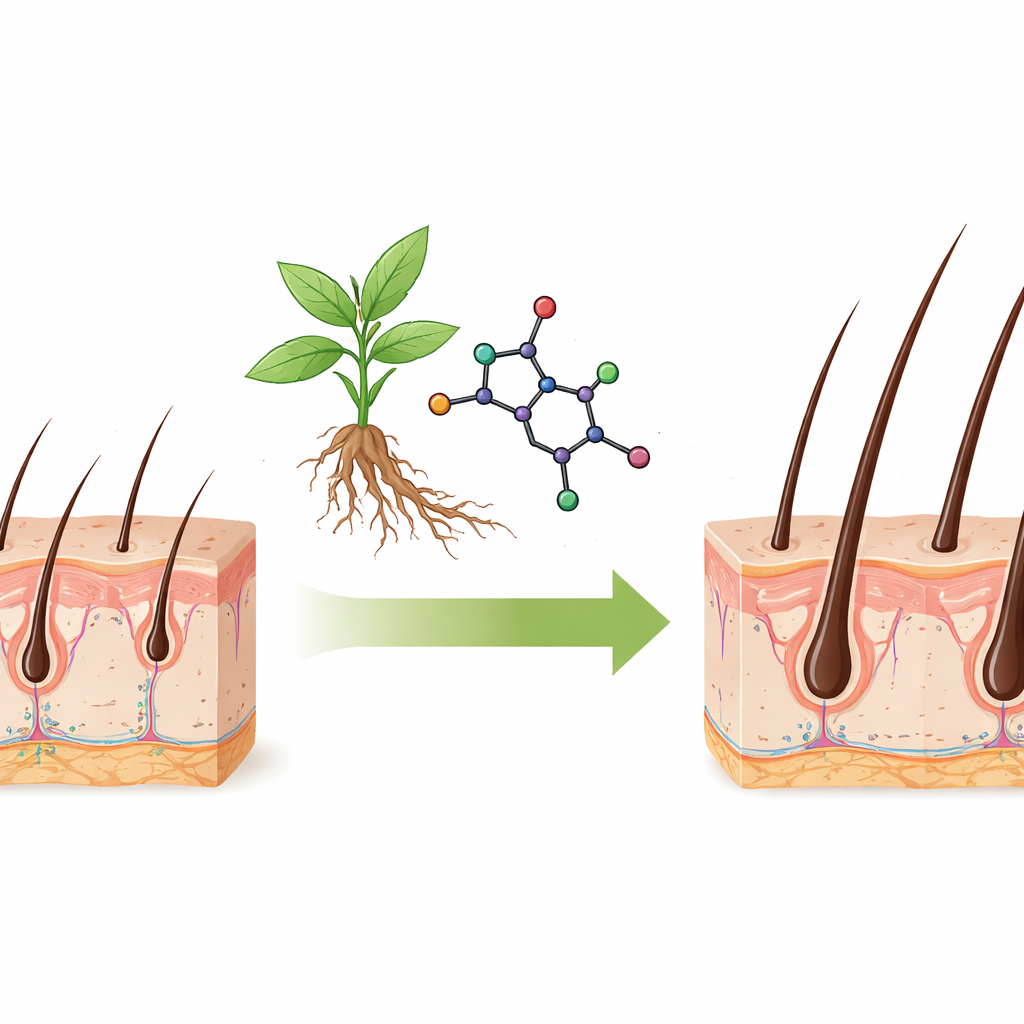
Cnidium officinale is a root used in East Asian traditional remedies, mainly for circulation and skin care. The researchers first tested an extract of this plant on human dermal papilla cells, a type of cell that sits at the base of each hair follicle and acts as its “control center.” When these cells were exposed to the extract, they divided more rapidly and showed higher mitochondrial activity, meaning their internal “power plants” were producing more energy. The extract also boosted signals associated with the growth phase of the hair cycle and increased several growth factors known to support thicker, longer hair shafts.
Zooming in on ferulic acid
Because plant extracts contain many different chemicals, the team next asked which specific ingredient was doing the heavy lifting. Chemical profiling pointed to ferulic acid as a major component. Ferulic acid is a well-known antioxidant used in skin-care products. Computer docking simulations suggested that this small molecule could fit into the binding pocket of estrogen receptor alpha, a protein through which the hormone estrogen exerts many of its effects. In follow-up cell experiments, ferulic acid alone increased dermal papilla cell growth and mitochondrial activity to a similar degree as estradiol, the main form of estrogen in the body.
Turning on hair cell energy like estrogen does
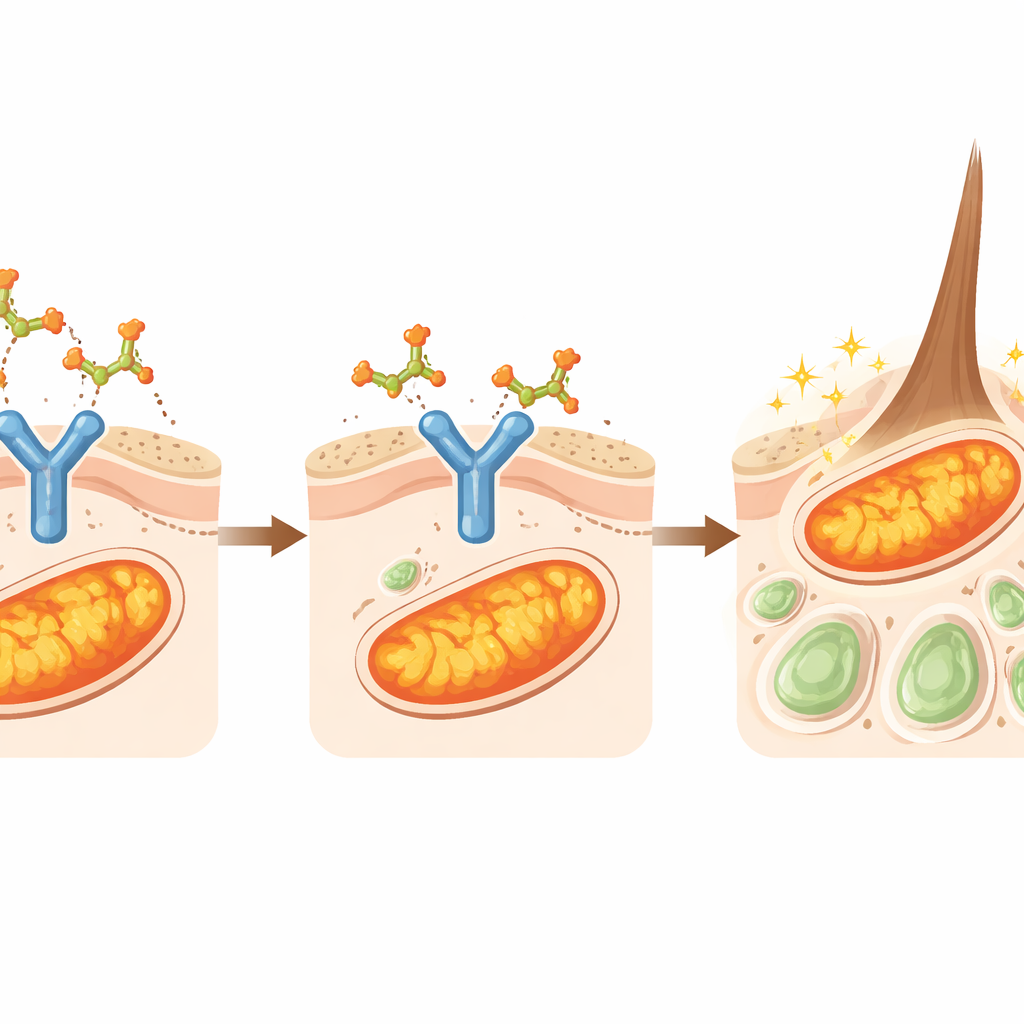
To see whether ferulic acid truly behaves in an estrogen-like way, the researchers compared global gene activity in cells treated with ferulic acid versus estradiol. Both treatments changed the expression of dozens of genes involved in energy production, especially those tied to ATP generation, the cell’s universal fuel. Ferulic acid also revived the activity of a downstream gene called c-JUN when it had been switched off by tamoxifen, a drug that blocks estrogen receptors. In addition, ferulic acid and the plant extract increased the phosphorylated, or “switched on,” form of estrogen receptor alpha and altered a network of signaling proteins, indicating that the same pathways triggered by estrogen were being activated in these hair-supporting cells.
From energized cells to longer-growing hairs
The team then moved beyond isolated cells to whole human hair follicles grown in dishes. Under the microscope, hair follicles pass through a growth phase (anagen), a regression phase (catagen), and a resting phase (telogen). When follicles were bathed in the plant extract or in ferulic acid, a higher percentage of them remained in the active growth phase after nine days compared with untreated controls. The treatments also raised levels of several growth factors, including EGF, FGF-7, PDGFRα, and IGF-1, which are known to help maintain the growth phase and support robust hair shafts. Ferulic acid further showed a cooperative effect with NMN, a molecule that boosts cellular energy currency, leading to even stronger mitochondrial activity when both were present.
What this could mean for future hair loss care
Overall, the study suggests that ferulic acid is a key active ingredient in Cnidium officinale extract that can mimic many of estrogen’s helpful actions on hair follicle cells without directly supplying hormone drugs. By activating estrogen receptor alpha, ramping up mitochondrial energy production, and increasing growth factor release, ferulic acid helps keep follicles in their growth phase longer in lab and ex vivo models. For lay readers, this points to a potential future in which certain plant-derived molecules might support scalp health and hair density, especially in women with estrogen-linked hair thinning, while possibly avoiding some of the hormonal side effects of current treatments. However, the authors stress that clinical trials in people are still needed before ferulic acid can be recommended as a proven therapy.
Citation: Rim, H., Kim, J., Joo, J.H. et al. Ferulic acid promotes hair growth via estrogen receptor alpha activation in cultured human dermal papilla cells. Sci Rep 16, 8753 (2026). https://doi.org/10.1038/s41598-026-36774-x
Keywords: hair loss, ferulic acid, estrogen signaling, dermal papilla cells, mitochondrial energy