Clear Sky Science · en
Determinants of late HIV diagnosis among patients attending ART clinics in amhara region northwest Ethiopia
Why this study matters for everyday life
Late diagnosis of HIV can turn a manageable infection into a life‑threatening crisis. This study from Northwest Ethiopia asks a simple but vital question: why are so many people learning they have HIV only after their immune system is already badly damaged? By understanding the social and personal reasons behind delayed diagnosis, the research points to practical ways communities and health services can help people get tested earlier and live longer, healthier lives.
The problem of finding HIV too late
HIV slowly weakens the body’s defenses, often without obvious symptoms for years. If the virus is detected early, antiretroviral treatment can keep people healthy and greatly reduce the chance of passing HIV to others. But in many low‑ and middle‑income countries, including Ethiopia, large numbers of people are diagnosed only when their infection is advanced. In the Amhara region, this means many patients arrive at clinics with very low immune cell counts or serious AIDS‑related illnesses, facing higher medical costs, higher risk of death, and more time when they can unknowingly infect partners. 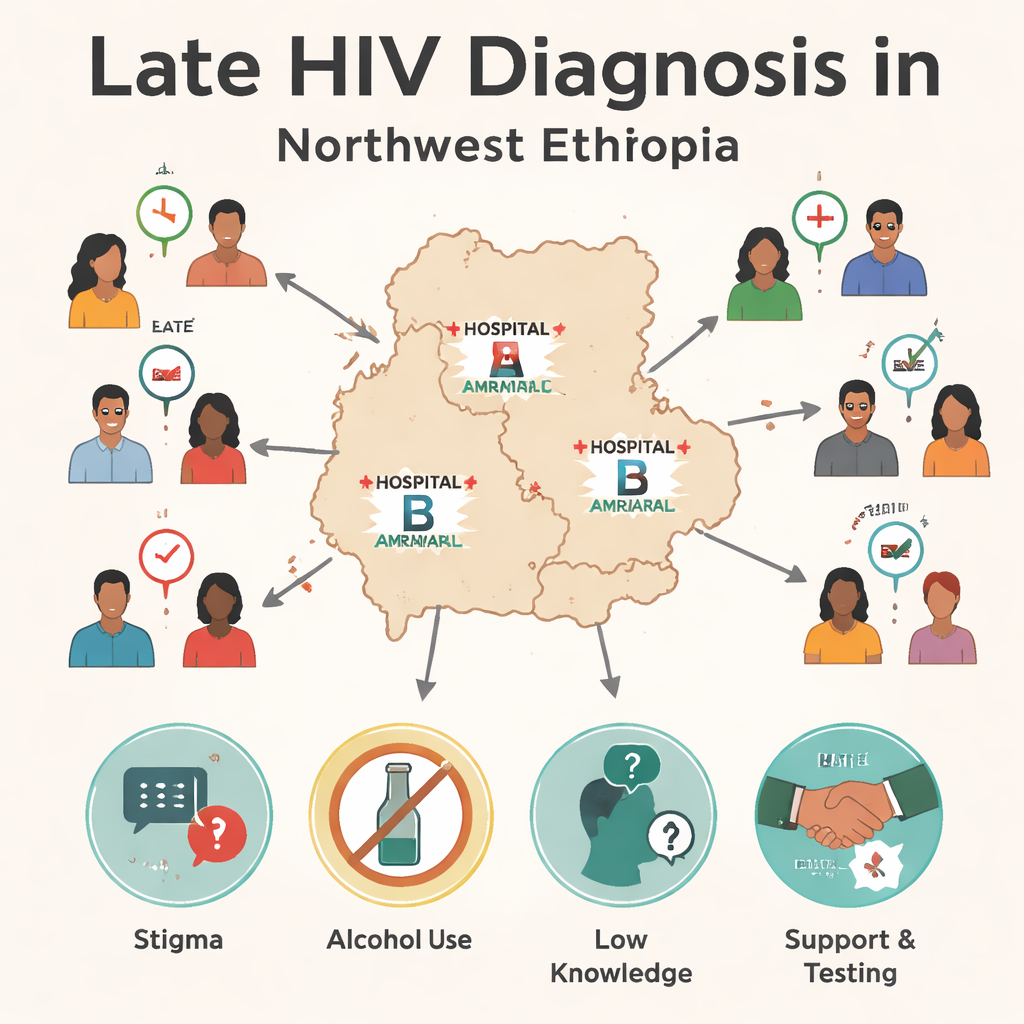
How the researchers investigated the issue
To uncover what drives late diagnosis, the researchers carried out a case‑control study in three public hospitals that provide HIV treatment in the West Gojjam Zone of Amhara. They compared two groups of adults already receiving HIV care. “Cases” were people whose first test showed they were already in an advanced stage of disease, and “controls” were those diagnosed earlier, with stronger immune systems and milder or no symptoms. Using medical records and detailed interviews, trained nurses collected information on age, education, income, how and why people decided to get tested, their use of alcohol and other substances, what they knew about HIV and its treatment, and whether they felt stigmatized because of HIV.
What factors were linked to late diagnosis
The analysis showed that the timing of HIV testing was strongly shaped by how the test was initiated and by people’s everyday experiences. Those whose testing was started by friends, family, or other social contacts were more than three times as likely to be diagnosed late compared with people who decided on their own to get tested. Similarly, those tested because a health worker suggested it during a clinic visit were about three and a half times more likely to have advanced disease at diagnosis than people who sought out testing voluntarily. Alcohol use also played a major role: people who had ever used alcohol before their diagnosis were almost four times more likely to find out about their infection late. 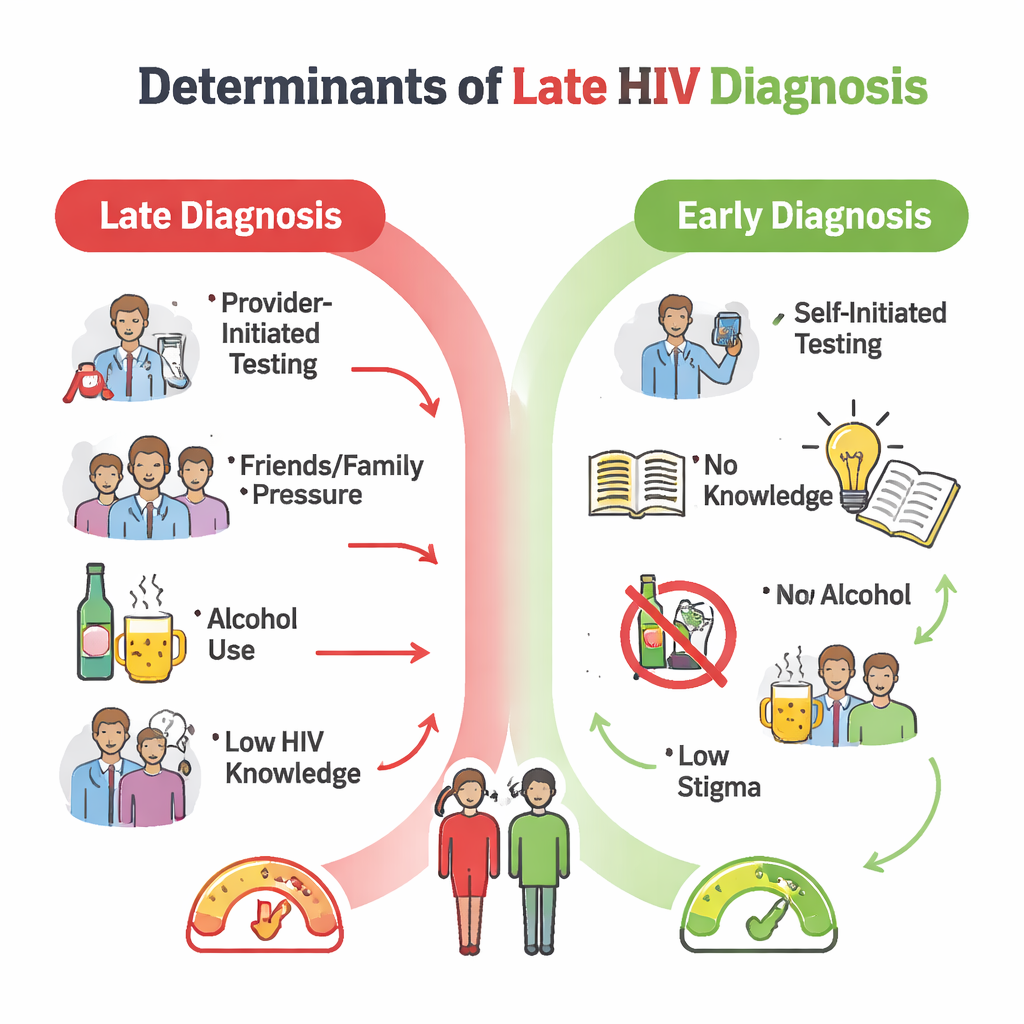
The roles of knowledge and stigma
Knowledge and social attitudes emerged as powerful influences on when people sought testing. Participants who lacked basic, accurate information about how HIV is spread and how treatment works were over three times more likely to be diagnosed late than those with good understanding. Many did not know that starting treatment early greatly improves survival. Perceived stigma was even more striking. People who felt judged, rejected, or ashamed because of HIV were nearly five times more likely to have delayed diagnosis. Fear of discrimination, gossip, or loss of social support can push individuals to avoid clinics, ignore early symptoms, or postpone testing until they are seriously ill.
What this means for communities and health services
For non‑specialists, the message is clear: late HIV diagnosis is not just about biology, but about everyday choices shaped by alcohol use, fear, misinformation, and the way testing is offered. Encouraging people to seek testing on their own—before they feel sick—could save lives. The study suggests expanding community education about HIV, emphasizing that effective treatment is available and works best when started early. It also points to the need for honest conversations about alcohol and health, as well as strong efforts to reduce stigma in families, workplaces, and health facilities. If communities can make HIV testing routine, confidential, and free from judgment, more people will be diagnosed in time to benefit fully from treatment and protect those they love.
Citation: Belay, A., Addisu Mulat, G., Abera, M. et al. Determinants of late HIV diagnosis among patients attending ART clinics in amhara region northwest Ethiopia. Sci Rep 16, 5712 (2026). https://doi.org/10.1038/s41598-026-36766-x
Keywords: late HIV diagnosis, HIV testing, stigma, Ethiopia, antiretroviral therapy