Clear Sky Science · en
The mediating and moderating effects of learning engagement and physical exercise on the mobile phone addiction and academic burnout
Why Your Phone Might Be Draining Your Study Energy
Many college students feel caught in the same cycle: they reach for their phones to relax, then look up to find that time and focus have slipped away, and studying feels harder than ever. This article reports on research with Chinese undergraduates that examines how heavy mobile phone use is linked to academic burnout—the feeling of being exhausted, detached, and ineffective at school—and how two everyday factors, learning habits and physical exercise, can either worsen or soften that impact.
From Helpful Tool to Hidden Burden
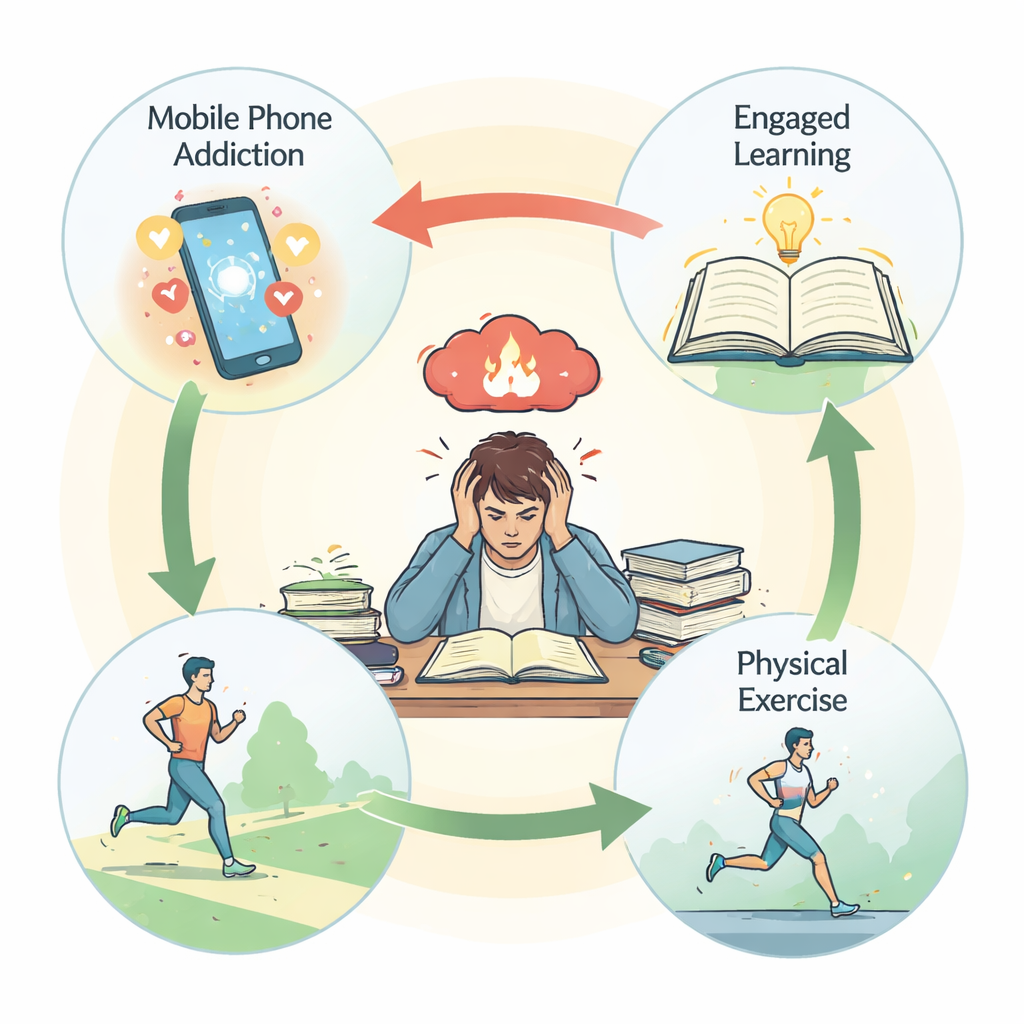
Smartphones put friends, games, and social media in our pockets 24/7. But when checking messages and scrolling becomes hard to control, it can turn into a kind of dependency. In this study, 677 college students completed questionnaires about how strongly they felt tied to their phones, how energized and focused they felt in their studies, and how burned out they felt about school. The researchers found a clear pattern: students who were more addicted to their phones also reported higher levels of academic burnout. Long stretches of screen time, constant notifications, and late-night use appeared to wear down attention, sleep, and mood, leaving students feeling more tired and discouraged about their coursework.
Staying Invested in Learning Makes a Difference
The team also looked closely at “learning engagement,” meaning how vigorous, enthusiastic, and absorbed students felt when they studied. Students who reported strong engagement—such as being willing to stick with difficult tasks, feeling proud of their progress, and losing track of time in a good way while learning—tended to have much lower burnout. Heavy phone use, however, was linked to reduced engagement, likely because it steals time and mental energy from deep study. Statistical analyses showed that part of the way phone addiction fuels burnout is by chipping away at this engaged state. About one-fifth of the total effect of phone addiction on burnout worked through lower learning engagement, suggesting that protecting students’ interest and involvement in their studies can meaningfully reduce the harm.
How Moving Your Body Protects Your Mind
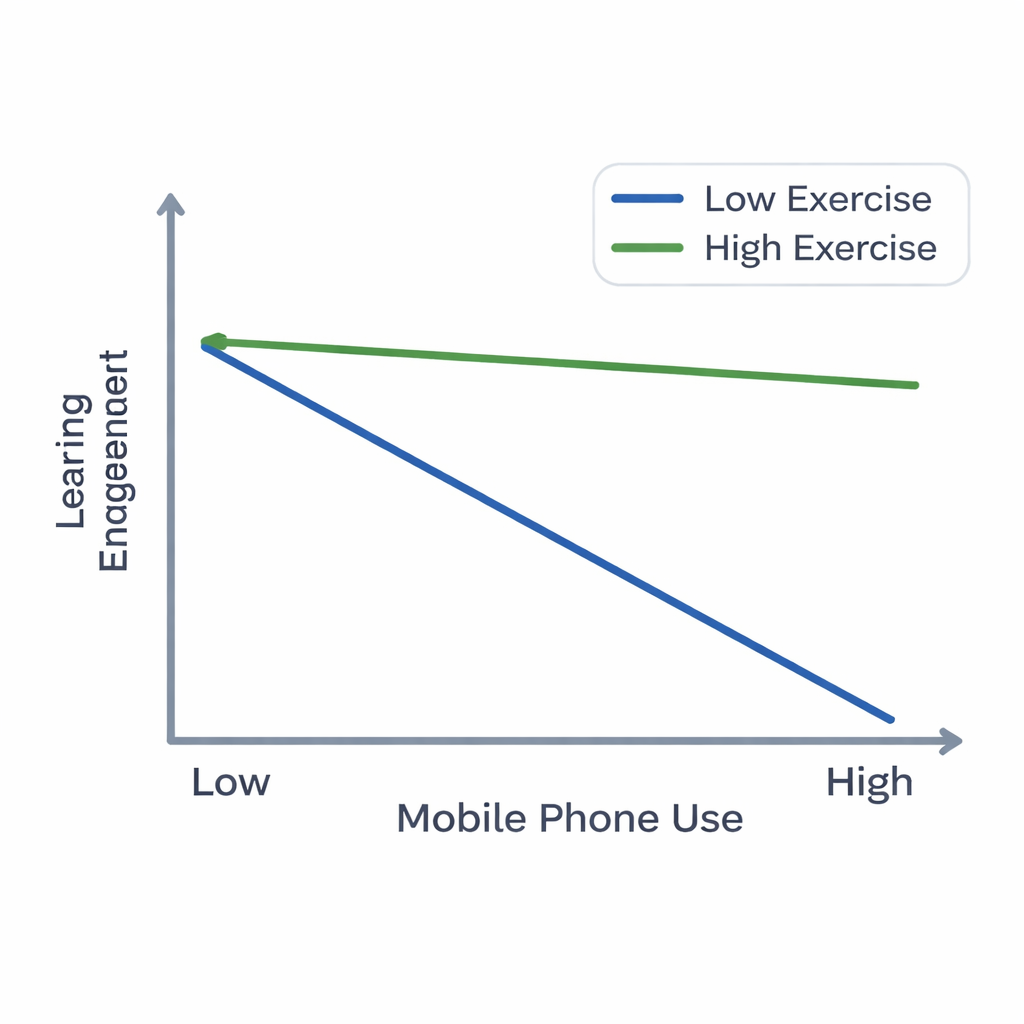
The researchers then turned to another everyday behavior: physical exercise. Students reported how often, how long, and how intensely they worked out, producing an overall score for activity level. When the team compared students with high and low exercise levels, they found something important. Among students who rarely exercised, stronger phone addiction was clearly tied to weaker learning engagement. But among those who exercised more, this negative link between phone use and engagement nearly disappeared. In other words, regular physical activity seemed to act like a buffer, helping students keep their focus and motivation for studying even when their phone habits were not ideal.
What This Means for Campus Life
These findings suggest practical steps for students and universities. On the one hand, helping students become more mindful of their phone use—especially late at night or during study time—could ease some of the pressure that leads to burnout. On the other hand, boosting learning engagement through more active, rewarding classroom experiences and better feedback may help students feel their efforts pay off, making school feel less draining. Just as importantly, the results highlight the value of simple, accessible exercise: regular walks, team sports, or fitness classes do more than strengthen the body; they also appear to preserve mental energy and self-control in a hyperconnected world.
Putting It All Together for Students’ Well-Being
In plain terms, this study shows that heavy, hard-to-control phone use tends to make college students feel more exhausted and cynical about their studies, partly because it undermines their ability to stay engaged with learning. Yet the news is not all bad. Students who keep up regular physical exercise are better able to withstand the pull of their phones without losing their study focus. While the research was conducted in one Chinese province and relied on self-reports, its message travels widely: balancing digital life, investing in meaningful learning, and moving your body regularly can work together to protect students from burning out in the modern university environment.
Citation: Jin, C., Long, W., Wang, L. et al. The mediating and moderating effects of learning engagement and physical exercise on the mobile phone addiction and academic burnout. Sci Rep 16, 6296 (2026). https://doi.org/10.1038/s41598-026-36764-z
Keywords: mobile phone addiction, academic burnout, learning engagement, physical exercise, college students