Clear Sky Science · en
The influence of the menstrual cycle on muscle injuries - a systematic review and meta-analysis
Why This Matters for Everyday Athletes
As women’s sports grow more intense and competitive, many athletes and coaches wonder whether certain times of the month bring a higher chance of getting hurt. This article looks closely at one simple question with big practical implications: do muscle injuries in female team sport athletes happen more often in some parts of the menstrual cycle than others?
The Question Behind the Study
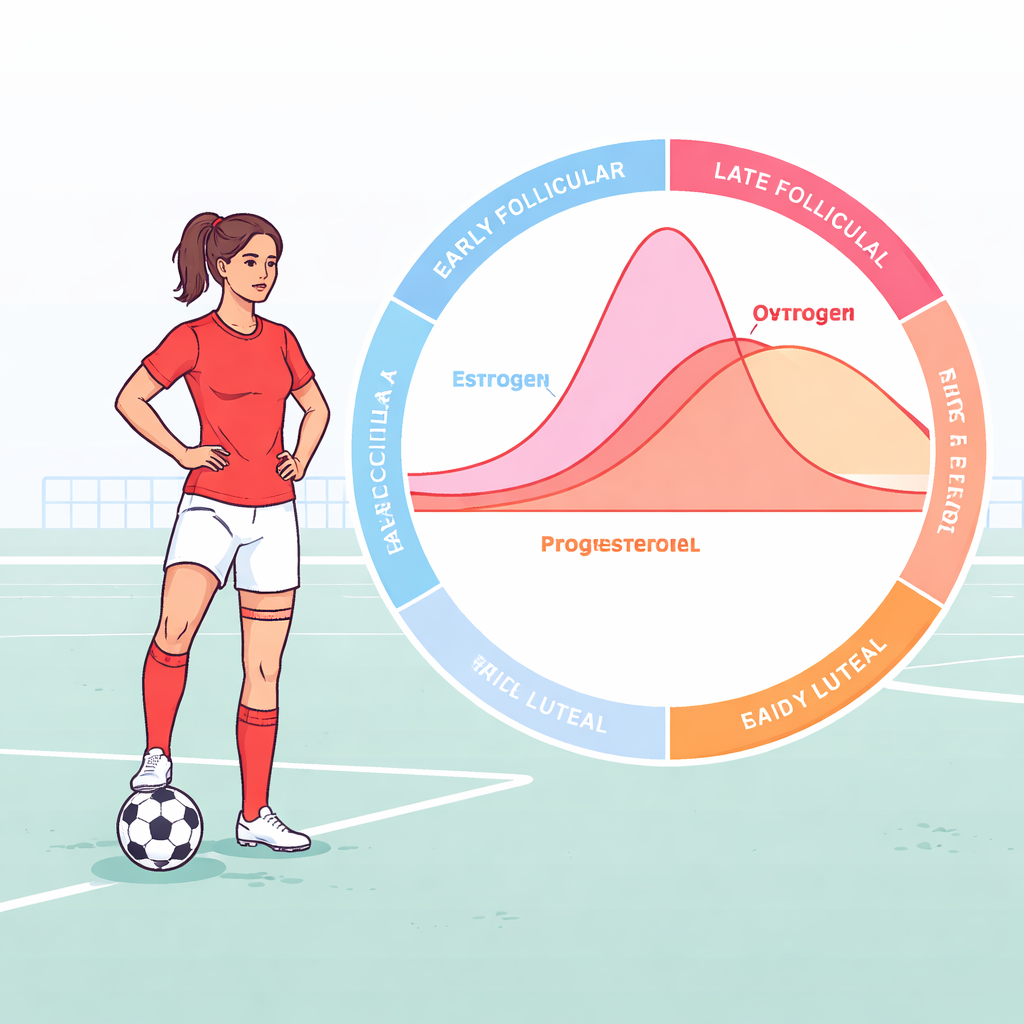
Female athletes in sports like football and futsal are exposed to high-speed sprints, sudden stops, and powerful kicks. Muscle strains and tears are among the most common injuries they face, often causing missed games and training. At the same time, hormone levels rise and fall naturally across the menstrual cycle and are known to affect tissues like ligaments and muscles, as well as factors such as balance and pain perception. Many athletes also report that they “feel more vulnerable” to injury at certain times of the month. This study set out to test whether those feelings are reflected in actual injury numbers.
How Researchers Looked for Patterns
The authors performed a systematic review and meta-analysis, which means they searched several major scientific databases for all studies that tracked muscle injuries alongside menstrual cycle phases in female team sport athletes. They focused on women of reproductive age with regular cycles who were not using hormonal contraceptives, to avoid blurring the natural hormone patterns. Only studies that compared at least two menstrual phases and used clear definitions of injury—such as missing at least one day of training or matches—were considered. Out of thousands of records, just three studies met all the criteria, together providing data from 318 athletes in elite football and futsal.
What the Studies Actually Found
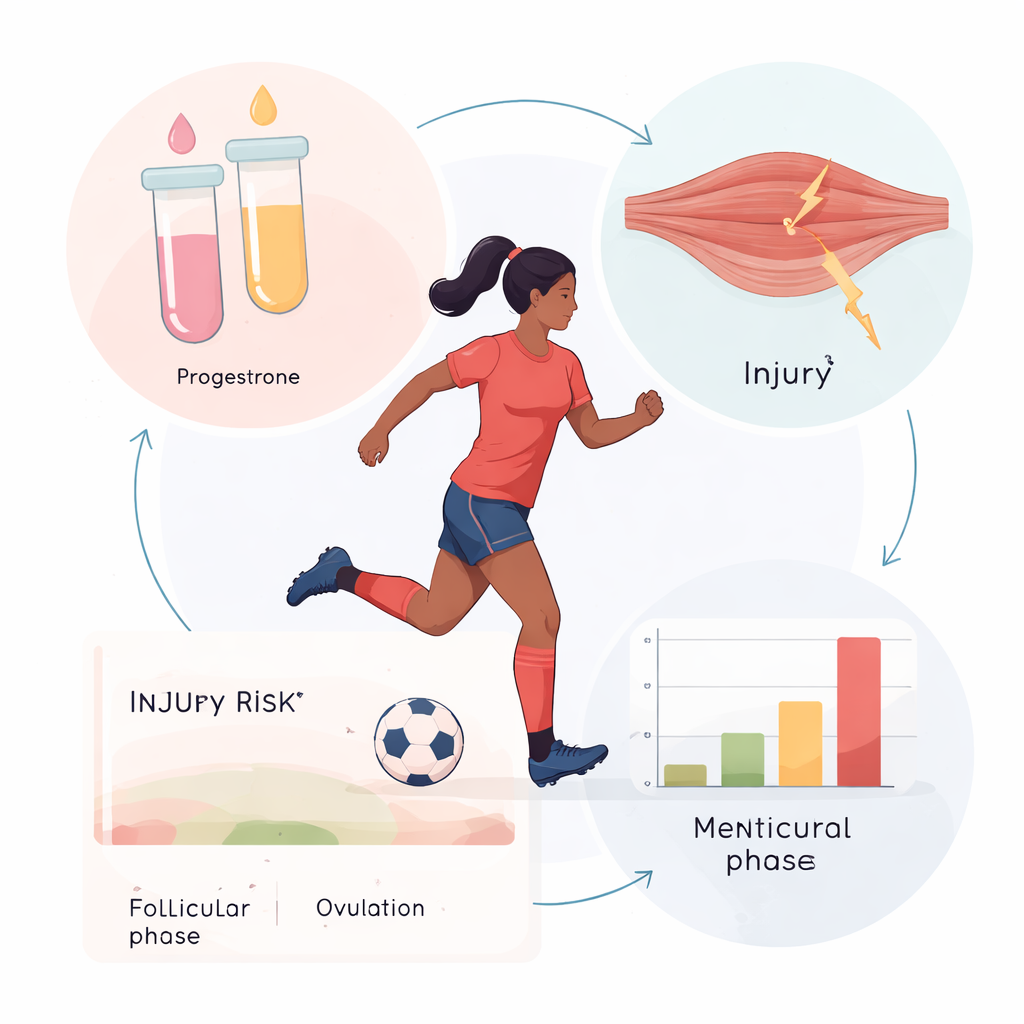
Across the three studies, the timing of injuries did not line up in a simple, consistent way. One group of researchers reported more muscle injuries when athletes were in the late follicular phase, just before ovulation. Another found the highest injury rates later in the cycle, especially in the days leading up to menstruation. A third study saw a tendency toward more injuries in the follicular phase overall, but the difference was not statistically clear. To make sense of these mixed results, the authors pooled the data and compared injury risk in two broad blocks: the follicular phase (from the start of bleeding to ovulation) and the luteal phase (from ovulation to the next period). Statistically, there was no meaningful difference between these two halves of the cycle.
Why the Evidence Is Still Uncertain
Despite the careful analysis, the authors caution against drawing firm conclusions. The three available studies used different ways of chopping the menstrual cycle into phases, making it difficult to line them up neatly. Most relied on self-reported period dates and calendar counting—methods that are cheap and convenient, but often inaccurate when it comes to pinpointing ovulation or the exact hormone environment. None of the work tracked hormone levels directly through blood or urine tests, and the studies also differed in how they measured athletes’ exposure to training and matches. Because of these issues, the overall strength of the evidence was rated as “very low,” meaning that the true relationship could look quite different if better studies are done.
What This Means for Players and Coaches
For now, this review suggests there is no solid proof that female team sport athletes are clearly more likely to suffer muscle injuries in one half of the menstrual cycle than the other. That does not mean the cycle is irrelevant—only that current research is too limited and inconsistent to support specific training or rest plans based on menstrual timing alone. The authors argue that future studies need more precise tracking of hormone changes, standard ways of defining cycle phases, and better control for factors like training load and previous injuries. Until such evidence emerges, decisions about training and injury prevention for female athletes should focus on well-established risk factors, while acknowledging that individual women may still notice their own patterns and adapt accordingly.
Citation: Guthardt, Y., Sargent, D. & Julian, R. The influence of the menstrual cycle on muscle injuries - a systematic review and meta-analysis. Sci Rep 16, 3035 (2026). https://doi.org/10.1038/s41598-026-36763-0
Keywords: menstrual cycle, female athletes, muscle injuries, team sports, injury risk