Clear Sky Science · en
Effect of Solanum rostratum Dunal litter extract on its seedling growth
Why a prickly weed’s leftovers matter
Invasive plants are usually feared for how they smother crops and native species. But what happens when an invasive plant starts to poison its own young? This study looks at Solanum rostratum, a spiny weed spreading across fields and pastures, and asks a surprising question: do the dead leaves and stems it drops on the ground help its seedlings grow—or hold them back? Understanding this self‑interaction could open new ways to keep the invader in check.
A tough weed with a toxic legacy
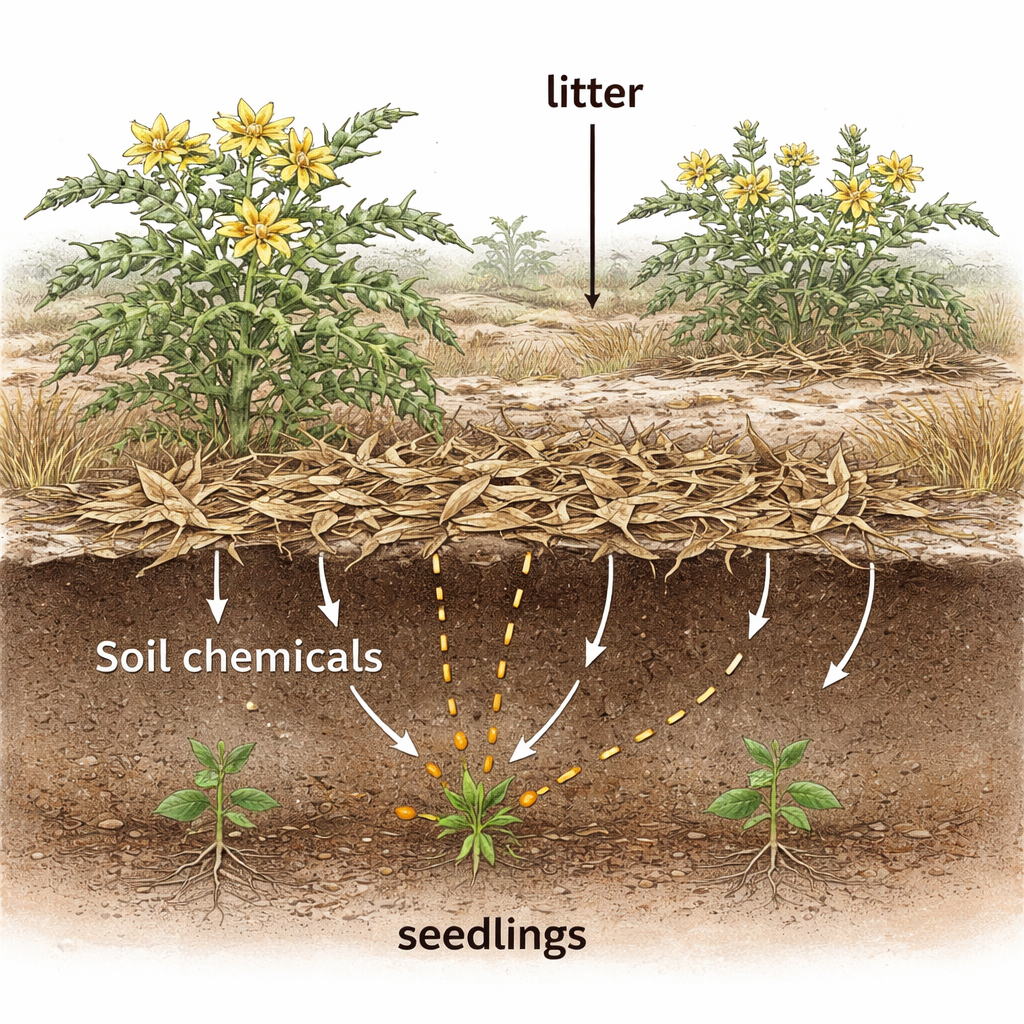
Solanum rostratum, sometimes called buffalobur, is an annual weed originally from North America that has now spread to Asia, Europe, Africa, and beyond. It competes fiercely with crops, harms grazing animals, and even hosts serious crop pests and viruses. In Xinjiang, China, large plants dry out and collapse each autumn, leaving a thick layer of prickly litter on the soil. As snow melts in spring, chemicals from this dead material seep into the ground, exactly when new seedlings begin to emerge. Earlier work showed that the plant’s chemicals can suppress other species, but it was unclear whether these same compounds quietly influence its own offspring.
Testing “self‑help” versus “self‑harm”
The researchers collected soil and litter from invaded sites and prepared ethanol extracts from the dried plant remains. They then grew S. rostratum seedlings in pots and regularly watered them with different extract concentrations, from very low to quite high, alongside a plain‑water control. Over nearly two months they measured plant size, leaf area, weight, and how efficiently leaves carried out photosynthesis. After harvesting the plants, they also analyzed the soil for nutrients, hundreds of small chemical compounds, and the mix of bacteria living around the roots, using high‑resolution chemical tests and DNA sequencing.
A double‑edged chemical effect
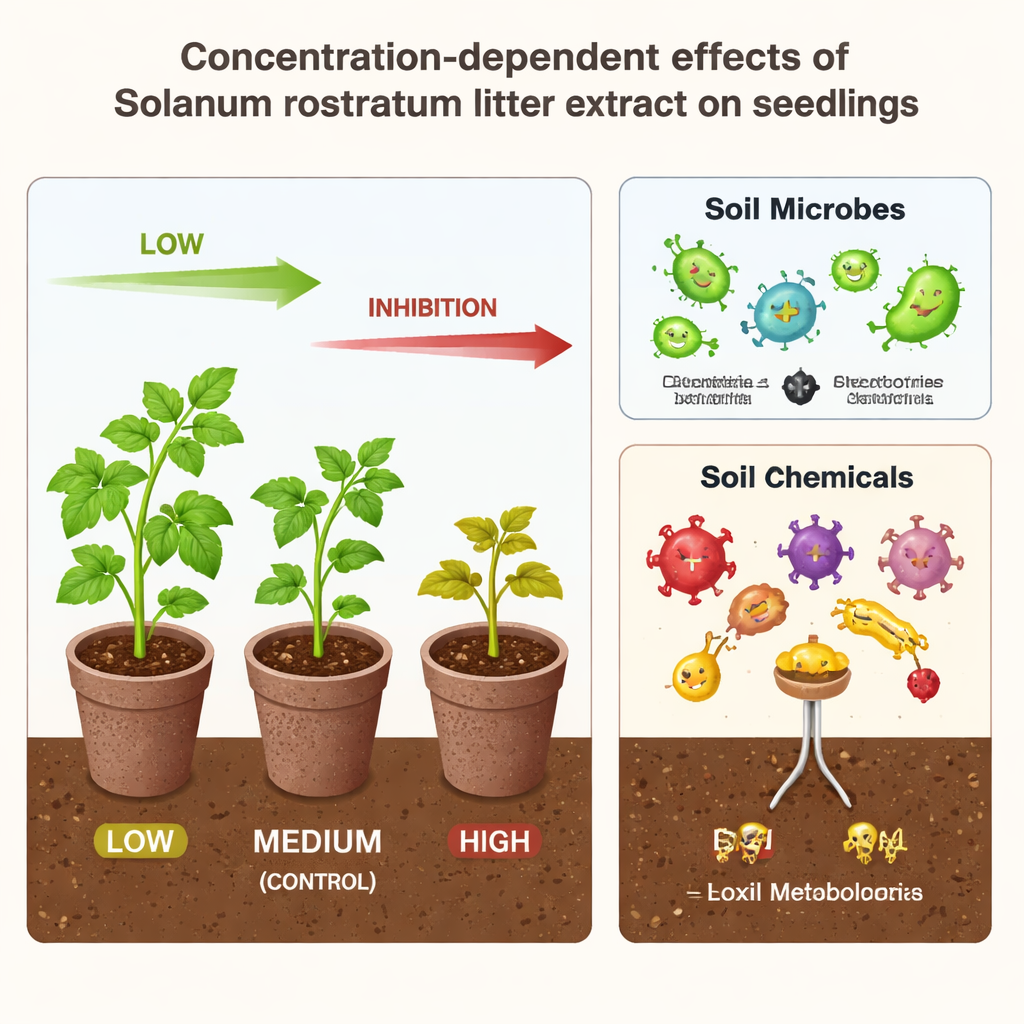
The litter extract turned out to act like a dose‑dependent switch. At very low levels, it actually boosted leaf area and seedling biomass, giving young plants more “green surface” to capture light and grow. At the highest level tested, however, seedlings were much shorter, had fewer leaves, weighed less, and showed sharply reduced photosynthesis, water loss, and gas exchange. Inside the plants, stress‑related enzymes and damage markers spiked, clear signs that the seedlings were struggling. In the surrounding soil, high doses of extract increased carbon and nitrogen levels but were linked with poorer seedling performance, suggesting that richer soil does not rescue plants from their own toxic leftovers.
Shaping the hidden soil world
The plant’s litter also reshaped the underground community. High extract concentrations reduced bacterial diversity and favored certain bacterial groups while suppressing others. Some genera, such as Brevundimonas and Novosphingobium, became more common in heavily treated soils and were strongly associated with weaker seedling growth. At the same time, dozens of soil chemicals shifted in abundance. The team identified at least 25 compounds, including 2‑aminobenzoic acid and several halogenated and fatty‑aldehyde molecules, that were consistently tied to poor growth. These substances are prime suspects as “self‑toxins” that may accumulate when many plants die back in the same place year after year.
From runaway spread to self‑control
Putting the pieces together, the study suggests that S. rostratum’s litter can both help and hinder its own success. At low concentrations—such as early in an invasion, when plant densities are modest—released chemicals may slightly stimulate its seedlings, giving the species an edge over neighbors. As stands become dense and produce more litter, those same compounds can build up to levels that damage seedlings, shift soil microbes in an unfavorable direction, and effectively thin overcrowded patches. For land managers, this opens a tantalizing idea: concentrated versions of these natural chemicals might be turned into targeted bio‑herbicides against the weed. While these experiments were done under controlled conditions and real‑world soils are more complex, they reveal how an invasive plant’s own “chemical shadow” could both drive its spread and, at high levels, help keep it in check.
Citation: Ma, Y., Jiang, L., Liu, S. et al. Effect of Solanum rostratum Dunal litter extract on its seedling growth. Sci Rep 16, 5930 (2026). https://doi.org/10.1038/s41598-026-36746-1
Keywords: invasive plants, allelopathy, soil microbes, plant litter, bioherbicide