Clear Sky Science · en
Evaluation and correlation of heart rate variability and ventricular repolarization parameters in an Indian pediatric clinical hypothyroid population: a prospective cohort study
Why a low thyroid matters for a child’s heart
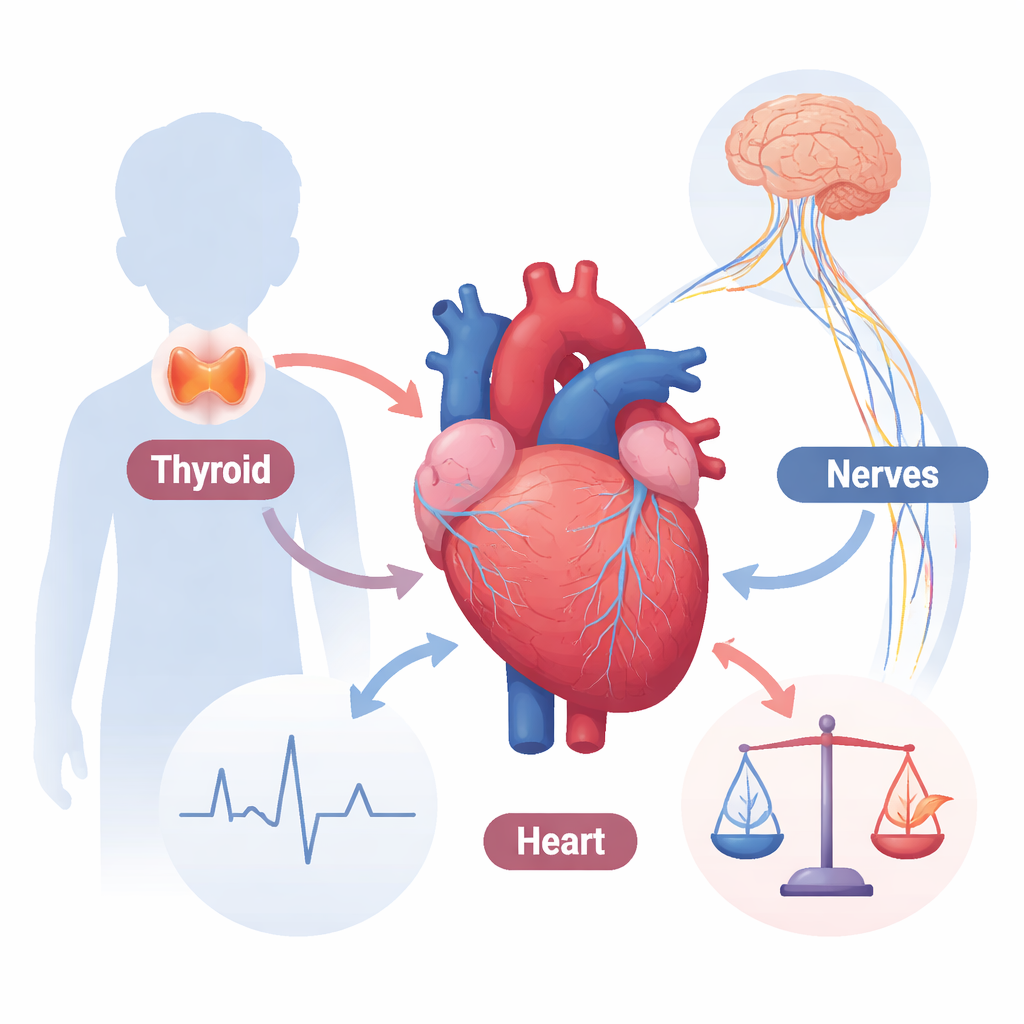
Parents often think of thyroid problems as issues that affect growth, weight, or school performance. This study shows that even in grade‑school children, an underactive thyroid can also subtly influence how safely and steadily the heart beats. By looking closely at the heart’s electrical signals and the tiny changes between heartbeats, the researchers explored whether early thyroid treatment can protect children from rhythm problems later in life.
Looking inside the young heart
The team studied 64 Indian children between 5 and 12 years old: 32 had newly diagnosed clinical hypothyroidism (a clearly underactive thyroid), and 32 were healthy peers. All children had their height, weight, blood pressure, and thyroid hormone levels checked, along with a standard 12‑lead electrocardiogram (ECG) and a short recording of their heartbeat to measure heart rate variability, a marker of how well the “rest‑and‑digest” and “fight‑or‑flight” nerves balance each other. Importantly, the two groups were similar in body size and blood pressure, so differences in heart behavior could be more confidently linked to thyroid status rather than general health.
Electrical ripples that hint at risk
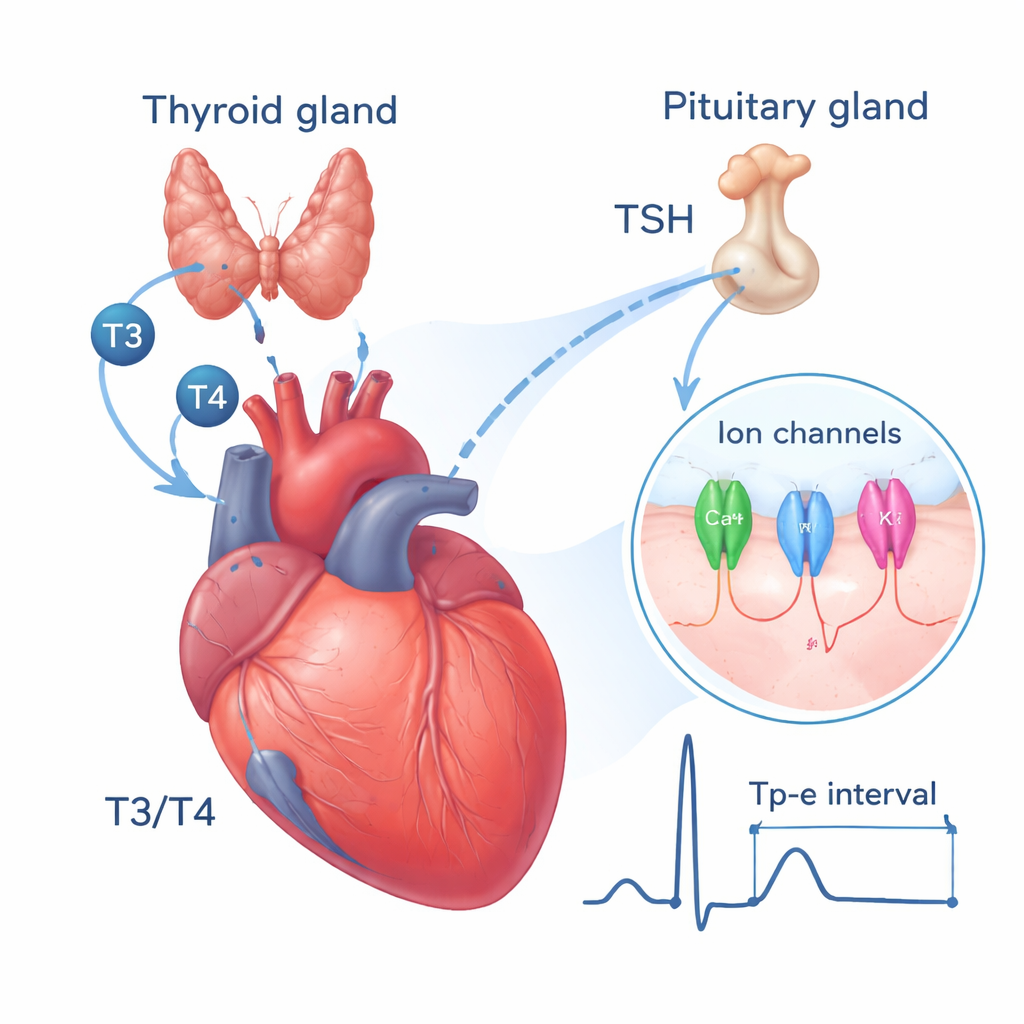
On first glance, many heart measures looked reassuringly normal in both groups. Heart rate, overall ECG intervals, and most heart rate variability readings did not differ much between hypothyroid and healthy children. But one subtle signal stood out: the Tpe interval, a slice of the ECG tracing that reflects how evenly the lower chambers of the heart reset between beats. In hypothyroid children, this interval was slightly but significantly longer, hinting at more uneven electrical recovery across the heart wall. Longer Tpe times and related ratios have been linked in other studies to a higher risk of dangerous rhythm disturbances, even when routine tests appear normal.
Hormone levels tied to heart signals
When the researchers compared blood tests with heart measurements, a clear pattern emerged. Higher levels of thyroid‑stimulating hormone (TSH) — a sign that the thyroid is not keeping up — went hand in hand with longer Tpe intervals and higher Tpe‑based ratios. In other words, the more severe the thyroid underactivity, the more the heart’s electrical “reset” seemed to be stretched out. By contrast, the usual markers of nerve control over the heart, such as the balance between calming and activating influences in heart rate variability, showed little connection to thyroid levels in this group of children.
Treatment that calms the currents
To see whether these changes could be reversed, the team followed 23 of the hypothyroid children for three months after starting standard levothyroxine tablets, a synthetic form of thyroid hormone. Over that short period, their thyroid blood tests returned to normal ranges, and their growth measures improved. Crucially, the Tpe interval and its ratios shortened toward healthier values, suggesting that the heart’s electrical landscape became more uniform and potentially safer. Heart rate variability measures, however, stayed largely the same, implying that the nerve control of the heart had not been strongly disturbed to begin with — or might need longer to change.
What this means for lifelong heart health
For families and clinicians, the message is both cautionary and hopeful. Even when a child with hypothyroidism seems well on routine checks, careful ECG analysis can reveal quiet shifts in the heart’s electrical wiring that may, over years, raise the risk of rhythm problems. The encouraging news is that timely thyroid hormone replacement appears to restore not only blood tests but also these hidden heart‑level changes. Recognizing and treating pediatric hypothyroidism early may therefore help safeguard the heart’s stability well into adulthood, underscoring the value of screening, follow‑up, and adherence to therapy.
Citation: Dhakar, D., Ahluwalia, H., Meena, K.R. et al. Evaluation and correlation of heart rate variability and ventricular repolarization parameters in an Indian pediatric clinical hypothyroid population: a prospective cohort study. Sci Rep 16, 6624 (2026). https://doi.org/10.1038/s41598-026-36745-2
Keywords: pediatric hypothyroidism, heart rhythm, ECG, heart rate variability, levothyroxine