Clear Sky Science · en
Association between lifelong physical activity, physical fitness, and quality of life in older adults in Poland
Why Staying Active Into Old Age Matters
As more people live into their 70s, 80s, and beyond, families and societies are asking a simple question: what helps us stay strong, mobile, and independent in later life? This study from Poland looks at one powerful candidate—regular physical activity practiced not just in old age, but across the entire lifespan—and asks how it relates to everyday fitness and how older adults feel about their lives.
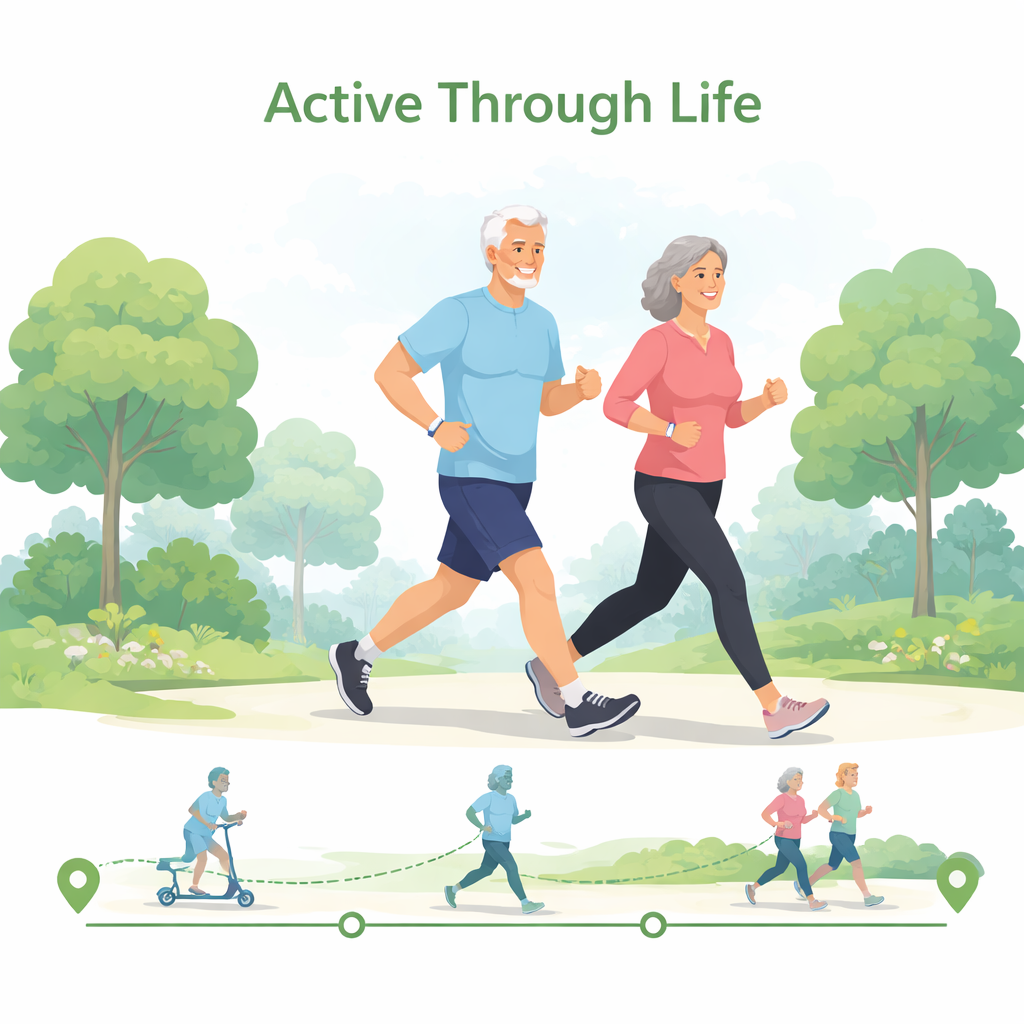
A Life Shaped by Movement
The researchers followed 220 volunteers aged 60 and older from south-western Poland between 2010 and 2016. They divided people into two clear groups. The “active” group had met World Health Organization guidelines for at least 150 minutes of moderate movement per week both in their youth (from about age 16 onward) and in later life. The “inactive” group had not met these guidelines in youth and were also not regularly active in old age. By comparing these two extremes, the study aimed to highlight what a lifetime of movement might mean for the body and daily functioning.
How Fitness and Well-Being Were Measured
To understand real-world abilities, the team used the Senior Fitness Test, a practical set of tasks that mimic everyday movements. Participants repeatedly stood up from a chair, curled a light weight, reached toward their toes, scratched behind their back, walked as far as possible in six minutes, and completed an “up-and-go” task that involves standing, walking eight feet, turning, and sitting again. These tests capture strength, flexibility, balance, speed, and endurance—skills needed to climb stairs, carry groceries, or avoid a fall. The researchers also measured handgrip strength, a simple but powerful indicator of overall muscle function, and asked two broad questions about quality of life and satisfaction with health using a World Health Organization questionnaire.
Stronger Bodies, Especially in Women
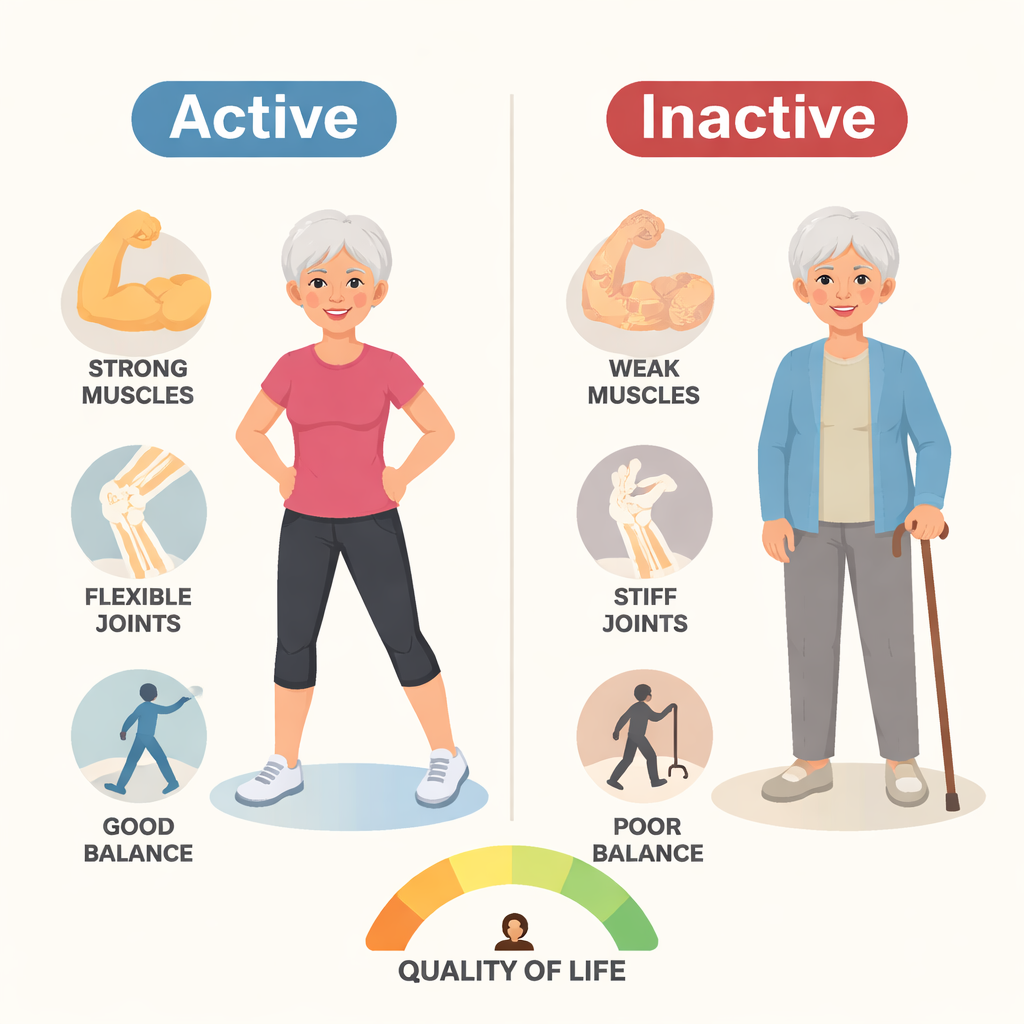
The clearest differences between the lifelong active and inactive participants appeared in physical fitness. Among women, those who had been active from youth through older age showed stronger legs and arms, better flexibility in the lower body, and greater walking endurance than inactive women. Both men and women who had stayed active completed the up-and-go test more quickly, suggesting sharper coordination, better balance, and greater confidence in moving around. Interestingly, men generally had higher strength and endurance than women overall, but lifetime activity seemed to give women a particularly strong edge, possibly because they are more vulnerable to age-related muscle loss and functional decline.
Feeling Good, Regardless of Activity Level
While the body-level differences were striking, the story was different for how people rated their lives. On average, both active and inactive groups reported high quality of life and similar satisfaction with their health, scoring around four out of five on both questions. In other words, even those who did not meet activity guidelines across their lives still felt quite positive. The authors suggest several reasons: participants volunteered for the study and were likely relatively healthy and socially engaged; they also tended to have higher levels of education, which can support better health habits and a more optimistic outlook. In addition, recalling physical activity from youth many decades later can be imprecise, which may blur true differences.
What This Means for Everyday Life
For older adults and their families, the findings send a clear, practical message. Being active from youth into older age is strongly linked with better strength, flexibility, balance, and endurance in later years—qualities that make it easier to live independently and avoid disability, especially for women. At the same time, the study did not find clear differences in how people rated their quality of life, reminding us that mood, social ties, education, and environment also play major roles in how we feel. The authors conclude that long-term movement is a powerful investment in the body, but more research is needed to untangle how lifelong exercise, health problems, and social conditions together shape the experience of aging.
Citation: Kaczorowska, A., Kołodziej, M., Sebastjan, A. et al. Association between lifelong physical activity, physical fitness, and quality of life in older adults in Poland. Sci Rep 16, 5934 (2026). https://doi.org/10.1038/s41598-026-36742-5
Keywords: healthy aging, physical activity, older adults, physical fitness, quality of life