Clear Sky Science · en
Astaxanthin improve the intestinal microbiota and metabolism after ischemic stroke
Why a pigment from seafood matters for stroke
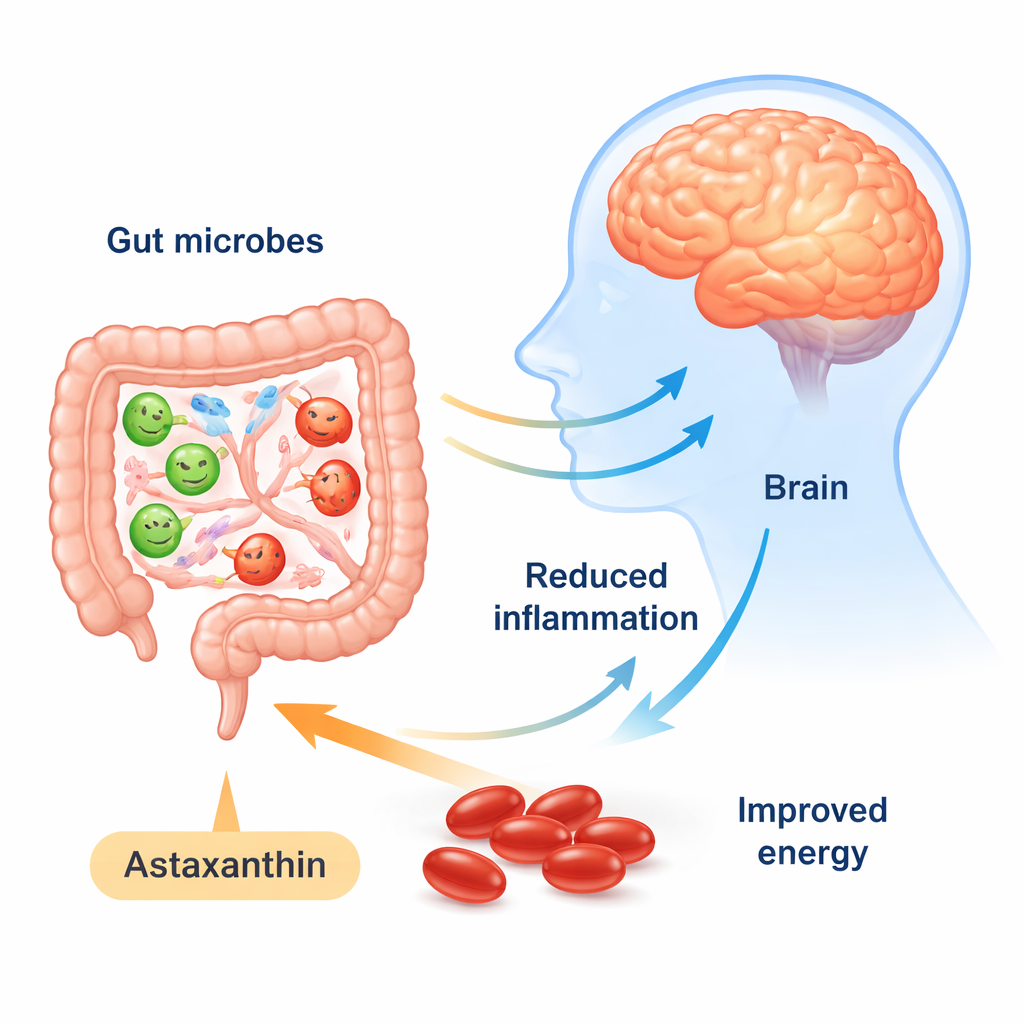
Stroke is one of the world’s leading killers and a major cause of long-term disability. Most treatments must be given within a few hours and are not suitable for many patients, leaving doctors with limited options. This study explores whether astaxanthin—a bright red pigment found in salmon, shrimp, and certain algae—might help protect the brain after an ischemic stroke by working through an unexpected partner: the bacteria living in our gut.
A stroke, the gut, and an unusual connection
In an ischemic stroke, a blood vessel supplying the brain becomes blocked, starving brain tissue of oxygen and energy. Scientists have recently discovered that stroke does not just damage the brain; it also disrupts the gut microbiota, the vast community of microbes in our intestines. These microbes, in turn, can influence inflammation, blood clotting, and even how the brain recovers. The research team used a standard rat model of stroke to see whether astaxanthin could ease brain injury and at the same time reshape the gut microbiota and brain chemistry in beneficial ways.
Testing astaxanthin in a stroke model
Researchers induced strokes in rats by briefly blocking a major brain artery, then treated some animals with low, medium, or high doses of astaxanthin for a week. They measured how well the rats could move, how much water the brain tissue held (a sign of swelling), and levels of molecules linked to oxidative stress—damage caused by reactive oxygen species. They also examined brain tissue under the microscope. Rats that received astaxanthin had better neurological scores, less brain swelling, and healthier-looking brain cells. Chemical tests showed that damaging by-products of oxidation dropped, while natural protective molecules increased, suggesting that astaxanthin helped calm the biochemical chaos triggered by stroke.
Friendly microbes and healing chemistry
The team then turned to the gut. Using genetic sequencing of bacterial DNA in feces, they compared gut communities in healthy rats, stroke rats, and stroke rats given astaxanthin. Stroke alone disturbed the normal balance of microbes, reducing some common helpful groups and allowing potentially harmful bacteria to flourish. Astaxanthin partly reversed this pattern: beneficial genera such as Bifidobacterium and Alloprevotella became more abundant, while some less desirable bacteria declined. Computer-based analyses predicted that the functions of the microbial community also shifted, affecting pathways related to amino acid breakdown and energy metabolism. At the same time, an untargeted survey of small molecules in the brain revealed that astaxanthin boosted levels of compounds like adenosine and gamma-aminobutyric acid—both known to help limit inflammation and protect neurons—while lowering vitamin K–related signals tied to blood clotting.
Powering up brain energy defenses
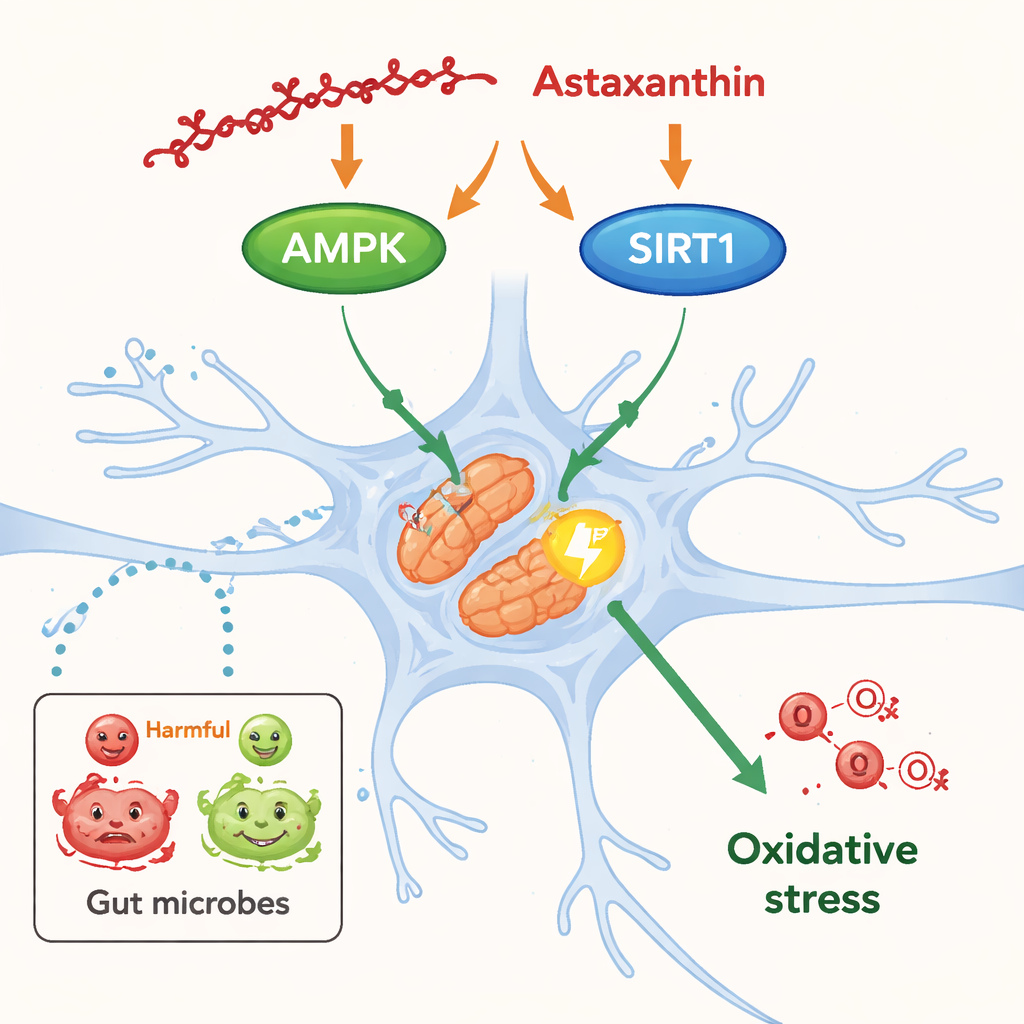
Because brain cells are extremely energy-hungry, the researchers examined proteins that act as master switches for cellular energy use. Computer docking studies suggested that astaxanthin can bind tightly to two key regulators, AMPK and SIRT1. In the stroke rats, astaxanthin treatment increased the active forms of these proteins and raised the amount of ATP, the cell’s main energy currency, in affected brain regions. This pattern fits a scenario in which astaxanthin, possibly aided by a healthier gut microbiota, turns on energy-saving and repair programs in neurons while reducing oxidative stress.
What this could mean for future stroke care
Overall, the study suggests that astaxanthin helps the brain withstand ischemic stroke by a double action: it reshapes the gut microbiota toward a more protective profile and boosts brain energy and antioxidant defenses through pathways involving AMPK and SIRT1. While these results come from rats and require confirmation in more complex models and human trials, they point to the intriguing possibility that a naturally occurring pigment, already used as a supplement, could one day become part of a broader strategy to support stroke recovery by caring for both the brain and the gut.
Citation: Rong, C., Wei, Z., Li, J. et al. Astaxanthin improve the intestinal microbiota and metabolism after ischemic stroke. Sci Rep 16, 5848 (2026). https://doi.org/10.1038/s41598-026-36735-4
Keywords: ischemic stroke, gut microbiota, astaxanthin, brain metabolism, AMPK SIRT1 pathway