Clear Sky Science · en
Soluble epoxide hydrolase inhibitory constituents from the Heartwood of Toxicodendron vernicifluum: isolation, kinetic characterization, molecular modeling, and quantitative analysis
Turning a Traditional Tree into Modern Medicine
For centuries, the East Asian lacquer tree, Toxicodendron vernicifluum, has been used in folk remedies to ease pain and inflammation. Yet exactly how it might work inside the body has remained a mystery. This study connects that ancient practice to modern biochemistry, showing that subtle molecules in the tree’s heartwood can block a key enzyme that normally dampens the body’s own anti-inflammatory defenses. In doing so, the work points toward new, plant-based strategies for treating chronic inflammatory diseases that affect the heart, brain, and other organs.
An Enzyme That Silences Natural Relief
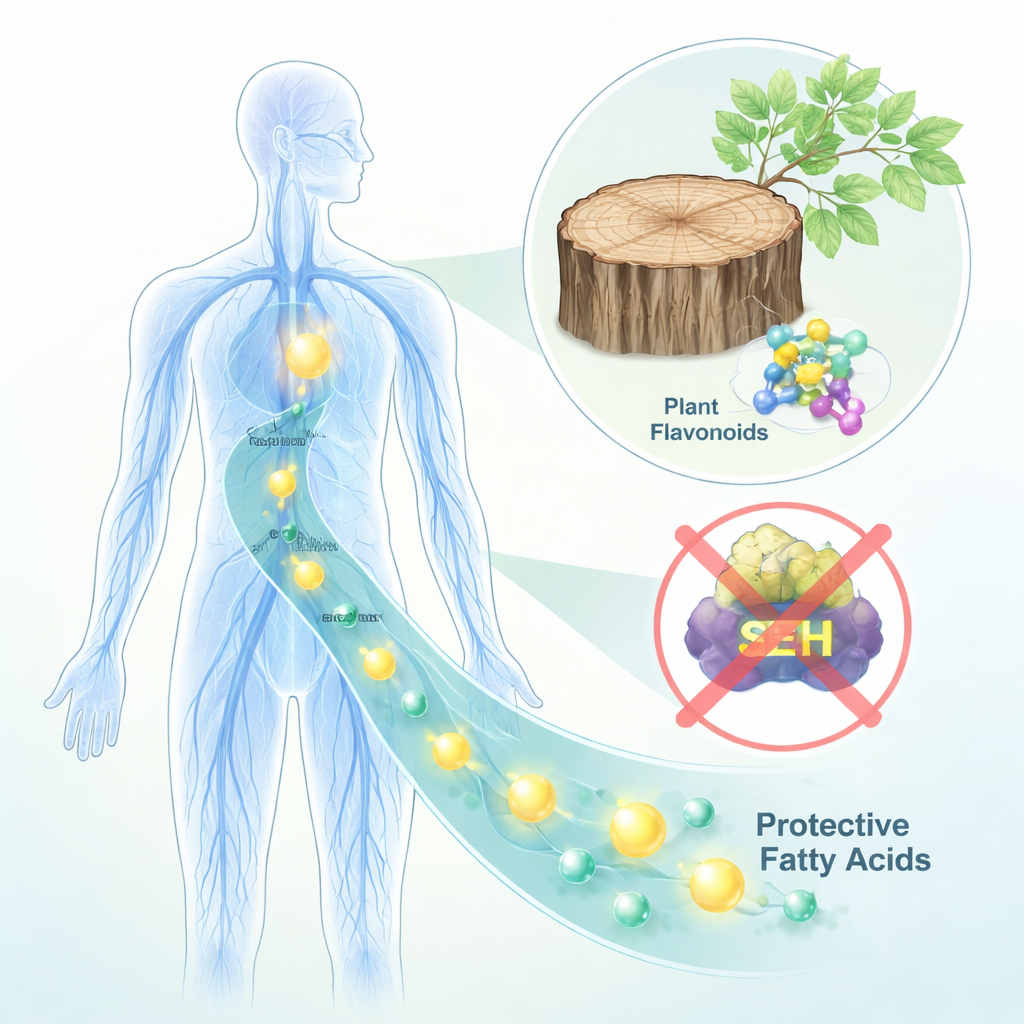
Our bodies produce oily molecules called epoxy fatty acids that quietly keep blood vessels relaxed and inflammation in check. A protein enzyme known as soluble epoxide hydrolase (sEH) quickly breaks these helpful compounds down into weaker forms, effectively turning down a natural calming system. Drug developers have been trying to inhibit this enzyme to treat conditions ranging from high blood pressure to nerve damage. While synthetic sEH blockers exist, they can come with drawbacks such as poor stability in the body and possible side effects, driving interest in safer, plant-derived alternatives.
Hunting Active Ingredients in Lacquer Tree Wood
The researchers focused on the heartwood of T. vernicifluum, a part of the tree long valued in traditional medicine. They extracted its chemical components with alcohol and then separated the mixture into fractions with different solvent systems. Each fraction was tested for its ability to slow down the sEH enzyme in a laboratory assay. The ethyl acetate fraction stood out, cutting enzyme activity by nearly 60 percent at a modest concentration. Careful purification and structural analysis revealed 11 known plant polyphenols—mainly flavonoids—as the key ingredients. Although these compounds had been seen before in this species, their precise behavior toward sEH had not been mapped.
Three Flavonoids, Two Ways of Blocking the Same Target
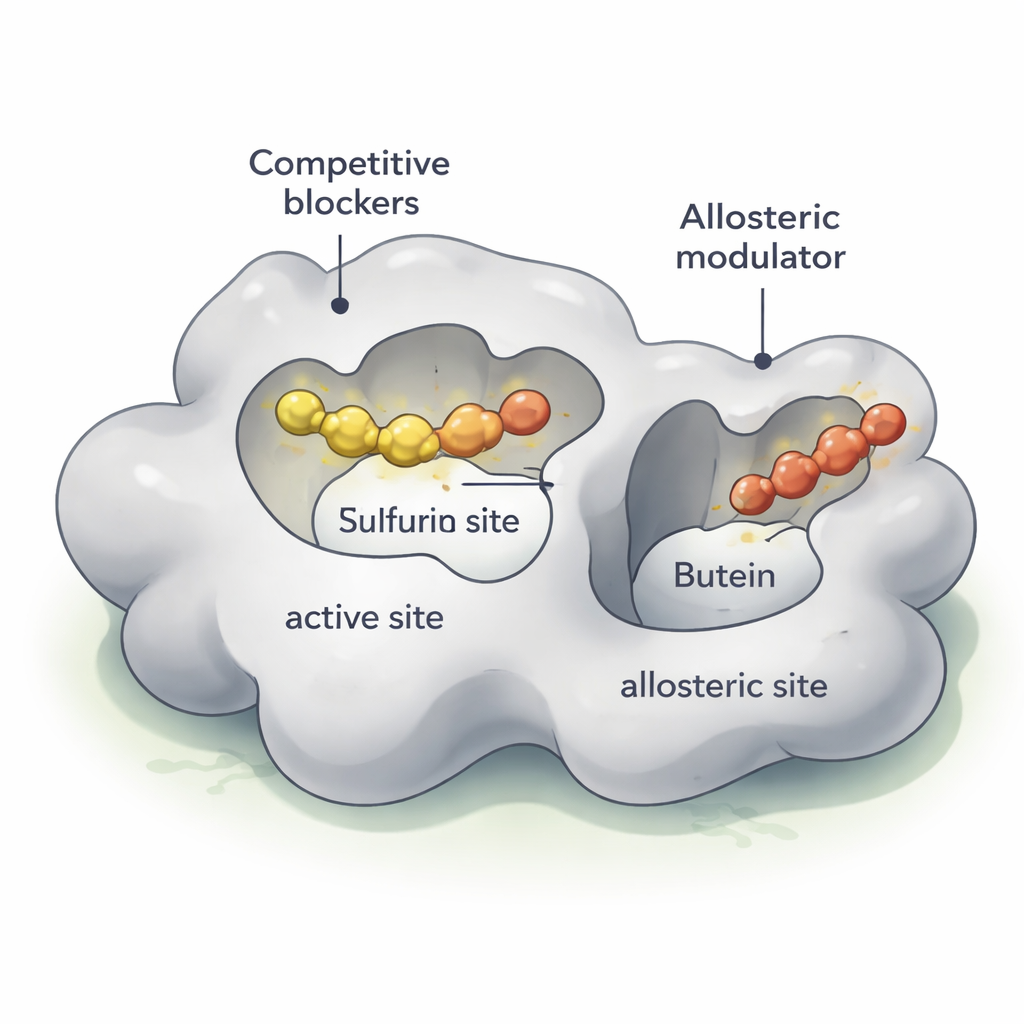
Among the 11 molecules, three flavonoids stole the spotlight. Two of them—fisetin and sulfuretin—proved to be strong “competitive” inhibitors, meaning they lodge in the enzyme’s main working pocket and block access to its usual fatty-acid substrates. Each shut down sEH at micromolar concentrations, comparable to some benchmark experimental drugs. A third compound, butein, acted differently. It latched onto a separate site on the enzyme surface and altered the protein’s shape in a way that weakened its activity; this is called “non-competitive” or allosteric inhibition. Together, these findings suggest that the lacquer tree’s heartwood delivers a one-two punch: some molecules occupy the enzyme’s core while others tug on side pockets to modulate its function.
Peering into Molecular Lock-and-Key Fits
To understand why these natural compounds work so well, the team used computer simulations to visualize how each molecule fits into sEH. Docking studies and long molecular dynamics runs showed that fisetin and especially sulfuretin sit snugly in the catalytic groove, forming stable hydrogen bonds with amino acids that are essential for the enzyme’s chemistry. These interactions stayed intact over 100 nanoseconds of simulated motion, suggesting that once bound, the inhibitors are not easily shaken loose. Butein, by contrast, consistently occupied a more distant pocket, supporting its role as an allosteric modulator. Another set of analyses used ultra-high-performance liquid chromatography to measure how much of each compound is present in the extract. Interestingly, the strongest inhibitors were not the most abundant, underscoring that potency, not bulk quantity, drives the extract’s biological power.
From Lab Bench to Future Anti-Inflammatory Therapies
To bridge test-tube findings with biology, the researchers also showed that these flavonoids reduce inflammatory signals, such as nitric oxide production, in immune cells without causing toxicity. Taken together, the work provides a clear biochemical explanation for the lacquer tree’s traditional use against inflammatory disorders. It shows that specific minor components in the heartwood can protect the body’s own anti-inflammatory fatty acids by blocking sEH through two complementary mechanisms. Although more animal and clinical studies are needed—and care must be taken to remove allergenic substances from any future products—this research lays a scientific foundation for developing standardized, safer, plant-based sEH inhibitors inspired by an old medicinal tree.
Citation: Kim, J.H., Cheon, JY., Yu, J. et al. Soluble epoxide hydrolase inhibitory constituents from the Heartwood of Toxicodendron vernicifluum: isolation, kinetic characterization, molecular modeling, and quantitative analysis. Sci Rep 16, 5800 (2026). https://doi.org/10.1038/s41598-026-36728-3
Keywords: anti-inflammatory plants, epoxide hydrolase inhibitors, flavonoids, Toxicodendron vernicifluum, natural drug discovery