Clear Sky Science · en
Association between a structured training programme and self-reported clinical inertia in type 2 diabetes management in primary care
Why this study matters to everyday health
Type 2 diabetes is no longer a rare or distant disease—it affects hundreds of millions of people worldwide and is especially common in Turkey. Many patients first turn to their local family doctor, not a hospital specialist, to manage their blood sugar. This study asks a simple but important question: if we give family doctors a focused, practical diabetes training course, will they change how they say they would treat and refer their patients, in ways that could help prevent complications earlier?
Training family doctors to take the lead
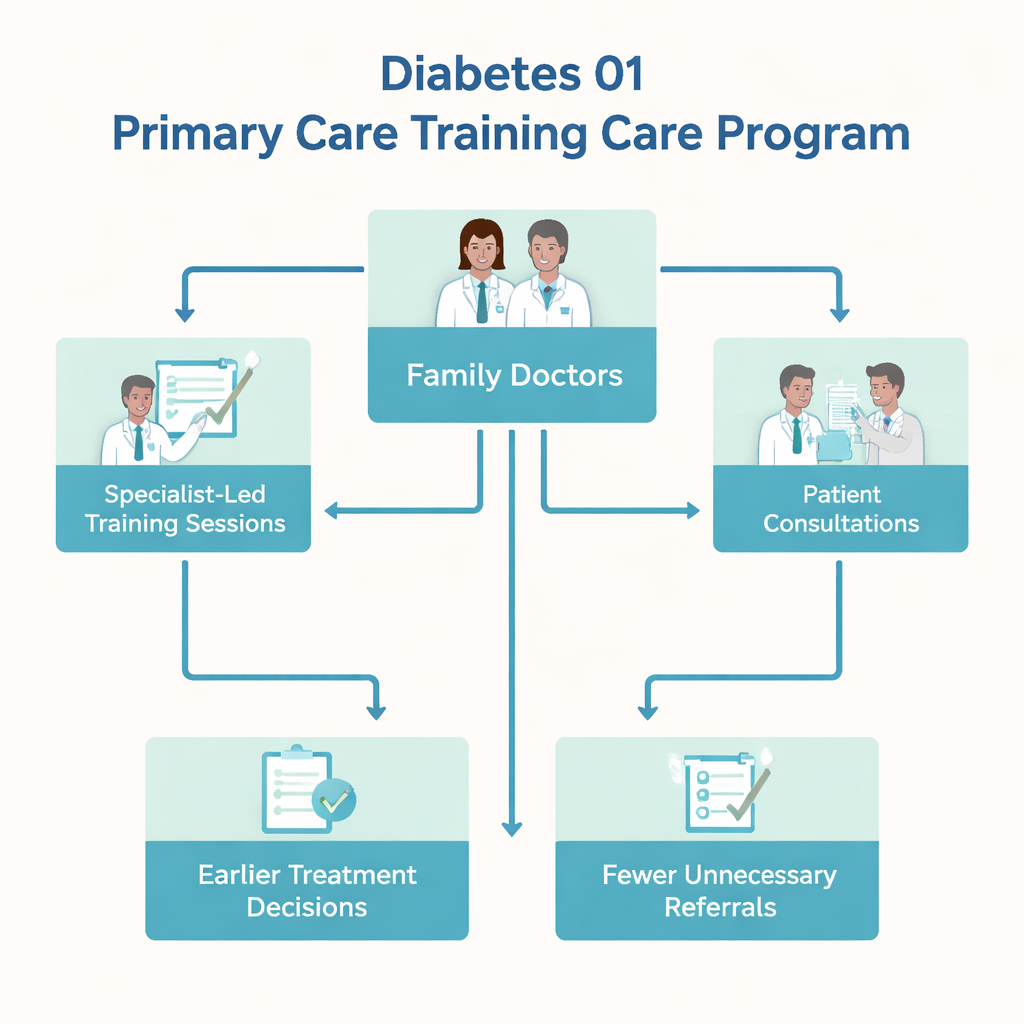
Researchers in Adana, a large city in southern Turkey, examined a programme called “Diabetes 01,” organised by the Turkish Diabetes Foundation. Over six months, 118 volunteer family physicians attended monthly sessions led by diabetes specialists. These sessions mixed short lectures with real-world case discussions and online consultations, all aimed at helping doctors feel more confident managing type 2 diabetes in their own clinics rather than sending patients straight to hospital care. To understand the impact, the researchers later compared these trained doctors with 516 colleagues in the same region who did not join the programme.
A survey that mirrors real-world choices
Instead of tracking patients directly, the team used a detailed questionnaire that presented everyday clinical situations. Doctors were asked, for example, how they would treat a newly diagnosed patient, when they would start medication, when they would change treatment, and at what point they would send someone to a higher-level clinic or hospital. A key marker in these questions was HbA1c, a blood test that reflects average blood sugar over several months. By comparing answers from trained and untrained doctors, the researchers could see whether the course was linked to more proactive, guideline-aligned decisions or to a tendency to delay action—what experts call “clinical inertia.”
Earlier action, fewer premature referrals
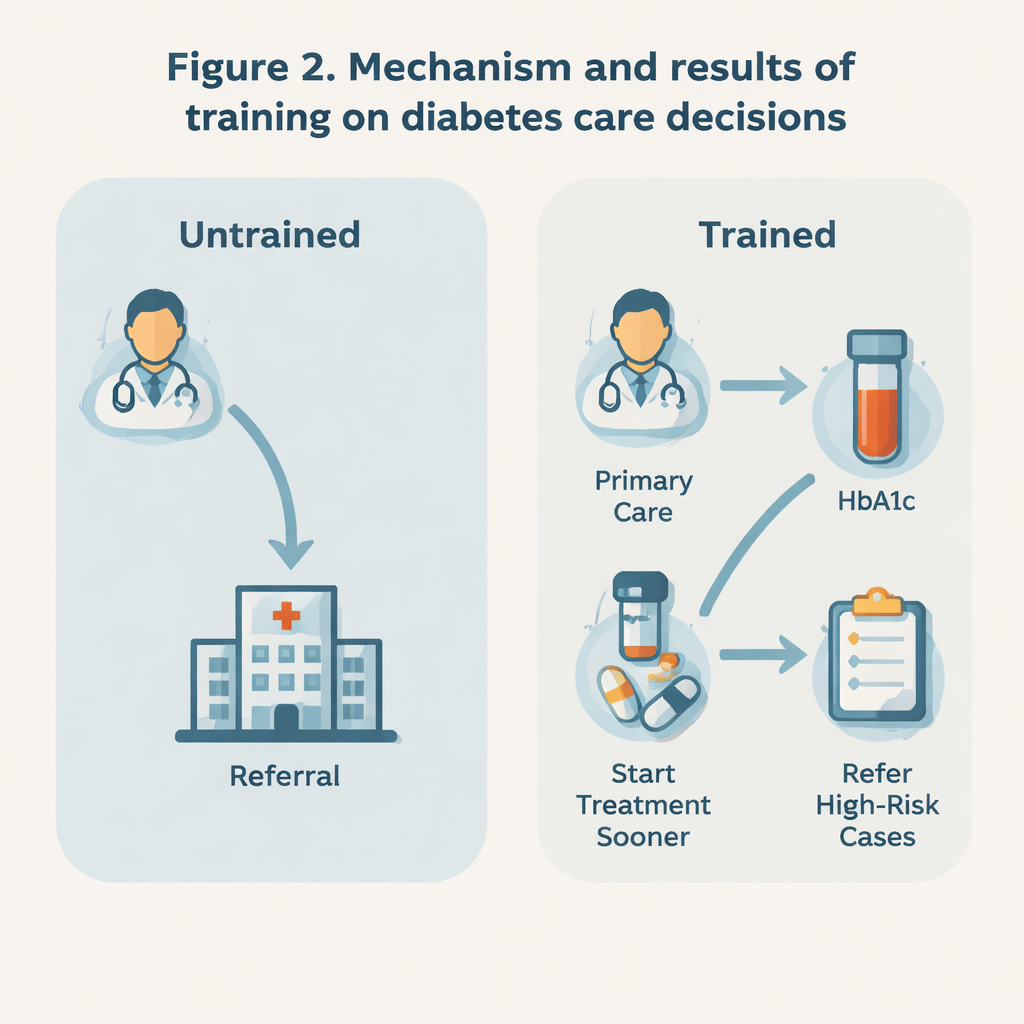
The results suggest that training nudged doctors in a more active direction. Trained physicians were far less likely to say they would refer a newly diagnosed patient directly to a specialist (about 3% versus 13% among untrained doctors). They were also less likely to refer patients with only mildly raised HbA1c levels, and more likely to try managing such cases themselves in primary care. At the same time, when HbA1c levels were very high—signalling more serious risk—trained doctors were actually more willing than their peers to refer patients on to higher-level care. This pattern points to a more selective, risk-based approach: keep manageable cases close to home, but escalate quickly when danger signs appear.
Starting treatment sooner, but not overtreating
Training also appeared to influence when doctors said they would begin diabetes medications. For patients without major health problems, trained physicians were more inclined to start drug treatment soon after HbA1c rose above 6.5%, rather than waiting until it exceeded 7%. This shift toward earlier treatment is important because tight blood sugar control early in the course of diabetes has been shown to reduce long-term complications such as eye, kidney, and nerve damage. However, when it came to raising the dose or adding new drugs later on, or choosing exact blood sugar targets, the two groups of doctors answered quite similarly. That suggests the programme mainly changed entry points into treatment and referral, rather than aiming for more aggressive control overall.
Promises, limits, and what it means for patients
Like any study, this one has limits. The doctors who joined the course chose to do so, and may already have been more motivated. The survey captured what they said they would do, not what actually happened with real patients. And the study took place in a single Turkish province, so the patterns may not be identical elsewhere. Still, the findings offer a hopeful message: structured, case-based training for family doctors can be linked to earlier treatment decisions and fewer unnecessary referrals, without encouraging risky delays for the sickest patients. For people living with or at risk for type 2 diabetes, this suggests that investing in the education and confidence of front-line doctors could mean getting timely care closer to home, and potentially heading off complications before they become life-threatening.
Citation: Coşkun, Y., Karagün, B. & Bakıner, O. Association between a structured training programme and self-reported clinical inertia in type 2 diabetes management in primary care. Sci Rep 16, 5878 (2026). https://doi.org/10.1038/s41598-026-36726-5
Keywords: type 2 diabetes, primary care, clinical inertia, physician training, diabetes education