Clear Sky Science · en
Social image presentation of virtual sports in social media through the analysis of Twitter data
Why Online Sports Debates Matter
More and more of our daily lives now unfold on screens, and that includes how we play and watch sports. Virtual sports—where people cycle, swing a racket or throw a punch using headsets, motion sensors or game controllers—are no longer niche pastimes. They are edging into the Olympic spotlight and stirring big conversations on social media. This study asks a simple but important question: when people talk about virtual sports on X (formerly Twitter), what exactly do they say, and how do they feel about it?
From Living Rooms to the Olympic Stage
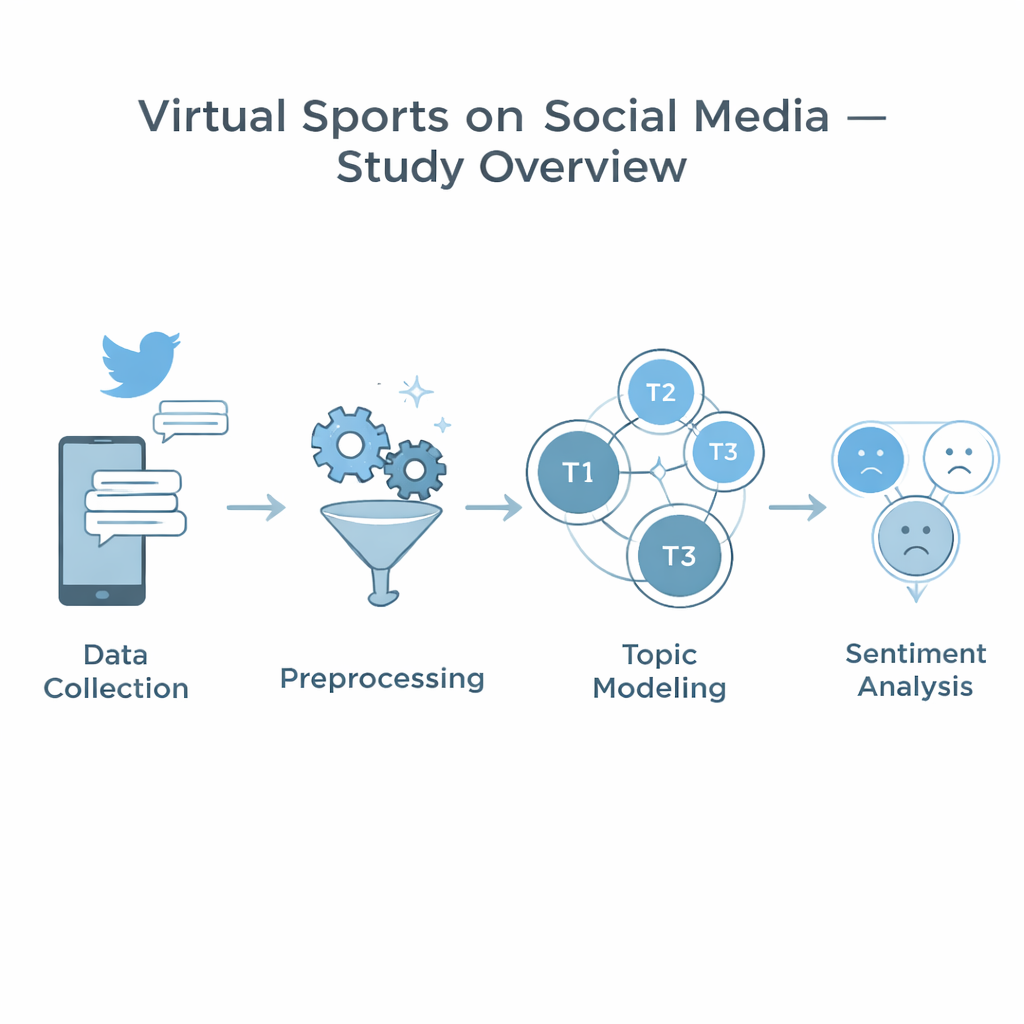
Virtual sports blend familiar athletic moves with digital worlds, using tools like virtual and augmented reality so people can compete from their living rooms yet still feel part of a larger arena. The International Olympic Committee has embraced this shift with the Olympic Virtual Series in 2021 and Olympic Esports Week in 2023. These events drew global attention and a flood of online reactions. To understand this new landscape, the researchers collected more than 26,000 tweets related to terms such as “virtual sports” and “Olympic Esports,” then carefully cleaned and filtered them down to 15,585 relevant English-language posts for detailed study.
Turning Tweets into Themes
Instead of reading every tweet by hand, the team used computer methods to uncover the main storylines. First, they grouped words that often appear together, revealing six recurring topics. One focused on how virtual sports and traditional sports blend, with people comparing digital competitions to real-world events and discussing the role of the Olympic movement. Another, and by far the largest, centered on how to join and use virtual sports—sharing sign-up links, free sessions and opportunities to participate. Other topics highlighted virtual sports in schools, using them for fitness and training, promoting big events, and the role of technology and media platforms in broadcasting and shaping these experiences.
Taking the Temperature of Public Feelings
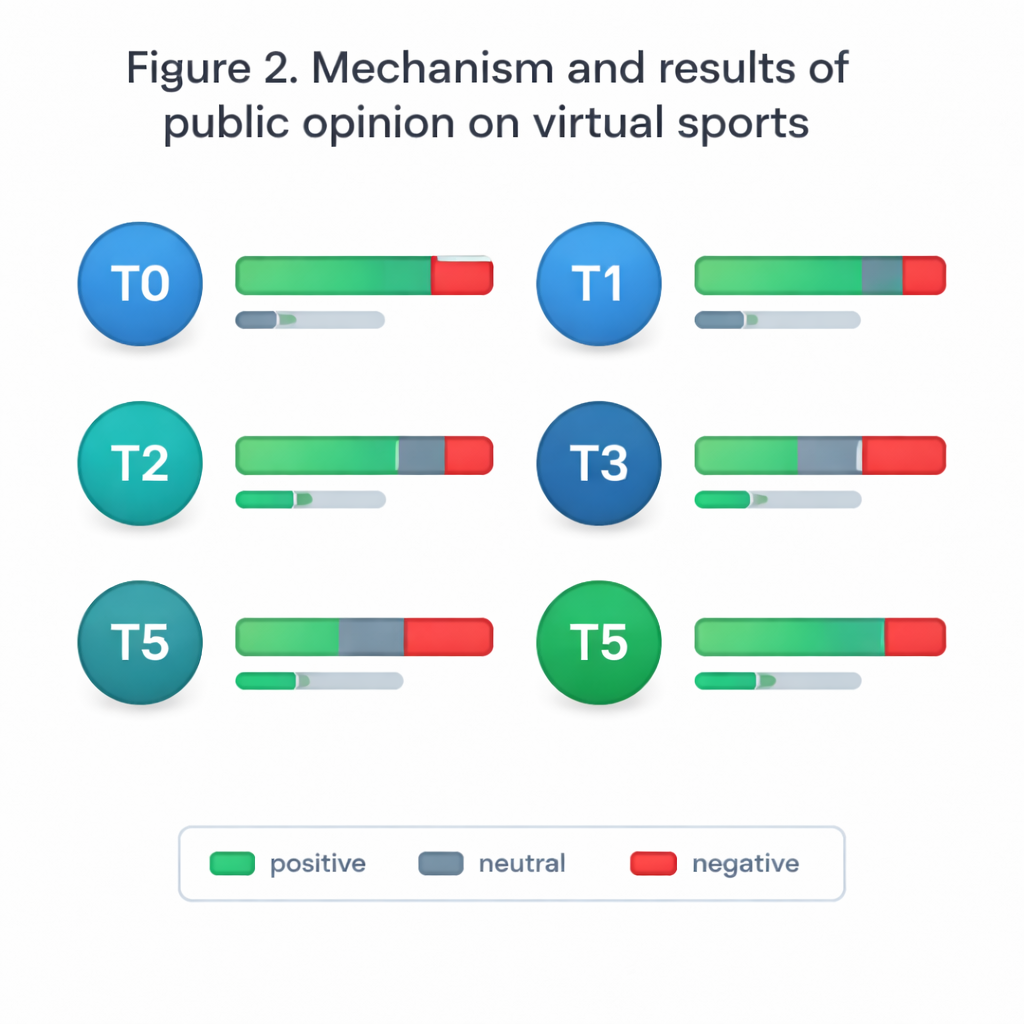
Finding topics is one thing; knowing how people feel about them is another. The researchers turned to a large language model to sort each tweet into positive, neutral or negative tone. Overall, the picture was upbeat: 58 percent of tweets were positive, 28 percent neutral and 14 percent negative. Many users were excited by the chance to compete, stay active and enjoy high-tech experiences from home—some even joked that this might be their best shot at becoming an Olympian. Neutral posts tended to simply relay news about events, rules and schedules.
Where Enthusiasm Meets Concern
Not all themes were equally cheerful. Discussions about integrating virtual and traditional sports, and about technology and media coverage, were strongly positive, suggesting that many people welcome innovation as long as it connects back to familiar sporting traditions. In contrast, the topic tied to event-based mobilization—large campaigns meant to rally fans and players around virtual Olympic events—sparked the most disagreement and had the highest share of negative comments. Some users worried about screens replacing stadiums, or questioned the motives behind digital events, echoing broader public concerns about big platforms, data use and fairness. Educational uses of virtual sports drew relatively little attention, hinting that many people still see these activities mainly as entertainment rather than classroom tools.
What This Means for the Future of Play
For readers outside academia, the takeaway is clear: virtual sports enjoy a generally warm welcome online, but their public image is still taking shape. People like the convenience, creativity and new paths to participation that digital competitions offer, especially when they extend real sports rather than replace them. Yet skepticism grows when large organizations are seen as pushing events mainly for promotion or profit. By mapping how conversations on X cluster into themes and moods, this study gives policymakers, educators and sports organizers a roadmap for building trust—highlighting health, access and fairness—so that virtual sports can complement, rather than crowd out, the games we already love.
Citation: Du, W., Shen, X., Zhou, S. et al. Social image presentation of virtual sports in social media through the analysis of Twitter data. Sci Rep 16, 5662 (2026). https://doi.org/10.1038/s41598-026-36725-6
Keywords: virtual sports, esports, social media, Olympic events, public opinion