Clear Sky Science · en
Relationship between lipoprotein(a) and PCSK9 in angiogram-proven premature coronary artery disease in an Asian cohort
Why this heart study matters
Heart attacks are often thought of as a problem of old age, yet more and more adults are developing serious heart disease decades earlier. This study focused on Asians who developed coronary artery disease—the clogged arteries that can cause heart attacks—at a relatively young age. It investigated two blood substances, lipoprotein(a) and PCSK9, that may help explain why some people are at higher risk even when they watch their diet or take cholesterol-lowering drugs.
Looking for hidden risks in the blood
The researchers examined 204 Malaysian adults divided into three groups: two groups with angiogram-proven premature coronary artery disease (meaning their artery narrowings were confirmed by imaging) and a third group of healthy people without known heart disease. Among the patients, some had signs of familial hypercholesterolemia, an inherited tendency to very high LDL or “bad” cholesterol, while others did not. All patients with heart disease were already on statin therapy, the standard drugs used to lower cholesterol, whereas the healthy comparison group was not.
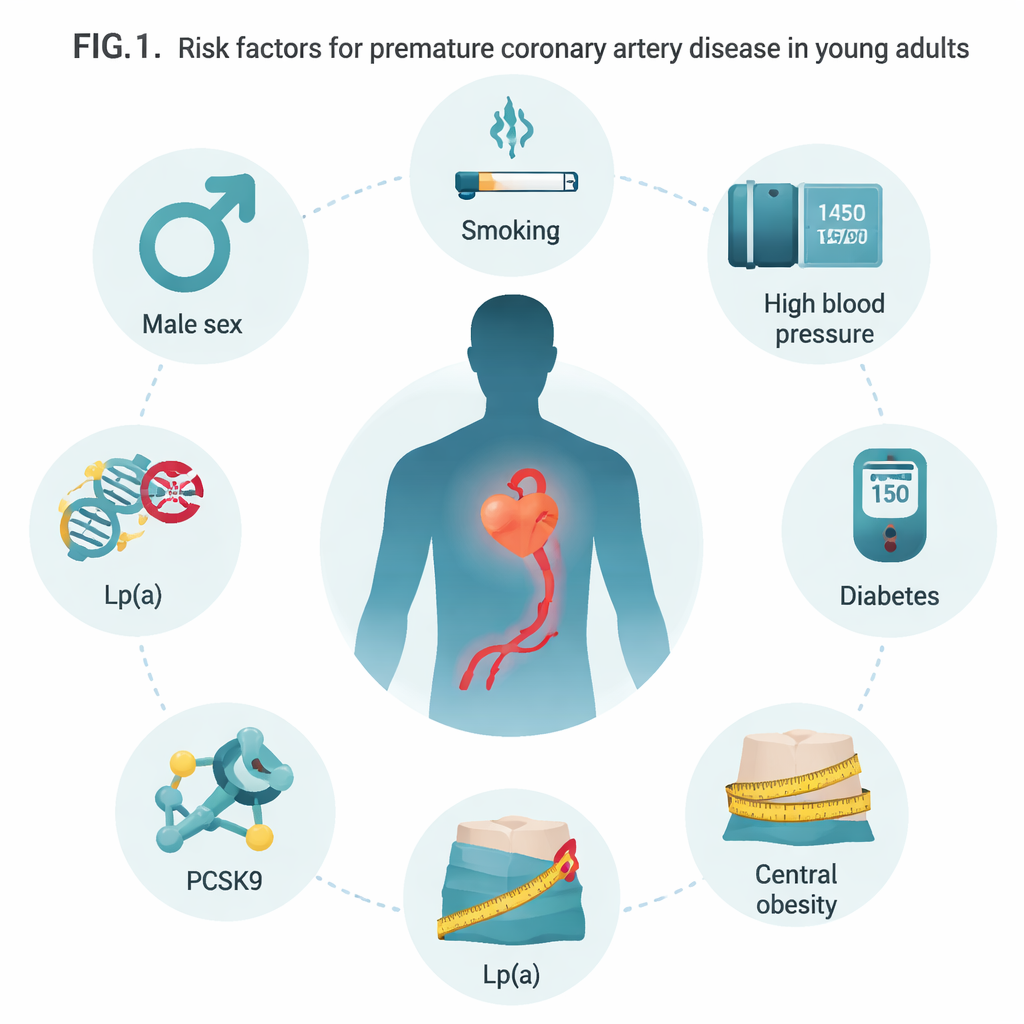
Two special particles: Lp(a) and PCSK9
Lipoprotein(a), or Lp(a), is a cholesterol-rich particle largely determined by genes rather than lifestyle. High levels are thought to damage blood vessel walls, promote inflammation, and make blood more likely to clot. PCSK9 is a protein that helps control how many cholesterol receptors sit on liver cells; drugs that block PCSK9 can dramatically lower LDL cholesterol. In this study, the scientists measured both Lp(a) and PCSK9 in participants’ blood to see how they varied between people with and without early coronary disease, and whether the two markers rose and fell together.
What the measurements revealed
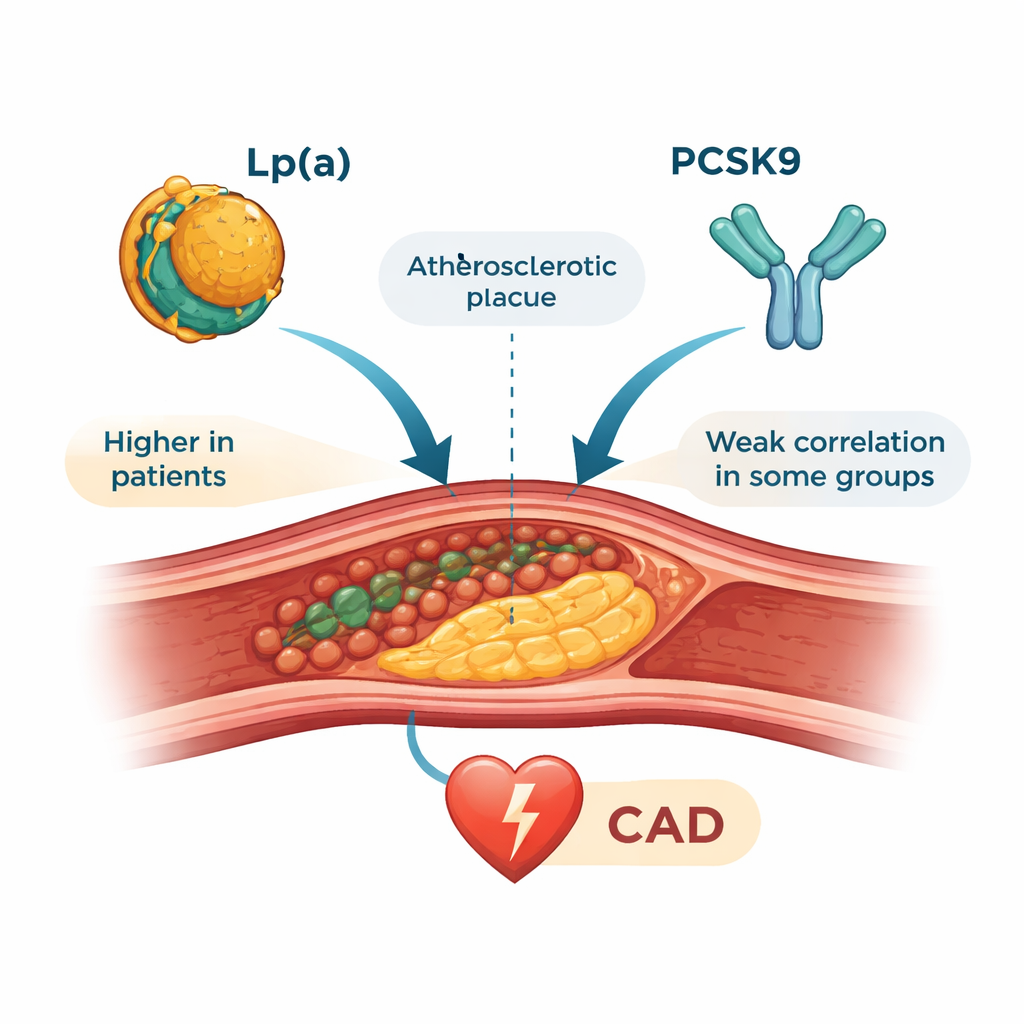
Both Lp(a) and PCSK9 levels were clearly higher in people with premature coronary artery disease than in the healthy group. This held true whether or not the patients showed clinical signs of familial hypercholesterolemia. When the team used statistical models that took into account other familiar risk factors—such as smoking, diabetes, high blood pressure, body weight, and traditional cholesterol measures—they found that Lp(a) stood out as an independent predictor of early coronary disease. In other words, people with higher Lp(a) had several times greater odds of having premature artery blockages, even after accounting for those other risks.
A complicated relationship between the two markers
In contrast, the link between PCSK9 levels and Lp(a) turned out to be surprisingly modest. Within each patient group, there was no strong correlation between the two, although a weak positive relationship was seen in the healthy controls and when the two patient groups were combined. The authors suggest that this inconsistency may stem partly from statin use, which is known to raise PCSK9 levels in complex ways, as well as from genetic and ethnic differences that influence both markers. They also note that they measured total PCSK9, which mixes together active and less active forms of the protein that may behave differently in the body.
What it means for patients and prevention
The study’s main message for a general reader is that some people carry a “hidden” inherited risk for early heart disease that is not fully captured by standard cholesterol tests. Elevated Lp(a) appears to be one such warning sign in this Asian population, while PCSK9’s role is more nuanced and may depend on medication use and underlying genetics. Although this study cannot prove cause and effect, it supports growing calls to measure Lp(a) at least once in adults, especially in those with a family history of high cholesterol or early heart attacks. As powerful new PCSK9-targeting drugs and upcoming Lp(a)-lowering treatments become available, understanding how these markers interact could help doctors better identify high-risk individuals and tailor therapies to prevent heart attacks before they strike.
Citation: Zulkapli, R., Muid, S.A., Wang, S.M. et al. Relationship between lipoprotein(a) and PCSK9 in angiogram-proven premature coronary artery disease in an Asian cohort. Sci Rep 16, 6031 (2026). https://doi.org/10.1038/s41598-026-36716-7
Keywords: premature coronary artery disease, lipoprotein(a), PCSK9, familial hypercholesterolemia, cardiovascular risk factors