Clear Sky Science · en
NMR metabolomic signatures of healthy lifestyle and incident MASLD
Why Your Daily Habits Matter to Your Liver
Most people know that what we eat, how much we move, and whether we smoke or drink can affect our heart and waistline. Far fewer realize that these same day‑to‑day choices quietly shape the chemistry of our blood and, in turn, the health of our liver. This study used advanced blood testing in nearly 180,000 adults to ask a simple but far‑reaching question: can we "see" a healthy lifestyle in blood molecules, and do those molecular fingerprints help protect against a common condition called metabolic dysfunction‑associated steatotic liver disease (MASLD), a leading cause of fatty liver, cirrhosis, and liver cancer?
Following Thousands of People Over Time
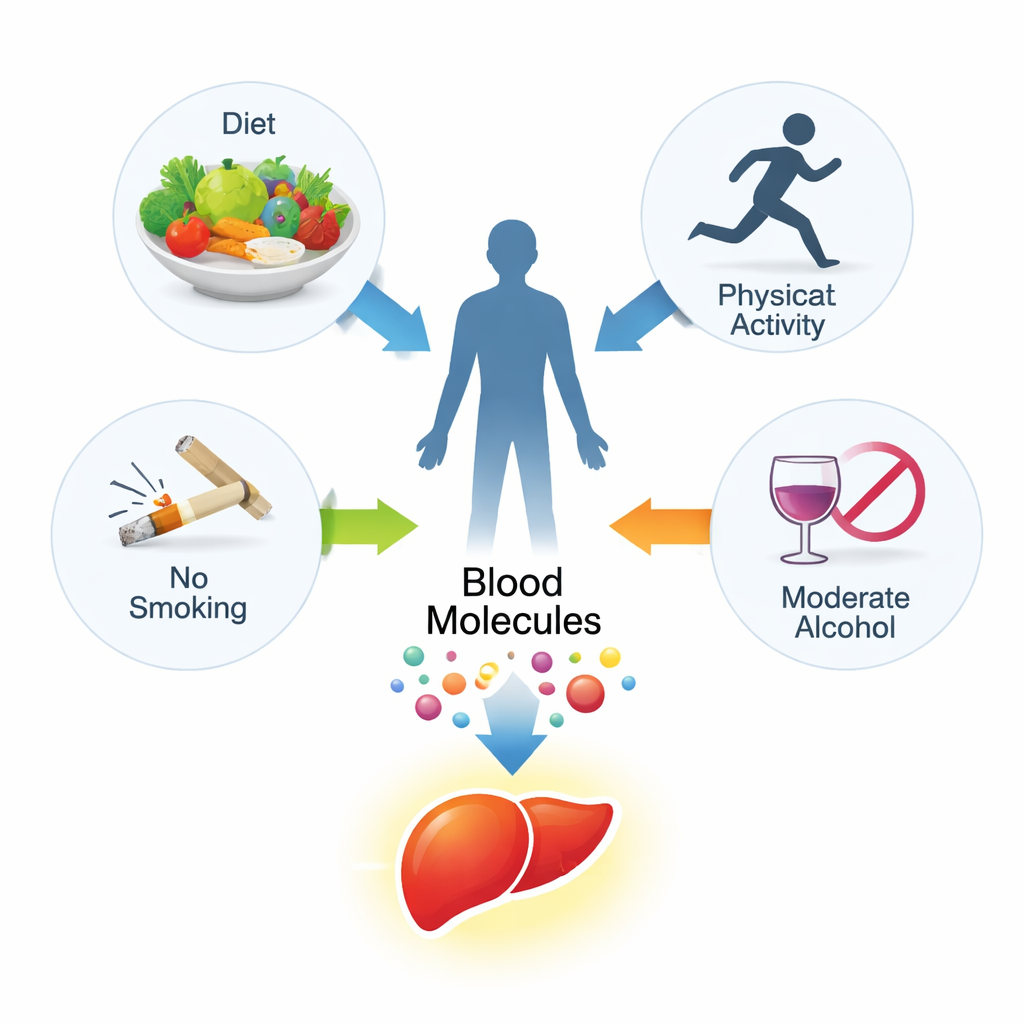
The researchers drew on data from the UK Biobank, a long‑running project that has tracked the health of more than half a million volunteers. From this resource they focused on 179,261 men and women who had a special type of blood test known as NMR metabolomics. Participants also reported four key lifestyle habits: diet quality, physical activity, smoking, and alcohol use. Each person received a simple lifestyle score from 0 to 4, with higher scores reflecting more fruit‑ and vegetable‑rich eating, regular exercise, not smoking, and low‑risk drinking. None had MASLD or other liver disease at the start, and health records were then followed to see who went on to develop fatty liver serious enough to be recorded in hospital or death statistics.
A Chemical Signature of Healthy Living
From 251 different blood markers, the team used modern statistical methods to pull out a "signature" that best captured these lifestyle habits. The result was a set of 94 molecules, most of them related to fats and fat‑carrying particles in the blood, along with some amino acids and sugar‑processing by‑products. People with healthier lifestyles tended to have higher levels of certain beneficial fats, such as polyunsaturated fatty acids, and more favorable patterns of lipoproteins, the tiny shuttles that transport cholesterol and triglycerides. Smokers, heavy drinkers, and those who were inactive or ate poorly showed the opposite pattern. In effect, the blood test turned a messy mix of behaviors into a single, quantifiable score that reflected how "healthy" a person’s internal chemistry looked.
Linking Blood Chemistry to Fatty Liver Risk
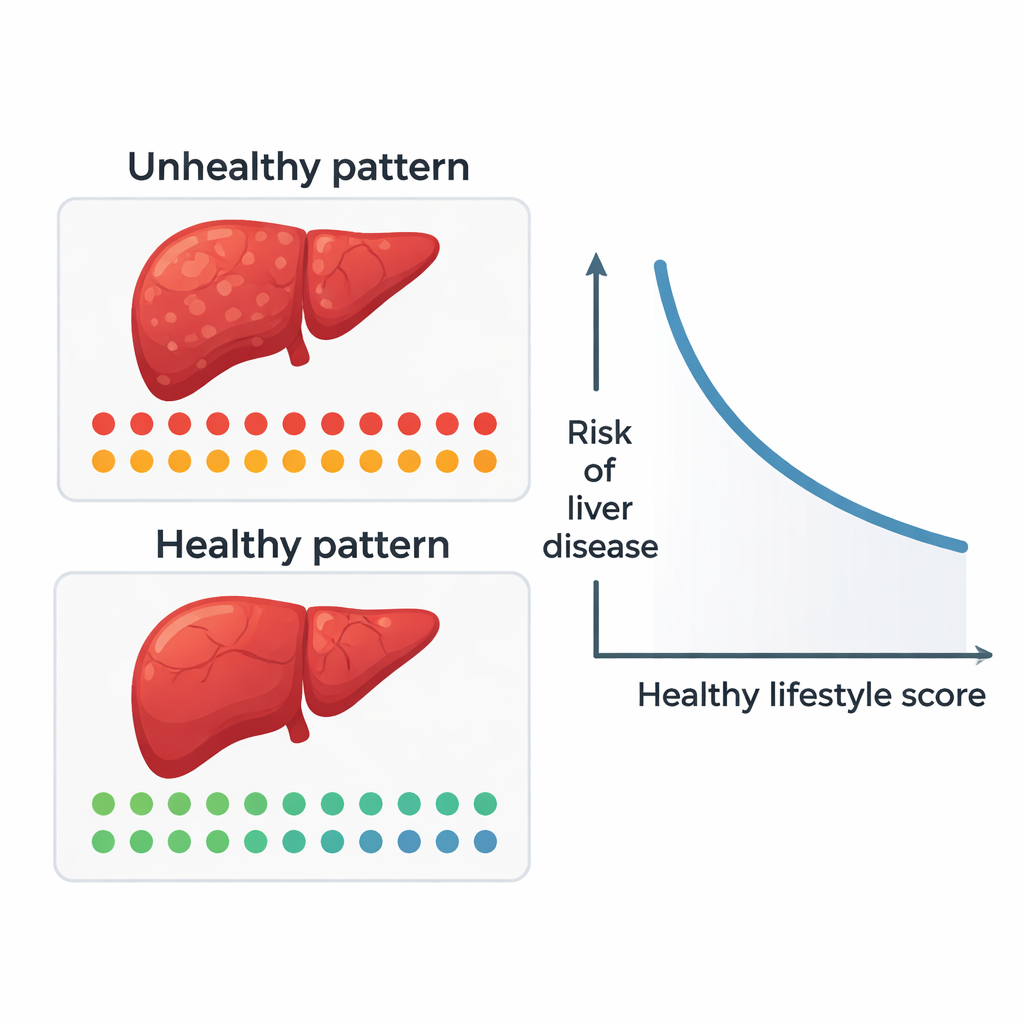
Over several years of follow‑up, 2,422 participants (about 1.35%) developed MASLD. As expected, people with higher lifestyle scores were less likely to end up with fatty liver. But the metabolic signature was an even stronger predictor. After accounting for age, sex, income, and prior heart disease or cancer, each step up in the lifestyle score was linked to roughly 15% lower risk of MASLD. By comparison, each step up in the metabolite score was linked to about 66% lower risk. Those in the highest third of this blood‑based score had about three‑quarters lower risk than those in the lowest third. These relationships held across many subgroups, including different ages, body sizes, and health histories, although the protective effect was somewhat weaker in people who already had cardiovascular disease.
How Much of Lifestyle’s Benefit Runs Through Metabolism?
The team then asked how much of the protection from healthy habits could be "explained" by changes in blood chemistry. Using mediation analysis, they estimated that more than half of the link between lifestyle and lower MASLD risk—about 56%—ran through these measured metabolites. When they added other well‑known intermediates such as body weight, diabetes, and high blood pressure alongside the metabolite signature, the combined pathways accounted for over 86% of lifestyle’s protective effect. Fatty acid patterns, especially a higher share of polyunsaturated fats and a lower share of saturated and monounsaturated fats, stood out as particularly important. These results suggest that lifestyle protects the liver largely by reshaping how the body handles fats and related molecules long before serious disease shows up.
What This Means for You
For non‑specialists, the message is both familiar and newly concrete. The classic pillars of healthy living—eating a balanced, plant‑forward diet, staying physically active, avoiding tobacco, and keeping alcohol in check—leave a measurable imprint on the blood. That chemical imprint, dominated by healthier fat profiles and better‑behaving cholesterol carriers, is strongly tied to a lower future risk of MASLD. While this study cannot prove cause and effect on its own and mainly reflects white European participants, it supports the idea that simple lifestyle steps can reprogram metabolism in ways that help shield the liver from fat build‑up and its dangerous complications.
Citation: Tang, X., Wen, S., Huang, M. et al. NMR metabolomic signatures of healthy lifestyle and incident MASLD. Sci Rep 16, 7017 (2026). https://doi.org/10.1038/s41598-026-36704-x
Keywords: fatty liver, healthy lifestyle, metabolomics, blood biomarkers, liver disease prevention