Clear Sky Science · en
Knowledge, attitude, and practices of pediatric healthcare workers toward healthy sleep in hospitalized children
Why Sleep in the Hospital Matters
When a child is admitted to the hospital, most families focus on medications, tests, and surgeries. But another powerful “treatment” often gets overlooked: sleep. This study, conducted in a large children’s hospital in Riyadh, Saudi Arabia, explores how doctors, nurses, and other pediatric staff understand, value, and protect sleep for sick children—and for their parents—during a hospital stay.
How the Study Was Carried Out
The researchers surveyed 200 pediatric healthcare workers, including residents, nurses, consultants, and allied staff such as respiratory therapists and dietitians. Participants answered a detailed questionnaire about what they know regarding children’s sleep, how they feel about its importance, and what they actually do in daily practice to help children and parents rest. The survey also asked them to rate common sources of sleep disruption on hospital wards and to judge how effective different solutions—such as closing doors or turning down alarms—might be. The team then used statistical methods to see which staff characteristics, like years of experience or amount of sleep training, were linked with better knowledge.
What Keeps Children Awake in the Hospital
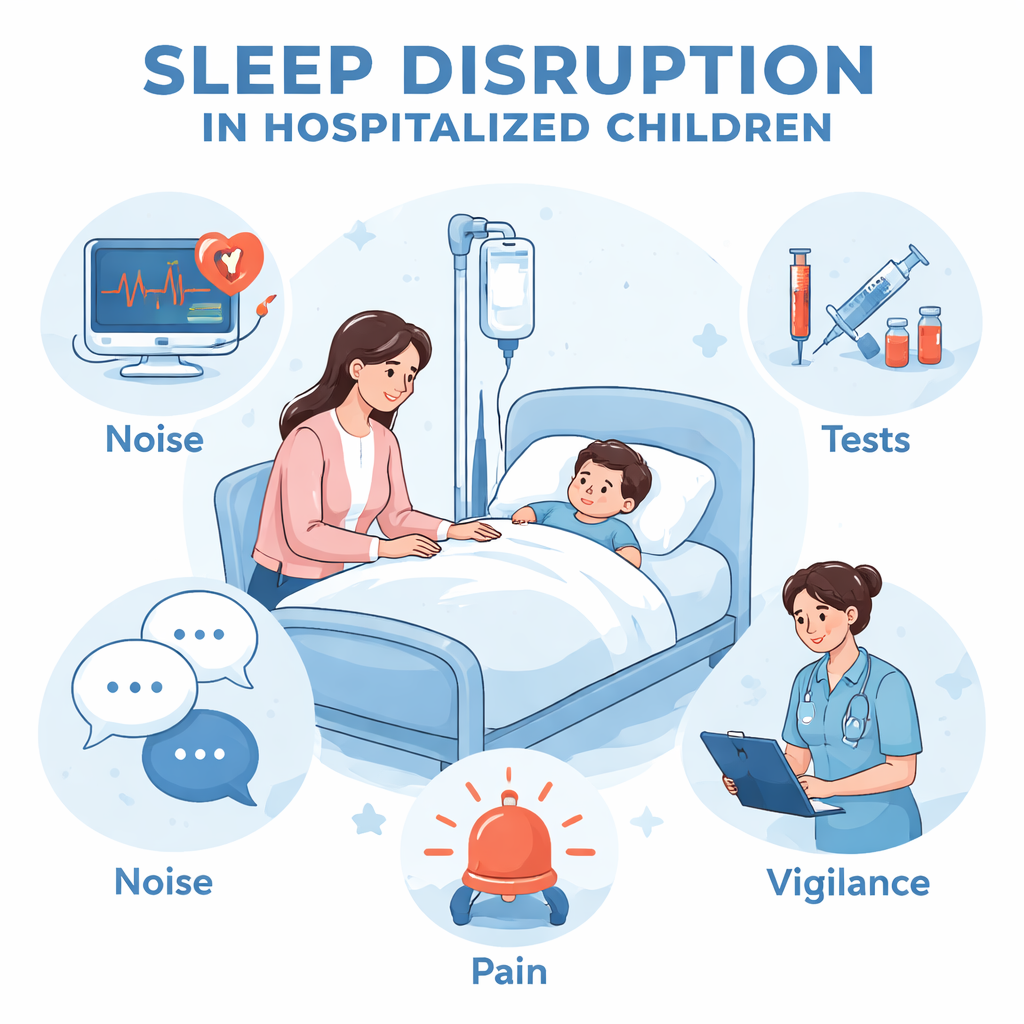
The staff overwhelmingly agreed that sleep is crucial for children’s health, healing, and emotional well-being. Yet they also recognized that hospitals are hard places to sleep. The top sleep disruptors they identified were blood draws and tests, children’s pain, and the constant beeping of medical equipment. Noise from staff conversations and machines, as well as routine checks of vital signs, added to the problem. Emotional strain mattered too: anxiety and feeling overwhelmed were seen as important reasons why both children and parents struggled to sleep. In short, the very activities meant to monitor and treat young patients often end up disturbing the rest they need to recover.
Simple Changes That Could Make Nights Quieter
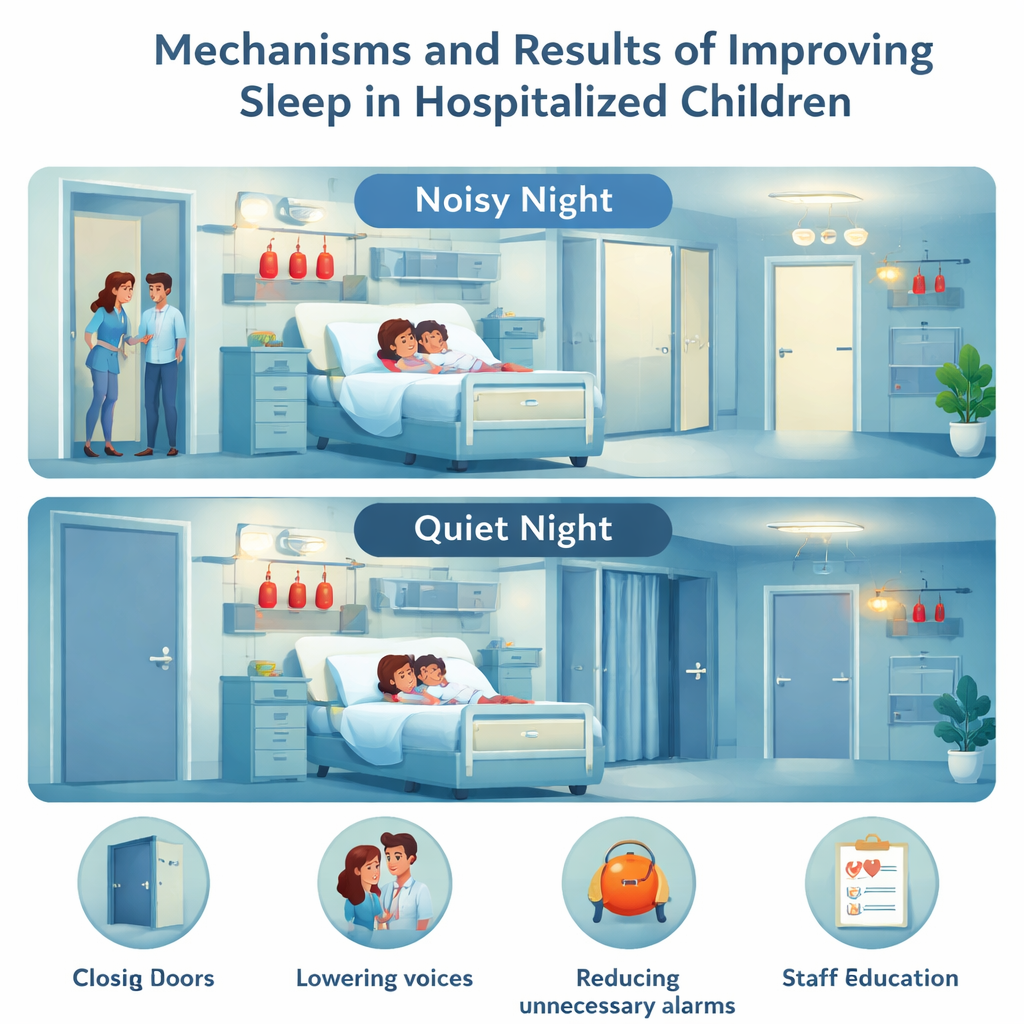
When asked about practical solutions, healthcare workers pointed to several straightforward steps that could make a big difference. Closing patient room doors and reducing unnecessary monitors and alarms were rated as the most effective ways to improve nighttime quiet. Staff also saw value in lowering voices, turning down phone ringers, and setting pagers to vibrate. Many clinicians reported using basic sleep-hygiene advice—such as keeping a regular bedtime routine—as well as tools like melatonin, behavior-based strategies, and, less often, light therapy or referrals to sleep clinics. These responses suggest that staff know at least some low-cost, common-sense actions that can help children and parents sleep better, even in busy hospital environments.
What Healthcare Workers Know—and Don’t Know
Although most participants said they believed sleep was important for both children and caregivers, they were less confident about exactly how many hours of sleep children need, or how best to support healthy sleep on the ward. Many felt unsure about helping parents rest as well. Surprisingly, factors such as age, job role, and years of experience did not clearly predict who had better sleep-related knowledge. The only factor that consistently stood out was education: even a modest number of hours of formal teaching about sleep was linked to higher knowledge scores. This suggests that experience alone is not enough; targeted training is needed to turn good intentions into effective, everyday practice.
What This Means for Families and Hospitals
For families, the message is reassuring and challenging at once. Pediatric staff do care deeply about children’s sleep and recognize the strain that hospital nights place on parents. However, many feel undertrained and unsure about specific strategies to improve sleep. For hospitals, the study highlights an opportunity: investing in simple environmental changes—like quieter alarms and closed doors—and in basic sleep education for staff could pay off in better rest and faster recovery for young patients. In plain terms, helping children and their parents sleep soundly is not a luxury; it is a key part of good medical care.
Citation: Alfadhel, A., Almutairi, N., Alsiwat, L. et al. Knowledge, attitude, and practices of pediatric healthcare workers toward healthy sleep in hospitalized children. Sci Rep 16, 5727 (2026). https://doi.org/10.1038/s41598-026-36703-y
Keywords: pediatric sleep, hospital environment, sleep disruption, healthcare workers, child recovery