Clear Sky Science · en
Perineal body length as a predictor of severe perineal lacerations in a Turkish obstetric cohort
Why this matters for women giving birth
Many women worry about tears during vaginal birth, but it can be hard to know who is most at risk. This study from a large Turkish maternity hospital asked a simple question with big implications: can a quick measurement of the tissue between the vagina and the anus—the perineal body—help doctors spot which women are more likely to suffer serious tears that damage the anal muscle? The answer could guide gentler, more tailored care in the delivery room.
The small strip of tissue that does a big job
The perineal body is a short bridge of muscle and connective tissue between the opening of the vagina and the anus. During birth, this area stretches dramatically as the baby’s head crowns. If it cannot stretch enough, the tissue may rip, sometimes extending into the muscle that controls bowel movements. These serious injuries, called obstetric anal sphincter injuries, can lead to long-term problems such as leakage of stool, pain, and reduced quality of life. Earlier research hinted that women with a naturally shorter perineal body were more likely to experience these injuries, but there were few data from Turkish women, whose body shapes and birth care practices may differ from those in other countries.
How the study was carried out
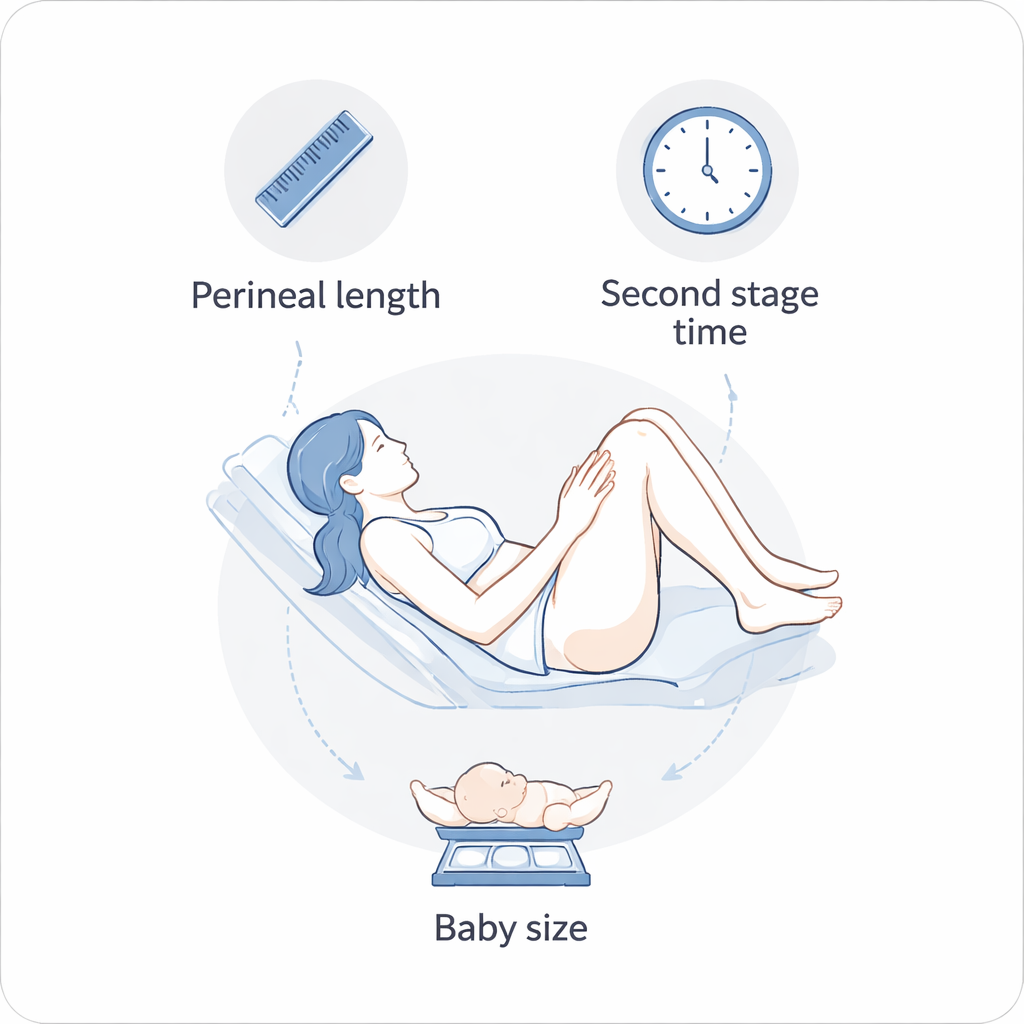
To explore this, researchers followed 495 women having full-term, single, head-down pregnancies who went into labor on their own at a busy city hospital. All had no history of major bowel or pelvic surgery. In early labor, when the cervix was four centimeters open, trained examiners used a sterile paper tape to measure the perineal body from the back edge of the vaginal opening to the edge of the anus. The staff who later judged and repaired any tears were kept unaware of these measurements to avoid bias. The team also recorded other details that might influence tearing, including the woman’s age and body mass index, whether labor was sped up with medication, whether forceps or vacuum were used, how long pushing lasted, and the baby’s birth weight and head size.
Shorter distance, higher risk
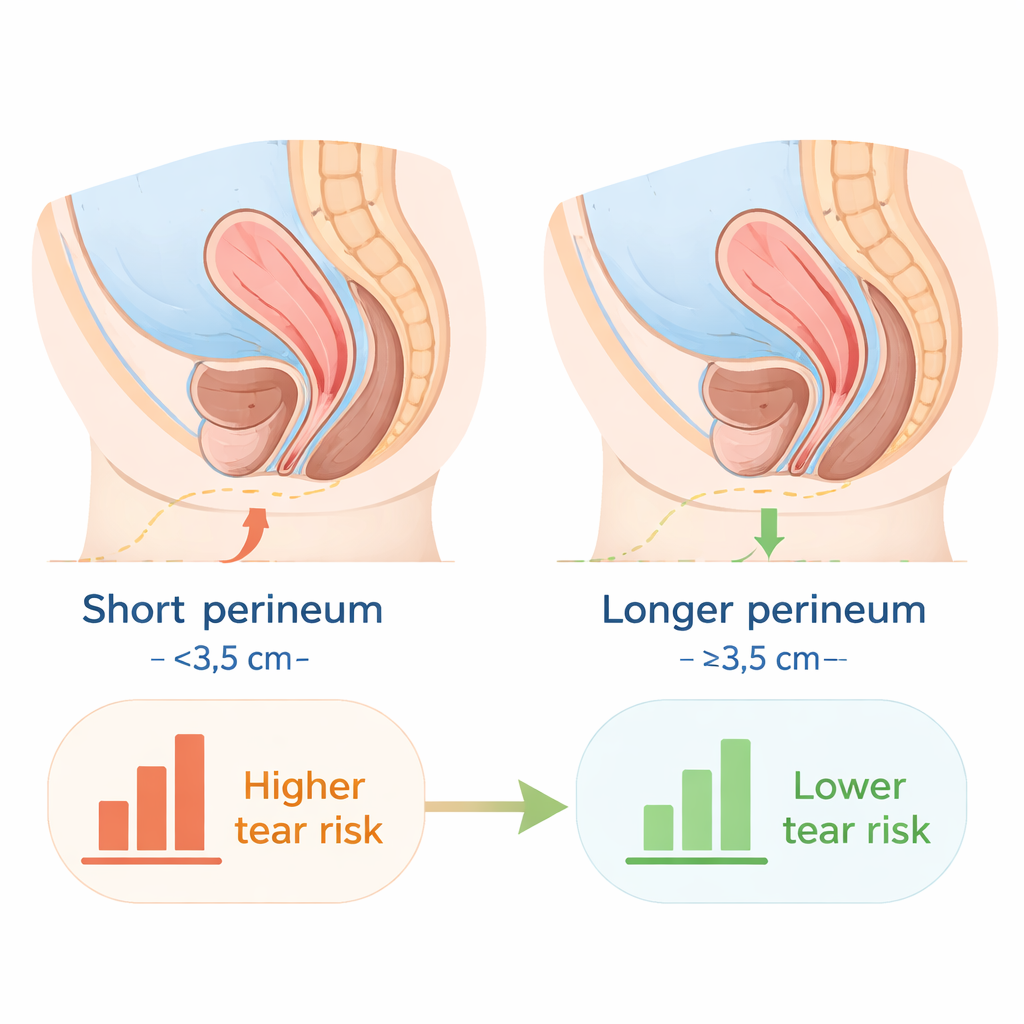
Severe tears involving the anal muscle occurred in 42 of the 495 women, or about 8.5 percent, and were somewhat more common in first-time mothers. When the researchers compared women with and without these injuries, a clear pattern emerged: those who tore badly had, on average, a shorter perineal body. Using statistical models, the team found that for every half-centimeter decrease in this distance, the chance of a severe tear rose steadily. They identified a practical cut-off point of 3.5 centimeters. Women measuring under this threshold were more than twice as likely to experience a serious tear as those above it, even after taking into account how long they pushed and how big their babies were. The measurement predicted risk reasonably well and, importantly, a perineal length of 3.5 centimeters or more was linked to a very low chance of severe injury.
Other forces at play during birth
The study also showed that anatomy is only part of the story. Longer pushing (more than an hour) and larger babies—both heavier and with bigger head size—increased the risk of serious tears. These findings match earlier work from other countries, which has consistently tied bigger babies and prolonged second stage of labor to more perineal trauma. In contrast, once the statistical models accounted for these factors and perineal length, other elements such as the mother’s age, her baseline weight, whether a mediolateral episiotomy was used, and whether forceps or vacuum were needed did not stand out as independent drivers of severe injury in this group.
What this could mean in the delivery room
For women and clinicians, the key message is that a quick, painless measurement of the perineal body in early labor may help identify who is more vulnerable to serious tearing. A short perineal body—especially combined with a large baby or a long pushing phase—signals that extra care may be needed. That could include warm compresses, hands-on support of the perineum, careful control of how fast the baby’s head is born, and thoughtful use of episiotomy. At the same time, the authors stress that this measurement is not a crystal ball: most women with a short perineum will still not have a severe tear, and the proposed 3.5-centimeter cut-off must be tested in other hospitals and populations. Used alongside, not instead of, clinical judgment, perineal body length could become a simple tool to make vaginal birth safer and protect women’s long-term pelvic health.
Citation: Çopuroğlu, M., Demir, M.B., Aydın, A.K. et al. Perineal body length as a predictor of severe perineal lacerations in a Turkish obstetric cohort. Sci Rep 16, 5671 (2026). https://doi.org/10.1038/s41598-026-36699-5
Keywords: childbirth tears, perineal length, vaginal birth, anal sphincter injury, pelvic floor health