Clear Sky Science · en
Optimization of mechanical and durability performance of graphene nanoplatelet modified PVA fiber reinforced cementitious composites using response surface methodology
Smarter Concrete for Tougher, Longer-Lasting Structures
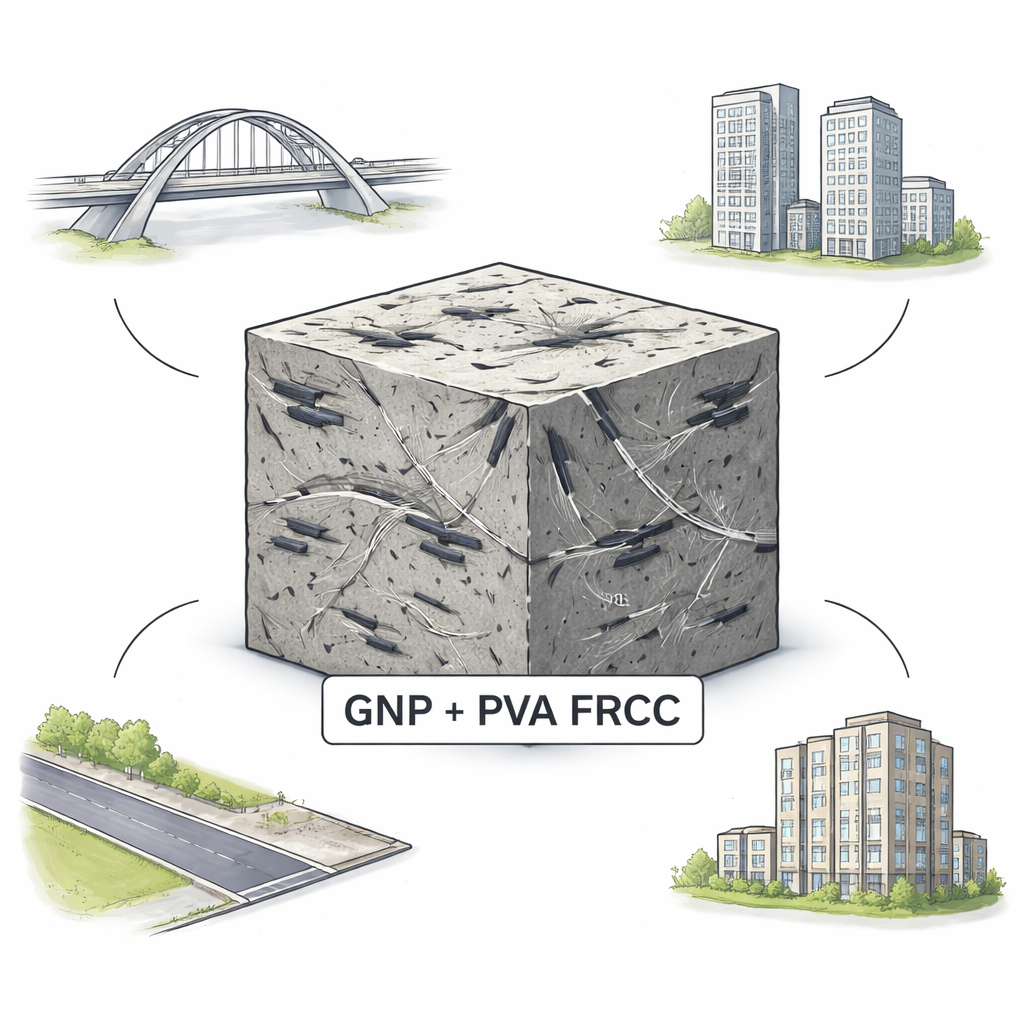
From bridges and pavements to high-rise buildings, modern life rests on concrete. Yet conventional concrete is prone to cracking, gradual weakening, and damage from water and repeated impacts. This study explores a new recipe for “smart” concrete that blends ultra-strong graphene flakes with flexible synthetic fibers. The goal is simple but powerful: make concrete that is stronger, tougher, and more durable, without dramatically changing how it is mixed and used on real construction sites.
Why Reinvent a Familiar Building Material?
Traditional concrete is strong when squeezed but weak when pulled or bent, which is why cracks so often appear in slabs and beams. Engineers have long added fibers—tiny strands of materials such as steel or polyvinyl alcohol (PVA)—to help hold cracks together and prevent sudden failure. At the same time, researchers have begun to explore nanomaterials like graphene, a form of carbon that is just one or a few atoms thick yet exceptionally strong and conductive. This study combines both ideas: it looks at a cement-based composite that uses 1% PVA fibers for toughness and very small doses of graphene nanoplatelets to densify and strengthen the mix.
Designing a Better Mix with Tiny Additions
The researchers prepared a series of fiber‑reinforced cementitious composites, all with the same overall recipe except for the amount of graphene nanoplatelets. The graphene content ranged from none to just 0.15% of the binder volume—fractions of a percent that still add cost and climate impact if overused. To avoid trial‑and‑error guesswork, the team used a statistical tool called response surface methodology. This allowed them to systematically vary graphene content, measure how the material behaved, and then build mathematical models that predict how strength and durability change with dosage, helping to pinpoint an efficient “sweet spot.”
How the New Concrete Performed
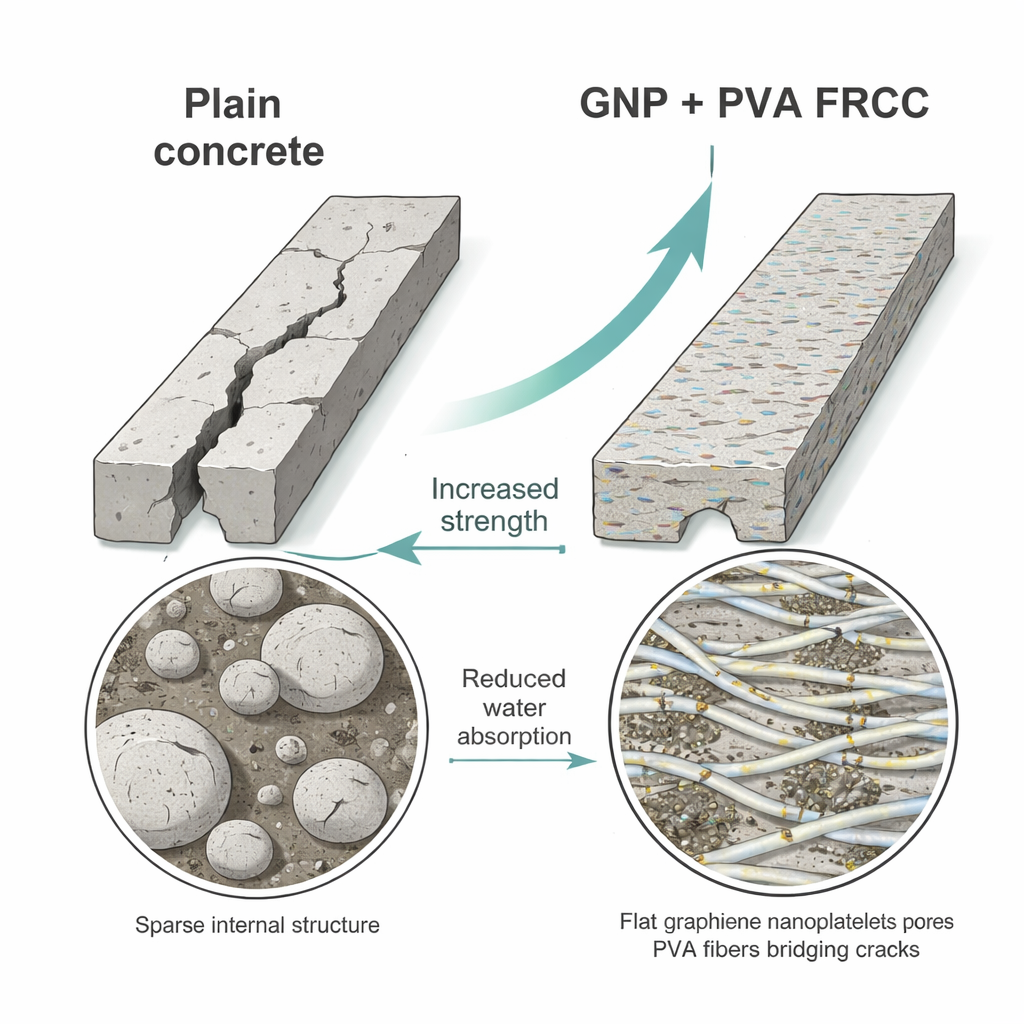
The upgraded mixes were tested in many ways that relate directly to real‑world performance. Compared with a similar mix containing PVA fibers but no graphene, the version with 0.15% graphene gained about 44% more compressive strength (resisting squeezing), 22% more flexural strength (resisting bending), and 22% more split tensile strength (resisting cracking under tension). It also became stiffer overall. Impact tests, which simulate repeated blows or dynamic loads, showed that the graphene‑enhanced composite could absorb far more energy before cracking or failing—up to 56% more blows at failure than the control. These improvements indicate that structures built with such a material would better withstand heavy traffic, shocks, and long‑term service.
Keeping Water and Damage Out
Cracks and pores in concrete are highways for water and dissolved salts that can corrode steel reinforcement and shorten the life of bridges and buildings. In this study, adding graphene nanoplatelets made the internal structure denser. Water absorption fell by nearly 27%, the dry density rose by about 11%, and ultrasonic pulse tests—an indicator of internal quality—showed faster wave speeds, meaning fewer flaws inside. Microscopic images revealed that the thin graphene sheets helped fill capillary pores and knit the cement paste together, while the PVA fibers acted like tiny bridges across developing cracks. Together, they promoted a pattern of many fine cracks instead of a few wide ones, improving both durability and ductility.
Finding the Best Balance for Practice
Because graphene is both powerful and expensive, using more is not always better. The response‑surface models showed that performance gains start to level off as graphene content approaches 0.15%, and very high contents can lead to clumping rather than even dispersion. By mathematically optimizing all the test results at once—strength, stiffness, impact resistance, density, water absorption, and internal soundness—the authors identified an ideal graphene level of about 0.149%. They confirmed this prediction in the lab: the measured properties of the optimized mix matched the model within about 5%, giving confidence that engineers can rely on these formulas to design future mixes.
What This Means for Future Construction
To a non‑specialist, the take‑home message is that a tiny amount of graphene, when paired with proven PVA fibers, can turn ordinary concrete into a tougher, more resilient composite. This optimized material resists cracking, takes longer to fail under impact, soaks up much less water, and offers a denser internal structure—all changes that can extend the life of roads, bridges, and repairs while reducing maintenance and resource use. The study also shows how advanced statistical tools can guide material design, ensuring that the benefits of nanotechnology are captured efficiently and sustainably rather than by costly trial and error.
Citation: Khan, M.B., Umer, M., Awoyera, P.O. et al. Optimization of mechanical and durability performance of graphene nanoplatelet modified PVA fiber reinforced cementitious composites using response surface methodology. Sci Rep 16, 5694 (2026). https://doi.org/10.1038/s41598-026-36693-x
Keywords: graphene concrete, fiber-reinforced composites, durable infrastructure, nanomaterials in construction, cementitious composites