Clear Sky Science · en
Trajectories of emotional and physical distress during ICU stay and their association with clinical factors and cognitive status at discharge
Why emotions in intensive care matter
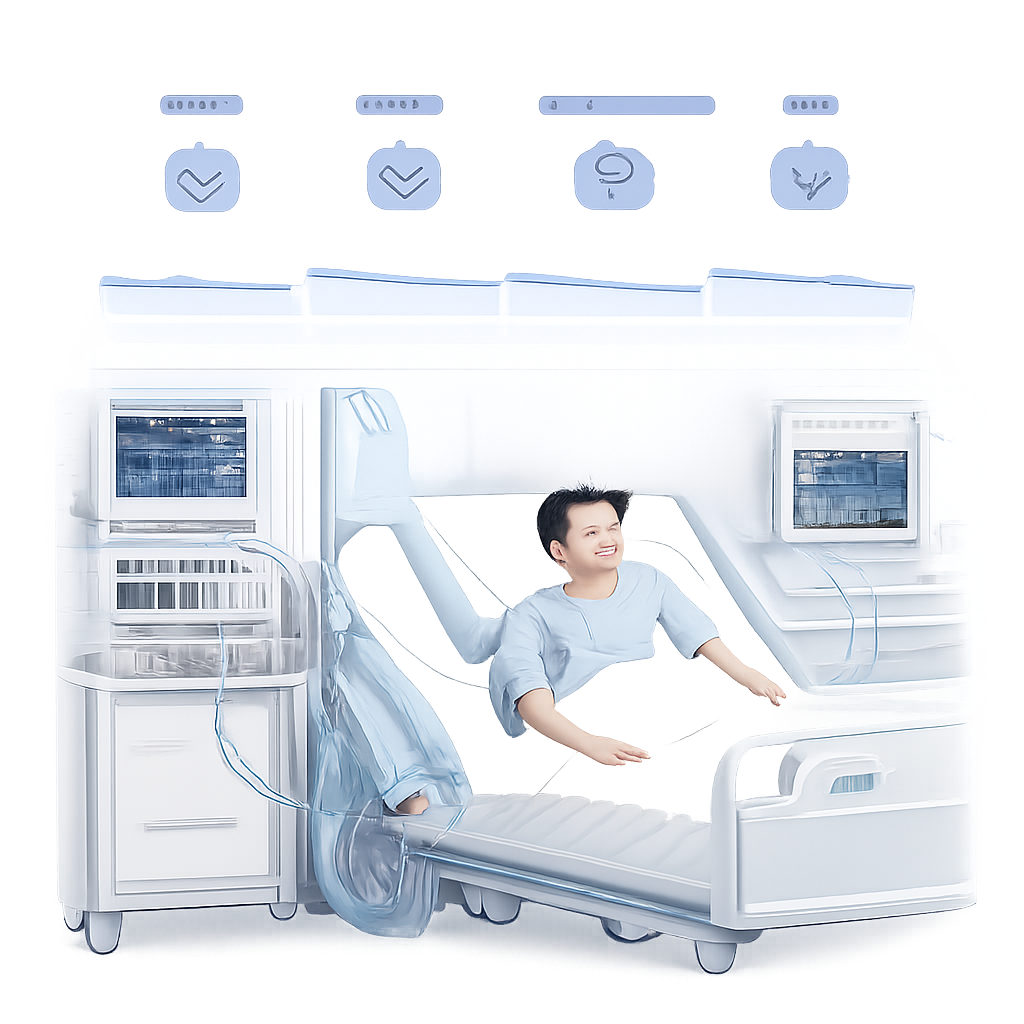
Landing in an intensive care unit (ICU) is not only a medical emergency; it is also an emotional earthquake. Many critically ill patients feel scared, sad, or in pain while struggling to breathe or understand what is happening around them. This study followed ICU patients day by day to see how these emotional and physical burdens – anxiety, sadness, breathlessness, and pain – rise and fall during their stay, and whether they are linked to thinking and memory problems when they leave the unit.
Tracking feelings day by day
Researchers in Spain observed 62 adults in a university hospital ICU, all awake enough to respond and free of delirium when assessed. Every day, patients rated four experiences – anxiety, sadness, shortness of breath, and pain – on a simple 0–10 scale. The team divided each patient’s ICU stay into four equal phases, from the first days to the final stretch before discharge. This allowed them to compare how distress changed over time even though patients stayed for different lengths. At the end of the ICU stay, patients took a brief thinking test to check attention, memory, and orientation.
Sadness stands out over fear
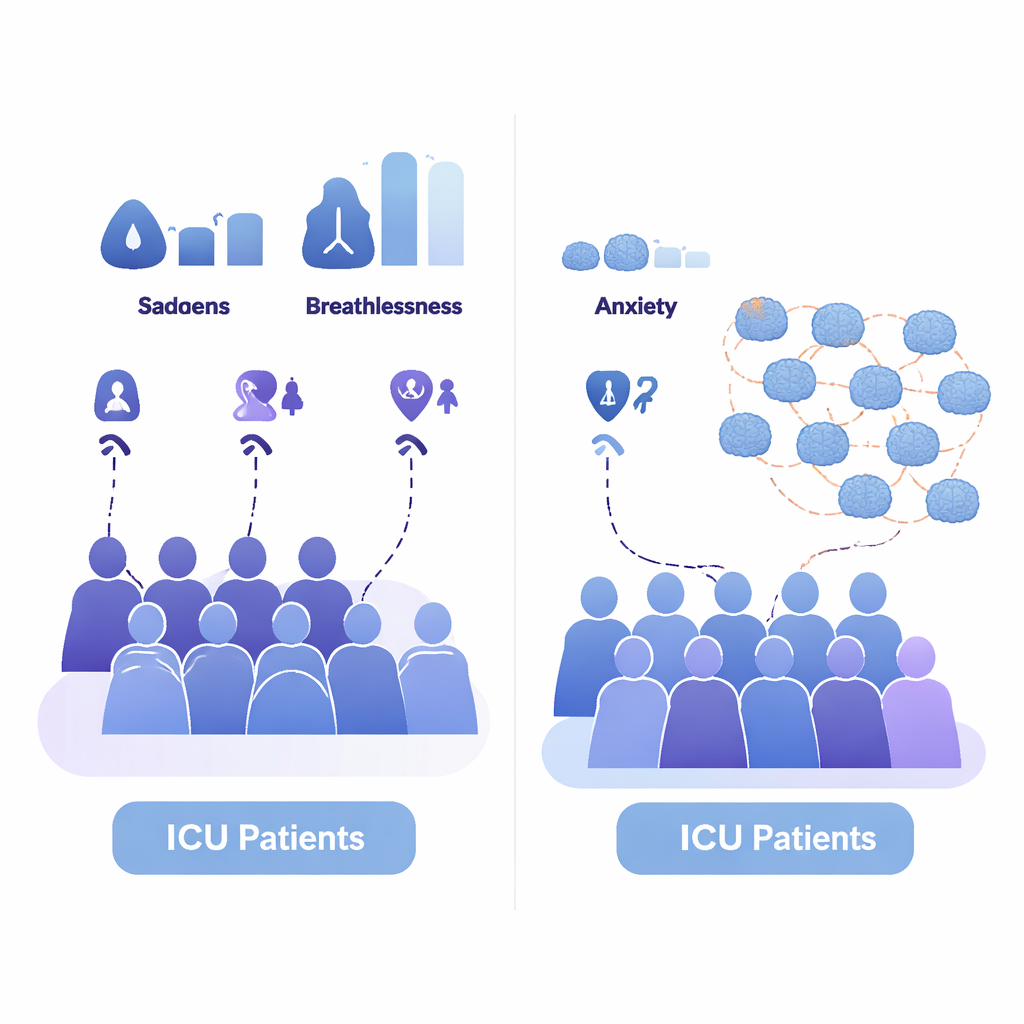
Across the ICU stay, sadness was a more prominent emotional burden than anxiety. Roughly one third to almost half of patients showed moderate to severe sadness at different points, and a similar proportion reported notable anxiety. Both feelings stayed relatively steady through most of the stay and improved only close to discharge. Women generally reported more anxiety than men, especially in the middle of their ICU stay, and people admitted for infections or sepsis tended to feel less anxious than those hospitalized for sudden problems like trauma or surgical complications – perhaps because the former were more often heavily sedated and less aware of their situation.
Breathing machines, breathlessness, and pain
Physical discomfort told a more complex story. On average, reported pain and breathlessness were low, but a key difference emerged for patients who needed invasive mechanical ventilation – a breathing machine connected through a tube. These patients consistently reported more sadness and more shortness of breath than those who never required the ventilator. Breathlessness was most pronounced in the earlier and middle phases of the ICU stay and tended to ease toward the end. Pain was highest early on and then declined, possibly reflecting effective pain-control routines and the relatively low number of major trauma or surgical cases in this ICU.
How body and mind symptoms move together
The study also explored how emotional and physical symptoms moved in tandem. Anxiety and sadness were closely linked at all stages, reinforcing the idea that ICU patients often experience a blend of worry and low mood rather than neatly separated conditions. Sadness showed a clear, shifting relationship with physical distress: early on, it was tied more to pain, while in the middle and later phases it was more strongly linked with breathlessness. Pain and breathlessness themselves became more connected in the middle and late phases, suggesting that discomfort from illness, injuries, or procedures can make breathing feel harder, which in turn may deepen sadness.
Thinking problems that follow – and what they mean
When patients were ready to leave the ICU, nearly three out of four showed mild to moderate problems in thinking or memory on a standard bedside test. Surprisingly, these cognitive difficulties were not clearly related to how anxious, sad, breathless, or painful their ICU experience had been, nor to basic clinical factors like age, sex, or need for a ventilator. This suggests that emotional distress and cognitive problems may stem from partly different biological and environmental processes during critical illness.
What this means for patients and families
For non-specialists, the message is twofold. First, sadness – not just fear – is a major emotional burden in the ICU, closely intertwined with breathlessness and pain, especially in those on breathing machines. Second, many patients leave the ICU with temporary thinking problems that appear to arise largely independently of how distressed they felt. Taken together, the findings argue for routine, multidimensional emotional monitoring in intensive care, including direct questions about sadness and breathing discomfort, and for timely psychological and symptom-relief support. By paying attention not only to survival but also to how patients feel and think along the way, ICU teams can better guide them through one of the most frightening experiences of their lives.
Citation: Doña-López, E., Godoy-González, M., Navarra-Ventura, G. et al. Trajectories of emotional and physical distress during ICU stay and their association with clinical factors and cognitive status at discharge. Sci Rep 16, 6281 (2026). https://doi.org/10.1038/s41598-026-36684-y
Keywords: intensive care, emotional distress, mechanical ventilation, dyspnea and pain, cognitive impairment