Clear Sky Science · en
In silico design and immunoinformatics assessment of a multiepitope vaccine targeting borealpox virus
Why a New Virus Should Be on Your Radar
Borealpox virus, a recently recognized cousin of better-known pox viruses, has begun appearing in scattered human cases around the world. Most infections have been mild, but at least one has been fatal, and there is no approved vaccine or specific treatment. This study uses advanced computer tools to design a new kind of “made‑to‑measure” vaccine, aiming to get far ahead of the outbreak curve before Borealpox can spread widely in people.
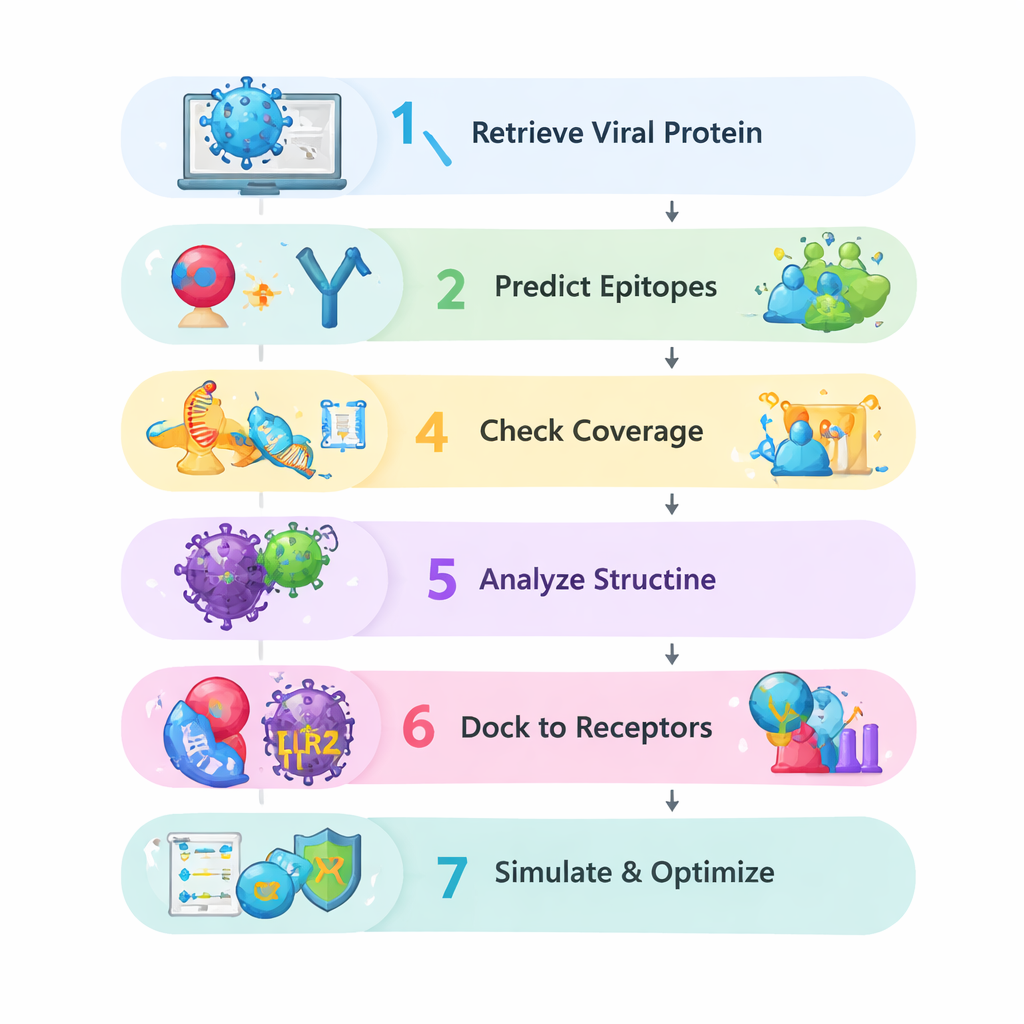
Building a Vaccine on a Computer
Instead of growing whole viruses in a lab, the researchers turned to immunoinformatics—software that predicts how our immune system will react to tiny fragments of viral proteins. They focused on a Borealpox surface protein that the virus uses to latch onto human cells, reasoning that blocking this step could stop infection at the gate. From this protein, they chose short stretches, or “epitopes,” that are especially likely to be seen by key immune cells. To make the design safer, they filtered out any fragments predicted to be toxic or to trigger allergies, keeping only pieces that look both immunogenic and well tolerated.
Designing a Custom Protein Shot
The final vaccine blueprint strings several of these epitopes together into a single small protein only 163 building blocks long. To help the immune system take notice, the team added human β‑defensin 3, a natural antimicrobial peptide, as a built‑in booster, plus a short PADRE segment known to work across many human genetic backgrounds. Flexible molecular “spacers” connect the fragments so each can be displayed properly, while a small purification tag at one end is included to make eventual lab production easier. Computer checks suggest this combined protein should be stable, soluble in water, and strongly antigenic—meaning the immune system is likely to recognize it—while still being classified as non‑allergenic.
Testing Fit with the Immune System
Using 3D protein modeling, the authors predicted the vaccine’s overall shape and confirmed it avoids strained or unstable folds. They then simulated how it might dock onto TLR2 and TLR4, two “alarm bell” receptors on immune cells that detect dangerous invaders. The virtual docking showed tight, energetically favorable binding, especially with TLR2, supported by numerous atomic‑level contacts. A longer molecular dynamics simulation, which lets the vaccine–receptor pair move in a virtual watery environment for 100 nanoseconds, indicated that the complex stays structurally steady, with only small natural flexing in the vaccine’s more mobile regions that could actually help expose its epitopes.
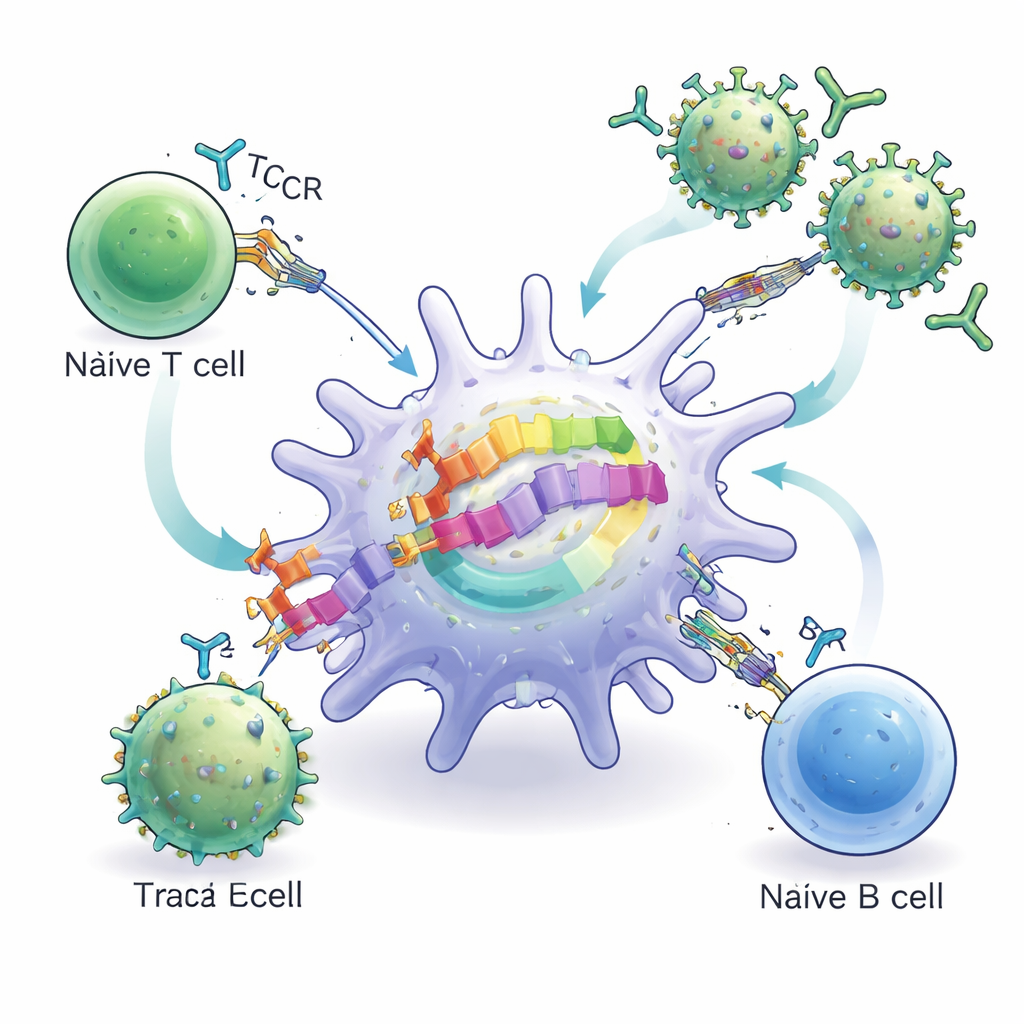
Simulated Immune Responses and Global Reach
To see whether this design might work for people in many regions, the team compared their chosen epitopes with global patterns of immune genes. The result was encouraging: the vaccine is predicted to be effectively “visible” to immune systems in about 96% of the world’s population, including high coverage in Europe, North America, and large parts of Africa and Asia. In a separate computer model of human immunity, three simulated doses led to rapid clearance of the virtual antigen by day seven, strong early IgM antibodies followed by more durable IgG1 antibodies, and high levels of key signaling molecules such as interferon‑gamma and interleukin‑2. The model also showed the formation of memory B and T cells, hinting at the possibility of lasting protection.
What This Means Going Forward
For non‑specialists, the main takeaway is that scientists can now sketch, test, and refine vaccine ideas entirely on computers before a single experiment is done in the lab. In this case, the designed Borealpox vaccine candidate appears stable, widely applicable, and capable—on screen—of triggering a strong and balanced immune response. However, everything here remains predictive: no human or animal has yet received this vaccine. The work lays a detailed roadmap for laboratory production and testing, but only careful experiments will reveal whether this digital design can become a real‑world shield against Borealpox and similar emerging viruses.
Citation: Naveed, M., Asim, M., Aziz, T. et al. In silico design and immunoinformatics assessment of a multiepitope vaccine targeting borealpox virus. Sci Rep 16, 3885 (2026). https://doi.org/10.1038/s41598-026-36680-2
Keywords: borealpox virus, multi-epitope vaccine, immunoinformatics, T-cell epitopes, computational vaccine design