Clear Sky Science · en
PPARs, L-FABP mediate the association between Per- and polyfluoroalkyl substances and gestational diabetes: a nested case-control study
Why chemicals in daily life matter for pregnancy
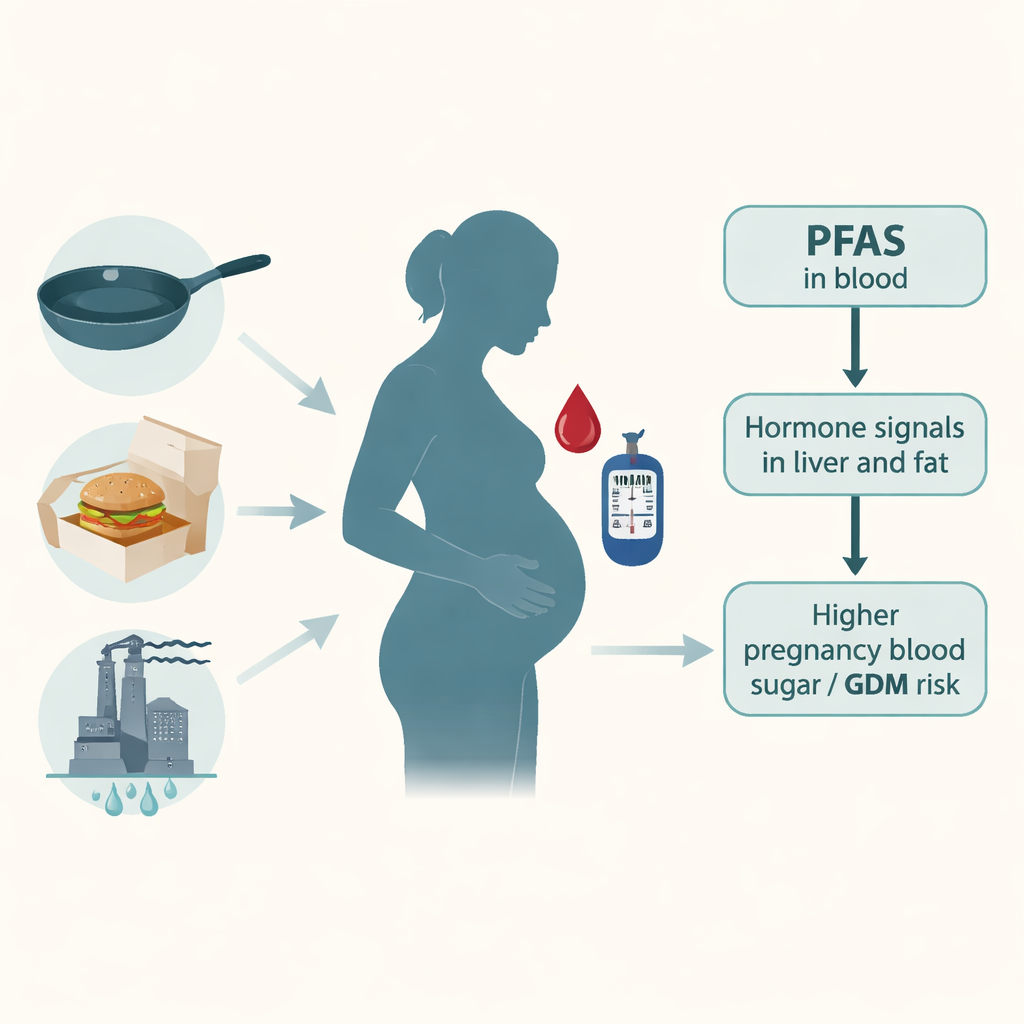
Cooking on non-stick pans, eating takeout, or drinking tap water can all expose us to a family of long‑lasting chemicals called per‑ and polyfluoroalkyl substances, or PFAS. At the same time, more women are being diagnosed with gestational diabetes, a type of high blood sugar that first appears during pregnancy. This study asks a simple but important question: could everyday PFAS exposure be one hidden reason why more pregnant women are developing gestational diabetes?
Hidden chemicals and pregnancy blood sugar
PFAS are industrial chemicals used to repel water, grease, and stains in many products. They do not break down easily and can accumulate in the human body. The researchers followed over 1,600 pregnant women in northern China and focused in depth on 255 of them, comparing 85 women who developed gestational diabetes with 170 who did not. Blood samples taken in early pregnancy were tested for 19 different PFAS, as well as for proteins involved in how the body handles fats and sugar. Later in pregnancy, all women took a standard sugar‑drink test so that doctors could measure their blood sugar levels and diagnose gestational diabetes.
Which chemicals stood out
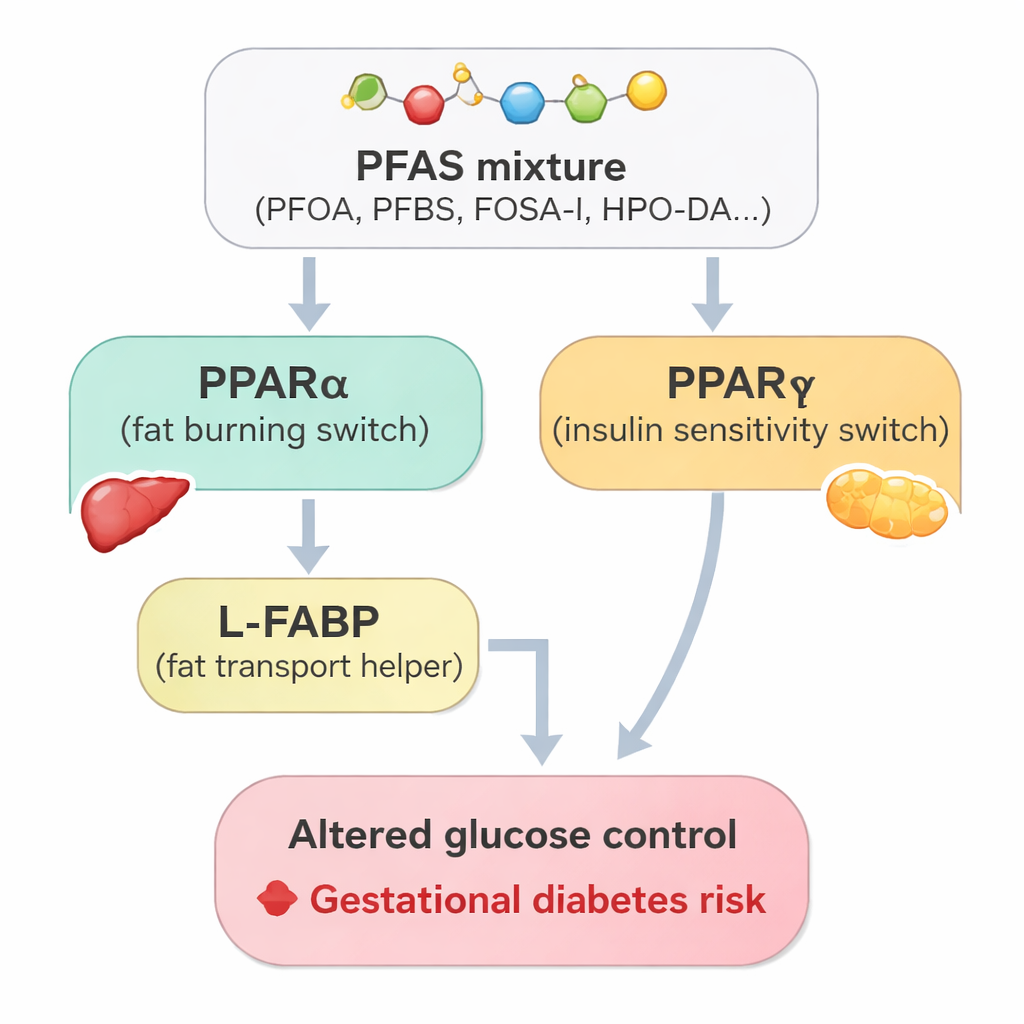
Because many PFAS tend to occur together, the team used statistical methods that can sort out which ones matter most when they appear as a mixture. They found seven PFAS that were closely linked with higher blood sugar or a greater chance of gestational diabetes. Two chemicals stood out. One, called PFOA, was the main contributor to overall gestational diabetes risk and to higher blood sugar two hours after the sugar drink. Another, PFBS, was most strongly tied to fasting blood sugar and the one‑hour sugar level. When the researchers treated these seven PFAS as a combined exposure, higher mixture levels were consistently associated with higher blood sugar at all time points and with a higher risk of gestational diabetes.
How PFAS may disturb the body’s sugar controls
The study also looked at two types of molecular “switches,” PPARα and PPARγ, and a liver protein called L‑FABP. These molecules help control how the body burns fat and responds to insulin, the hormone that lowers blood sugar. In women with gestational diabetes, levels of PPARα were higher, while PPARγ and L‑FABP were lower, suggesting that normal sugar control had been disturbed. Using advanced mediation analyses, the team asked whether PFAS might increase diabetes risk partly by changing these switches. They found that one PFAS precursor, FOSA‑I, appeared to act through a chain: higher FOSA‑I was linked to higher PPARα, which in turn was linked to lower L‑FABP, and this pattern was associated with greater gestational diabetes risk. Another replacement PFAS, HFPO‑DA (also known as GenX), seemed to influence risk mainly through its impact on PPARγ, a key regulator of insulin sensitivity.
What this means for mothers and babies
Although this was an observational study and cannot prove cause and effect, its results point toward a PFAS–PPAR–L‑FABP pathway that may help explain how chemical exposure disrupts sugar metabolism during pregnancy. The work suggests that not all PFAS act the same way: some, like PFOA and PFBS, appear to drive higher blood sugar directly, whereas others, like FOSA‑I and HFPO‑DA, may operate by rewiring hormone‑like signals that control fat handling and insulin response. These findings support policies to further limit PFAS in the environment and highlight the need for pregnant women to be aware of possible exposure sources, such as contaminated water or certain consumer products.
Take‑home message
For a layperson, the takeaway is that a group of long‑lasting industrial chemicals present in our everyday surroundings is linked to higher blood sugar and a greater chance of diabetes during pregnancy. The study also offers early evidence about how this might happen inside the body, through changes in molecules that normally keep fat and sugar in balance. While more research is needed, especially to confirm these pathways and test ways to reduce exposure, the results strengthen the case that cleaning up PFAS pollution could benefit both maternal health and the next generation.
Citation: Xiang, Q., Guo, P., Tian, Q. et al. PPARs, L-FABP mediate the association between Per- and polyfluoroalkyl substances and gestational diabetes: a nested case-control study. Sci Rep 16, 6193 (2026). https://doi.org/10.1038/s41598-026-36679-9
Keywords: PFAS, gestational diabetes, pregnancy, endocrine disruption, environmental exposure