Clear Sky Science · en
Performance evaluation of the BactInsight simplified blood culture system developed for resource-limited settings using a simulated test design
Why Faster Blood Tests Matter
When people develop serious bloodstream infections, every hour of delay in diagnosis can mean the difference between recovery and death. In wealthy countries, hospitals rely on large, automated machines to detect germs in blood samples. But in many low‑resource settings, these systems are too expensive, hard to maintain, or need constant electricity. This study introduces and rigorously tests a low‑cost alternative called BactInsight, designed to bring faster, more reliable blood culture testing to clinics that currently have little more than an incubator and a trained eye.
A Simple Tool for a Big Problem
BactInsight is a pared‑down blood culture system built for tough environments. It uses in‑house prepared blood culture bottles and a small reader called a turbidimeter, which shines light through the bottle to detect cloudiness caused by growing microbes. Traditional manual systems in low‑resource settings depend on staff visually checking bottles once or twice a day, which can miss early growth and is highly subjective. In contrast, the BactInsight turbidimeter automatically takes measurements every 30 seconds and sends the data to a computer, helping to standardize and speed up the process. The device is compact, uses off‑the‑shelf parts, costs about 50 US dollars to build at scale, and is designed to be robust in high heat and humidity.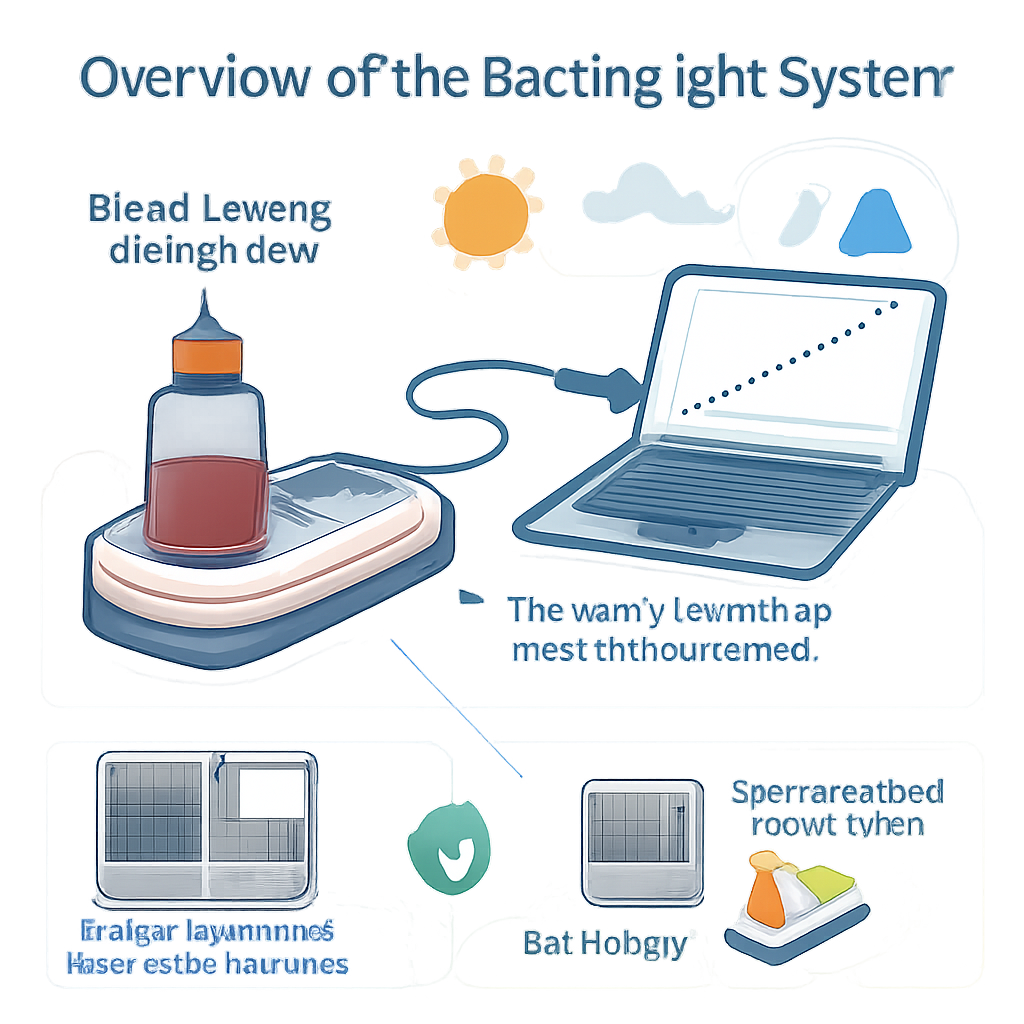
Putting the New System to the Test
To see how well BactInsight performs, the researchers created a controlled laboratory setup that mimics real infections. Fresh blood from healthy volunteers was mixed with small, carefully measured amounts of 20 different microbes that commonly cause bloodstream infections, including bacteria such as Escherichia coli and Staphylococcus aureus, as well as yeasts like Candida. Each strain was added to several BactInsight bottles and to a commercial reference bottle used by a widely adopted automated system called BACT/ALERT. The reference bottles were incubated and shaken inside the automated machine, which checks for rising carbon dioxide as germs grow. The BactInsight bottles were instead warmed in a standard incubator, with some monitored only by eye and others tracked continuously by the turbidimeter. After incubation, all bottles were plated on agar to confirm that growth had truly occurred.
How Well Did It Detect Infection?
Across 169 successful test runs and more than 500 blood culture bottles, both the BactInsight system and the high‑end automated machine detected growth in 100 percent of spiked samples. On average, BactInsight signaled growth about an hour and a half later than the reference system, but still picked up nearly 90 percent of infections within the first day and all by day three. For many common gut bacteria and some other groups, the new system was as fast or even a bit faster than the commercial machine. The main weaknesses appeared with so‑called fastidious organisms and yeasts, which either do not cloud the broth much or do so very late. For these, the light‑based reader struggled, and the team had to rely primarily on visual inspection.
The Role of the Light‑Based Reader
Looking at the turbidimeter on its own, it correctly flagged growth in about 97 percent of bacterial bottles where turbidity does occur, but it also produced some false alarms in bottles that were actually negative. Importantly, when compared directly to visual checks, the turbidimeter detected many infections several hours sooner for key bacterial groups, while visual inspection was still better for certain species like Staphylococcus aureus. These results underline that, in its current form, the reader is best used as an assistant, not a replacement, for trained staff: it can shorten waiting times in many cases, while human eyes remain crucial for organisms that do not make the broth noticeably cloudy.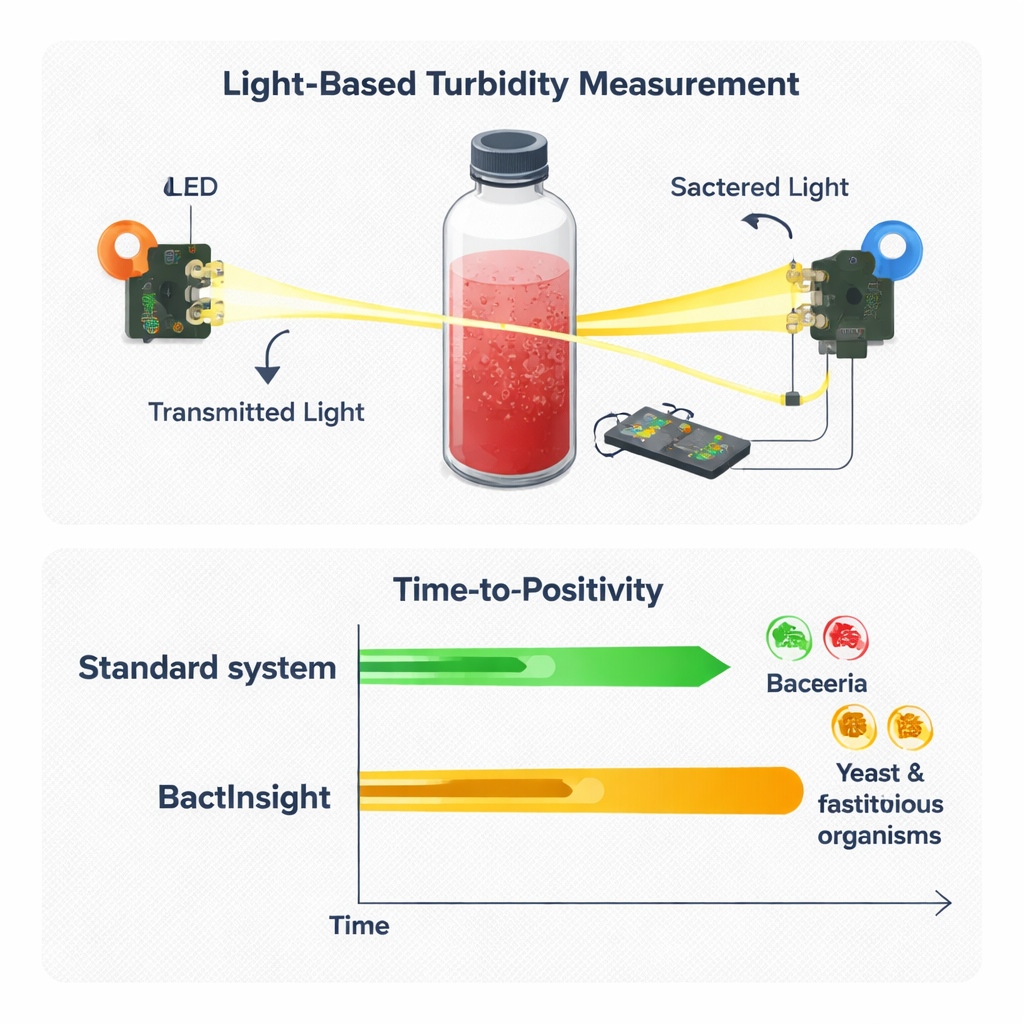
What This Means for Patients
The authors conclude that BactInsight offers performance close to that of a sophisticated automated system, but at a fraction of the price and complexity. For clinics in resource‑limited settings, this could mean more routine use of blood cultures, faster answers for many bacterial infections, and better tracking of antibiotic resistance. However, because some hard‑to‑grow microbes and yeasts escape the light‑based reader, BactInsight currently works best as an enhanced manual system: a rugged device that speeds up and standardizes what staff already do, rather than a fully automated replacement. Further field trials and design refinements are underway, but the study suggests that practical, affordable tools like BactInsight could help narrow the diagnostic gap between high‑ and low‑income health systems.
Citation: Barbé, B., Cornelis, J., Ghomashi, M. et al. Performance evaluation of the BactInsight simplified blood culture system developed for resource-limited settings using a simulated test design. Sci Rep 16, 6004 (2026). https://doi.org/10.1038/s41598-026-36676-y
Keywords: bloodstream infection, low-resource diagnostics, blood culture systems, turbidimetry, antimicrobial resistance surveillance